A Comprehensive Analysis of Sudan’s Current Situation and Future Prospects
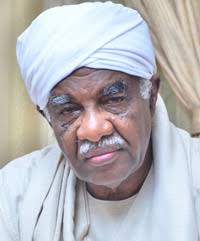
By Dr. Ibrahim Al-Amin
Sudan is currently experiencing one of the most complex and critical moments in its modern history. The country faces an existential crisis that threatens the very foundation of the state, following the collapse of its institutions and the disintegration of its political, security, and social structures as a result of a prolonged struggle for power and resources. The political and military elites have failed to establish a modern state based on institutions; political parties have become instruments of patronage and loyalty, while repeated military coups have undermined every attempt at democratic transformation.
The Armed Forces and Their Role in a Civilian State
The armed forces are a fundamental national institution whose mission is to protect the homeland, preserve its unity, and safeguard its security. They are not a substitute for a civilian state but rather one of its pillars. Building a modern civil state does not mean excluding the army; rather, it entails placing it in its proper role as guardian of the constitution and national sovereignty—not as a political or economic actor.
The Ongoing War and Its Catastrophic Consequences
The outbreak of fighting between the Sudanese Armed Forces and the Rapid Support Forces marked a tragic turning point in Sudan’s contemporary history. The war has resulted in widespread destruction across cities and infrastructure, the near-total collapse of state institutions, and the displacement of millions of citizens. Consequently, Sudan now ranks among the least stable and least developed countries in the region.
The Future of the Rapid Support Forces After Atrocious Violations
The Rapid Support Forces have committed heinous crimes against civilians, including identity-based killings, sexual violence, looting, and the destruction of property. These atrocities place the group under immense legal and moral responsibility and open the door to international accountability. The future of this force depends on the pursuit of justice and transparency: either it will be dismantled and its leaders held accountable before fair courts, or it will remain an open wound that endangers the country’s security and unity if impunity prevails.
The Sit-In Massacre — A Crime Without Justice
The massacre that ended the sit-in in front of the army headquarters stands as one of the most horrific crimes in Sudan’s modern history. Hundreds of young protesters, who had gathered peacefully to demand freedom and justice, were brutally killed. Years have passed, yet no perpetrators have been held accountable, owing to the complicity of certain political and military forces, the weakness of the justice system, and overlapping interests within the state apparatus. The impunity surrounding this crime poses an existential threat to Sudan’s future, for no nation can be built upon injustice and the evasion of accountability. Genuine reconciliation can only emerge through truth, acknowledgment, and justice.
Sudan’s Resources and the Ambitions of Foreign Powers
Sudan possesses immense wealth—gold, oil, rare minerals, vast arable lands, and abundant water resources—making it a prime target for regional and international ambitions. Some foreign powers have exploited the state’s weakness and internal divisions to expand their economic and military influence. Confronting these ambitions requires the establishment of a strong, sovereign state that channels its resources toward serving its people and invests in its human capital as the nation’s greatest asset. Sudan’s wealth must be a tool for renaissance, not a curse that perpetuates conflict and war.
Escaping this dark tunnel demands a unifying national project grounded in civilian governance, accountability, and equality among all citizens. Sudan also needs wise and courageous leadership capable of transcending the past, rebuilding trust among the nation’s diverse communities, and restoring the country’s rightful place among nations. The future of Sudan lies in the unity of its people, the justice of its cause, and the independence of its national decision-making.