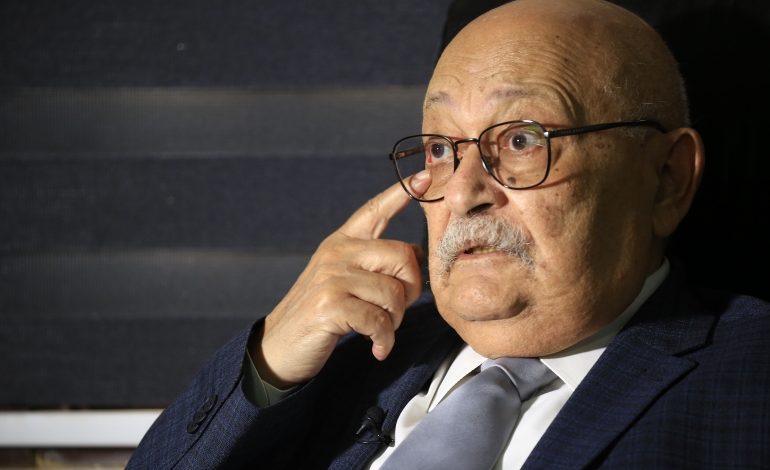
Legal expert Nabil Adib has described the announcement to resume the activities of the Committee for Dismantling the June 30, 1989 regime and recovering public funds as a “political farce,” asserting that the committee lacks both a legal foundation and the practical mechanisms needed to enforce its decisions.
Speaking to Al-Karama on Wednesday, Adib said the Empowerment Removal Committee was originally part of the transitional authority’s framework to dismantle the former regime. However, its work required investigative tools and institutional access within state bodies—raising questions about how it could resume operations in the absence of such instruments.
“If committee members lack the authority or access to state institutions, how can they perform their duties?” he said. “In my view, this is nothing more than political theatrics.”
Adib stressed that, from a legal standpoint, the committee lacks a valid mandate. He also criticized its reference to cooperation with regional and international actors, describing it as an appeal for foreign intervention in Sudan’s internal affairs. He said such an approach is “unacceptable and amounts to betrayal,” emphasizing that dismantling the former regime and recovering public funds are domestic matters to be handled by Sudanese courts and state institutions.
He noted that international and regional organizations typically intervene only in cases rising to the level of war crimes—such as violations attributed to the Rapid Support Forces during the ongoing conflict—adding that only such crimes justify international investigations.
Regarding the political forces backing the committee’s reinstatement, Adib argued that the move represents an attempt to topple the government by relying on foreign actors, warning that such an approach undermines their credibility and political effectiveness.
He also suggested that the timing of the announcement may be linked to what he described as U.S. sanctions on Islamists, noting that such measures are administrative decisions that do not grant Washington legal authority to penalize any political group within Sudan.
Adib reiterated his earlier criticism of the committee’s past operations, arguing that it had exercised powers reserved for the judiciary, including investigations and asset confiscation orders. He stressed that asset seizures, under the constitutional framework, must be carried out through court rulings, accusing the committee of issuing confiscation decisions without judicial authorization—thus violating judicial independence.
He added that the committee was formally dissolved in 2021 following the October measures, not merely suspended, and that any attempt to resume its work under current conditions would lack enforcement mechanisms.
He concluded by saying that any decisions issued by the committee would amount to “ink on paper” or “voices in the air with no real effect.”