The People’s Withdrawal and the Absence of Leadership from the Battlefield
As I See
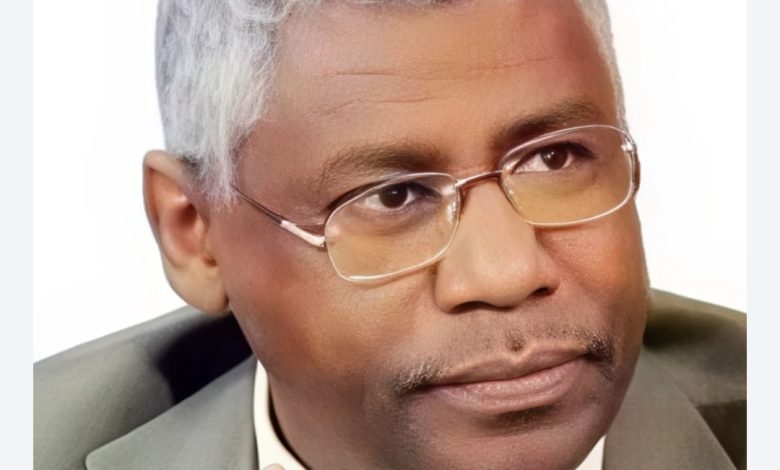
Adil El-Baz
1
At the outset, I would like to remind the heedless that half of the country is still occupied, and that five neighboring countries are besieging us and supplying the enemy with all kinds of weapons and various forms of support, from mercenaries to petroleum supplies. The fall of the strategic town of Al-Kurmuk just a few days ago—accompanied by the displacement of thousands of families and accusations of involvement by forces coming from deep inside Ethiopia—proves that this siege is not theoretical, but a reality that expands day by day, and that new fronts are opening wide doors for the enemy.
2
At the conclusion of my previous article (“The country is besieged and the people have turned away from their battle”), I stated that what is required now is not merely a rallying of spirits, but also a clear call for army leaders to return to the theaters of operations, and for the people to return to the mobilization grounds to support them. This is the only way capable of preventing premature surrender.
Before answering how the people can return to the mobilization grounds, we must ask frankly: why did they withdraw in the first place?
3
After the liberation of Khartoum and the decline of the rebellion, which became concentrated in western Sudan, many believed that the rebellion had ended and been decisively defeated, and that it would only take a few months to be completely swept from all parts of the country. These perceptions were reinforced by repeated statements from state and military leaders emphasizing that “the end is near,” and that we would soon reach Umm Dafuq and beyond.
4
At the same time, a belief spread that the army had become capable of decisively ending the battle on its own, without the need for broad popular support. If that were the case, why continue mobilization?
As a result, the level of general mobilization declined, discussion of mobilization faded in both official and popular media, and state leaders stopped calling on the people to support the army. Most people came to believe that the state itself did not wish for mobilization to continue, either due to internal considerations or political and military concerns. Gradually, the public sense that this war still threatens the very existence of the nation faded, along with the awareness that the risk of collapse or occupation still exists.
All these assumptions are merely illusions and myths with no real evidence to support them. The enemy still occupies half the country and continues to gather money, fighters, and gold with direct Emirati support to seize what remains. The major problem is that the people in the half untouched by war have loosened their grip on the trigger and believed the battle had ended simply because it moved out of their sight. The living proof of the danger of this illusion is what happened in Al-Kurmuk: a strategic border town that fell after fierce battles, leading to the displacement of thousands of families and opening the road toward Ad-Damazin. Yet for many, the news passed almost unnoticed, as if the war were taking place in another country. This is exactly what pleases the enemy: the people turning away from their battle.
5
Thus, the people withdrew, training camps for mobilized recruits were emptied, and the state stopped calling for mobilization. In fact, it began to treat the idea of popular mobilization with extreme caution, as if it feared it more than it feared the enemy itself. People left the mobilization grounds in search of their livelihoods. As a result, the army lost its ability to replenish its ranks, the bond between it and the people began to erode, and the nation’s resolve weakened—as if it had left the ashes of war behind, as if the siege had been lifted and the enemies had departed.
Most dangerous of all is that this withdrawal occurred at a time when the army needs reinforcements—both human and moral—more than ever. How can it compensate for its losses and expand its operations if the mobilized remain in their homes, following the news on WhatsApp as though the battle does not concern them? This is the real tragedy.
6
How do we restore confidence and rebuild the internal front? How can the army regain its ability to replenish its forces and remobilize the people?
This question leads directly to the role of military leadership: where are they today, and what are they doing?
Restoring confidence and rebuilding the internal front require decisive measures and a frank, courageous review by the leadership. The leadership must clearly answer key questions:
Why did mobilization stop? Has the war truly ended? Have we won? Does the army no longer need mobilized recruits? What is the future plan for replenishment?
A clear answer is far better than leaving the public prey to rumors flooding social media—especially in light of the rapid and dangerous developments in the Blue Nile region, where Ad-Damazin is now threatened, and At-Tina on the Chadian border is witnessing escalating tensions. The people want direct and clear answers, not dry military statements issued after disaster strikes.
7
The people want to see their leaders united. Any visible conflict or disagreement at the highest levels of leadership negatively affects morale both on the battlefield and at home. They also want their leadership present on the front lines.
If the people do not see their leaders at the front, they will continue to believe that the army can win alone, and the frustrating question will persist: what are army leaders doing away from the battlefield? The people want to see military leaders in theaters of operations, including the Chief of Staff, Lieutenant General Mohamed Othman, and his colleagues.
The people take great pride in seeing President Abdel Fattah al-Burhan among his soldiers and officers in the field. The mere landing of his aircraft among any combat unit raises morale sky-high—not only for the soldiers, but for the entire population, who see him chanting and celebrating among the fighters. This scene sends a powerful and credible message both internally and to the enemy: that statements such as “the war will continue until the rebellion is defeated” are not mere media rhetoric, but a genuine field position.
8
And where are the symbols of the “Battle of Dignity”: Lieutenant General Yasser Al-Atta and Lieutenant General Ibrahim Kabashi? Their absence has been prolonged, and their presence in the field has diminished. Where are they today? What are they doing in offices?
The people long to see them among the troops, raising morale and participating in mobilization. Their field presence carries great military and political symbolism, sending a clear message to the enemy that the country is united—leadership and people—and that its leaders are present in the field, leading and fighting alongside the soldiers until final victory. Surely, these leaders would not withhold even an hour or two per week from the theaters of operations.
9
And where is Malik Agar, Deputy Chairman of the Sovereignty Council? And Joseph Tuka, who defected from his army and currently occupies Al-Kurmuk? Why do we hear nothing from him? We would like to see him in uniform leading the campaign to retake Al-Kurmuk himself. The battle requires not only official statements and declarations, but visible field leadership that makes both soldier and citizen feel that the leadership stands with them in the same trench. Is this not a reasonable and logical request, Mr. Deputy Commander?
10
Finally, administrative chaos in Port Sudan, corruption scandals, and struggles over positions and influence among political and military elites have distracted leadership from the main objective: defeating the enemy.
Today, we stand at a dangerous crossroads:
Either we all return—leadership, people, and army—to mobilization, true unity, and serious action,
Or we leave the army to fight alone until ammunition runs out and morale collapses. The result is already known: more cities fall, more displacement, and a country that bleeds until it perishes.
At the same time, the people cannot be mobilized and convinced that this is their existential battle while they see elites fighting over positions, money, and gold fields as the country itself is on the verge of being lost.