Berlin Conference… How Is Sudan Being Reshaped from the Outside Under a Humanitarian Cover?
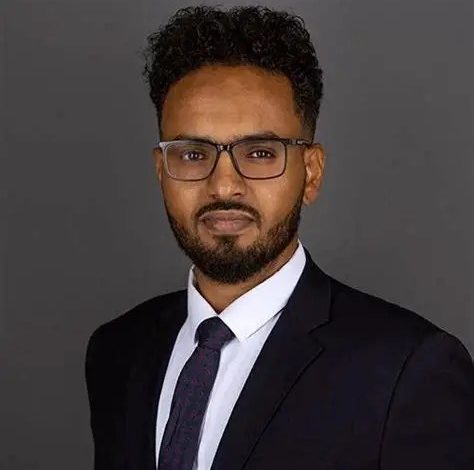
Eng. Abubakr Shibo
Head of the Sudanese Diaspora Association (SADA)
What is unfolding around the Berlin Conference, scheduled for April 15, 2026, cannot be treated as a routine diplomatic event. Rather, it represents an advanced stage in a comprehensive international trajectory that began with the Paris Conference in 2024, passed through London in 2025, and now reaches a more sensitive phase where humanitarian dimensions intersect with political arrangements.
This trajectory is no longer limited to mobilizing humanitarian support or calling for a ceasefire. It has evolved into a clear attempt to reshape Sudan’s political landscape through international platforms, under dynamics that do not necessarily reflect the real balance of power within Sudan.
The first undeniable factor is that the Berlin Conference comes after intensified activity at the UN Security Council and the Human Rights Council, as well as the release of the United Nations fact-finding mission report on El Fasher in February 2026. The report explicitly pointed to patterns of violations that may amount to genocide, particularly in the targeting of specific communities in Darfur.
This report did not remain confined to the human rights sphere. It was followed by official positions from major European countries calling for an expansion of the arms embargo and the formation of an international coalition to prevent further violations in Sudan. In its political context, such language signals a shift from merely describing the crisis to constructing new tools of international pressure.
At this precise moment, the Berlin Conference is being presented as a unifying platform, jointly organized by Germany and international partners, including the European Union, the United Kingdom, the United States, and the African Union. According to official statements, the conference aims to support a “civilian process” and to ensure the effective participation of “Sudanese civil society.”
However, the central question remains: who defines this civil society, and who grants these actors the legitimacy of representation?
Available indicators suggest that the current arrangements do not grant the Sudanese government a clearly central role, while placing significant emphasis on involving civil entities and individuals selected through international channels. This approach effectively opens the door to redefining who represents Sudan outside the national framework.
In this context, serious concerns arise about the reintroduction of political forces that have lost their presence within Sudanese society, or the promotion of new faces from the same الاتجاه as ready-made political alternatives to be marketed internationally. The issue is not with the concept of civilian participation itself, but with the selection process and its connection to Sudan’s actual realities.
The matter goes beyond representation to include the nature of the participating international actors. The Sudanese government has formally accused the United Arab Emirates of supporting the Rapid Support Forces. International reports have addressed these accusations, pointing to investigations and indications of logistical and financial support through the region, despite the UAE’s denial.
At the same time, the UAE remains part of the international landscape linked to the Sudan file, raising serious questions about neutrality—particularly given the involvement of parties accused of directly influencing the course of the conflict.
Moreover, what transpired in the Paris and London conferences provides an important lens for understanding Berlin’s trajectory. While those conferences saw broad international participation, they failed to produce tangible change on the ground or to create internal Sudanese consensus. Instead, they highlighted a clear gap between externally proposed solutions and the lived reality inside Sudan.
Today, the Berlin Conference comes within a different context, where the humanitarian file is increasingly being linked to the political track, with a clear focus on building a platform for civilian representation. While this linkage may be theoretically important, it carries inherent risks if it is not grounded in genuine balance and fair representation.
The primary concern is not the conference itself, but its potential outcomes—particularly if they are built on partial or selective representation, or if humanitarian and human rights momentum is used to justify political arrangements that do not reflect the national will.
In light of these developments, it becomes legitimate to pose clear questions: Does this conference truly reflect Sudan’s reality? Does it represent the actual forces on the ground? Or is it an attempt to manufacture a new political equation to be presented to the international community as a fait accompli?
Engaging with the Berlin Conference requires a careful reading beyond slogans, and a deeper understanding of the trajectory to which it belongs. Sudan today is not only experiencing an internal conflict; it is also at the center of complex international interactions, with each actor seeking to protect its interests or impose its vision.
Ultimately, the most important question remains: can any process built outside Sudan—without genuine and balanced representation—lead to a sustainable solution?
Recent experiences suggest otherwise… the field will have the final word.