Sudan on the Brink of Fragmentation: Is There Still a Chance to Avert It?
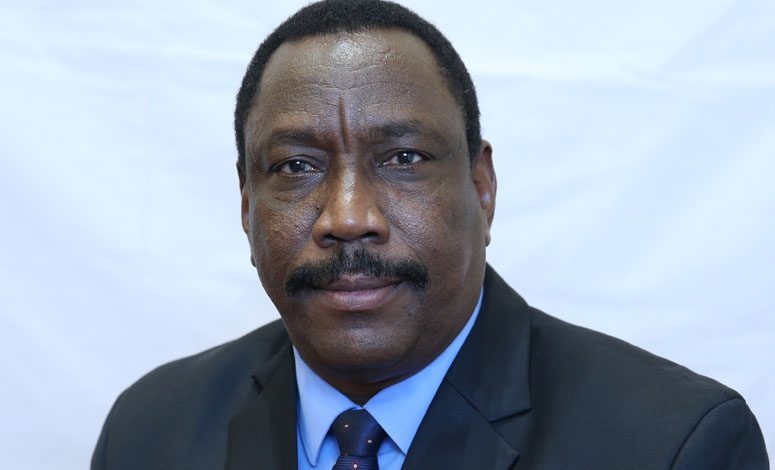
Dr. Bahr Abu Garda
Introduction
Those following Sudanese affairs are well aware that the aggression the country has faced since April 15, 2023, came after the failure of a carefully prepared coup orchestrated through three internationally coordinated levels. At the international level, it was driven and sponsored by a number of dominant global powers. At the regional level, it was led by the UAE, acting as a functional state entrusted with carrying out the mission. At the local level, the Rapid Support Forces (RSF) were used as the instrument of direct implementation on the ground.
Although the agendas of the various actors across these three levels occasionally diverge because of their overlapping interests, the principal objective of the international force behind the project is widely understood to be the fragmentation of Sudan into small, weak statelets that can be easily controlled along with their resources, while eliminating the vital geopolitical role of a united Sudan in the Red Sea region, the Horn of Africa, and the African Sahel.
The Reality of Partition
The project to divide and fragment Sudan, which has passed through various stages and phases over a prolonged period, has now reached a very advanced stage. The facts and indicators pointing to this include:
- The establishment of a parallel government to the Sudanese government under the leadership of the militia commander in Nyala, where many of the functions and manifestations of governance are already being exercised.
- Despite the claims of all countries and international organizations involved in Sudanese affairs that they are committed to Sudan’s unity and do not recognize a parallel government, practical developments have demonstrated strong but undeclared support from these same actors for turning the parallel government into a fait accompli. Among the most significant indicators are the following:
The Addis Ababa Meeting
For the first time—and in what may be the most dangerous step yet—the parallel government (“the Founding Government”) was officially and publicly invited, under the umbrella of the Founding Alliance, to participate in the meeting held in Addis Ababa from June 3 to 5, while the Sudanese government itself was not invited.
A separate meeting was allocated for the Founding Alliance with the Quint Mechanism consisting of the African Union, the Arab League, IGAD, the European Union, and the United Nations, all of which had been entrusted with contributing positively to a solution for the Sudanese crisis based on Sudan’s unity.
This step effectively amounts to re-legitimizing the RSF and its allies as a military-political entity and granting them international and regional recognition under the banner of the Founding Alliance and the Founding Forces. The objective, according to this view, is to discard the RSF name and distance the movement from the crimes associated with it, while also circumventing its anticipated designation as a terrorist organization, paving the way for its re-entry into Sudanese politics through a Sudanese-Sudanese dialogue designed according to external specifications and standards.
To understand the scale of the effort and the alleged conspiracy, organizers openly stated that the outcomes reached in Addis Ababa were an extension of the Berlin Conference. In other words, the processes launched in Paris, London, and Berlin culminated in the Addis Ababa outcomes after the RSF militia and the parallel government were effectively legitimized through their publicly acknowledged participation under the Founding Alliance framework.
Parallel State Institutions
The parallel government has begun establishing a central bank, appointing a former governor of the Central Bank as its head, printing national currency with the assistance of supporting states, and injecting that currency into the banking structures operating within territories under its control.
In another major step toward partition—despite attempts by some observers to downplay its significance—the parallel government conducted what it called Sudanese Certificate Examinations in Nyala, with the opening ceremony publicly presided over by the militia commander and head of the Founding Alliance.
The issue is not the academic value of the examinations themselves, which currently carry no recognized status internationally and therefore risk turning participating students into victims. Rather, the significance lies in the political message and the gradual accumulation of facts on the ground that could eventually normalize the parallel authority.
The national leadership has not clearly stated its position on the matter despite remarks by Finnish diplomat and UN official Pekka Haavisto praising the conference and its outcomes. This raises questions about whether the leadership is in agreement with the UN Secretary-General’s envoy and the conference conclusions, and whether it is coordinating with the political forces that participated without expressing significant reservations.
Military and Political Concerns
- The stagnation of military operations by the Sudanese Armed Forces and allied forces, despite intensive efforts by what the author describes as the axis of aggression to mobilize manpower and weapons across all combat fronts through neighboring countries, with the exception of Egypt and Eritrea.
- Despite repeated appeals and recommendations urging the leadership to sign strategic agreements—including mutual defense agreements—with countries capable of helping Sudan confront what is described as an existential threat without harming its strategic interests, such as Turkey, no such initiatives have materialized so far.
- Ambiguous policies toward the UAE, which the author considers primarily responsible for the aggression against Sudan, as illustrated by the meeting with the Emirati delegation in Switzerland several weeks earlier.
- The weakening of popular resistance structures and pressure on some of their leaders despite their substantial contributions during the previous period. The same hesitation and skepticism have reportedly characterized dealings with supporting forces, particularly the Joint Force, as well as restrictions placed on some allied groups, including Al-Bara’oon, allegedly in response to external pressures from actors who simultaneously provide military and political support to the militia.
- The state leadership’s failure to engage with proposals and visions submitted by national political forces supportive of state institutions during the past period. These proposals sought to coordinate efforts and fill the political vacuum that external actors exploited in the name of civilian forces abroad. Instead, the government allegedly adopted a divide-and-rule approach among these groups, negatively affecting their cohesion and weakening their unified stance internationally.
- According to the author, the government pursued the same approach toward civilian and political groups supporting it abroad, resulting in visible fractures within their ranks. This has reportedly diminished the scale of activities and demonstrations supporting the Sudanese state, with the protests held in Britain the previous week cited as a clear example.