Al-Burhan’s Initiative… and Sudan as a Gateway to the World!
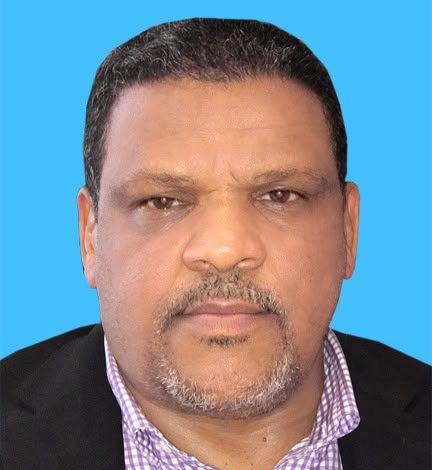
Adel Al-Rifai Abu Al-Hassan
The initiative put forward by the Chairman of Sudan’s Transitional Sovereignty Council, General Abdel Fattah al-Burhan, during the Russia-Africa Summit, expressing Sudan’s readiness to establish a major free trade zone on the Red Sea coast that would allow Russia to set up strategic fuel and wheat storage facilities to meet the needs of Sudan and West African countries, opens an important avenue for thinking about Sudan’s economic future and its role in regional and international trade.
However, the significance of this initiative extends beyond cooperation with Russia or the establishment of fuel and wheat storage facilities. It presents an opportunity to advance a broader strategic vision that harnesses Sudan’s geographical location, maritime capabilities, and African reach, positioning the country as a regional hub for maritime services, logistics, and trade.
Sudan overlooks the Red Sea, one of the world’s most important maritime corridors, and is connected to a vast African hinterland. It also borders four landlocked countries—Ethiopia, Chad, the Central African Republic, and South Sudan—all of which need access to seaports, markets, transportation services, and trade facilities. Sudan also possesses multiple-purpose ports, as well as agricultural, livestock, and mining production areas that can be connected to domestic and regional markets through road and railway networks.
Sudan’s competitive advantage lies not merely in its geographical location, but in its ability to combine its maritime coastline, its African hinterland, and its proximity to the markets of landlocked countries, while providing integrated routes and services linking maritime trade with production centres and markets. If developed, these assets would give Sudan an opportunity to compete with existing regional hubs, not simply by receiving ships or facilitating the transit of goods, but by providing services that meet the needs of African markets.
Ethiopia offers a clear example of this opportunity. According to African Development Bank data, more than 90% of its imports and exports pass through the ports of Djibouti. United Nations data also indicate that logistics costs for imports into landlocked developing countries are 75% higher than those incurred by developing countries that serve as transit countries, while the costs of their exports are 63% higher. These figures illustrate the scale of the economic opportunities that effective trade corridors can generate if Sudan succeeds in providing competitive alternatives and connecting them to the African continent’s hinterland.
The proposed free trade zone could serve as the nucleus of a much larger economic project, incorporating dry and refrigerated warehouses, storage and distribution centres, re-export facilities, and industrial and commercial zones that benefit from their proximity to ports and shipping routes. Sudan should not be merely a transit corridor for other countries’ trade; rather, it should become an economic hub that adds value to trade flows through storage, manufacturing, maritime services, and logistics, thereby generating investment and employment opportunities.
The opportunities also extend to services required by ships and international shipping companies, such as bunkering, ship maintenance and repair, dry docks, maritime emergency services, and cargo handling. Transshipment and cargo redistribution activities could also be developed by receiving large vessels and redistributing their cargo onto smaller ships bound for ports across the region. These activities could be integrated with logistics and industrial zones and an international airport to create a comprehensive system offering opportunities for investment, training, and the transfer of expertise and technology, while strengthening Sudan’s role in maritime security.
The success of these projects requires a comprehensive plan linking the free trade zone to ports, roads, railways, energy networks, telecommunications, and water infrastructure. Such a plan must identify the requirements of each project and its relationship with other projects, in order to avoid conflicting routes, duplication, and waste of resources.
Integrated planning does not mean implementing all projects simultaneously. Rather, it means establishing a comprehensive vision and identifying priorities, then implementing projects in interconnected phases, beginning with those that are most economically viable and capable of generating a direct economic impact. This should be guided by studies assessing demand, costs, returns, and technical requirements. Operational studies must also address, from the outset, the technologies, equipment, types of vessels, communications and navigation systems, safety standards, and maintenance requirements. This would spare the state costly modifications after operations have begun.
This vision also requires national infrastructure capable of accommodating economic activity and future expansion, foremost among it electricity and energy, roads and railways, telecommunications, and water. Such infrastructure should serve the productive needs of the Sudanese economy, from agriculture and industry to livestock and mining, helping to reduce production and transportation costs, facilitate exports, and open up markets.
Here, an important principle emerges: when building the state and developing its economy, we must start with our national needs. But when designing services to offer to the world, we must understand the needs of global markets and the standards of competition, and prepare Sudan to meet them.
This vision cannot be built on temporary decisions or projects tied to the tenure of a particular government or official. It requires a stable legal and institutional framework that protects investments, contracts, and commitments, while giving partners confidence in the continuity of policies.
It also requires institutions capable of planning, implementation, and monitoring, as well as qualified professionals in maritime, logistics, engineering, and management fields. This must be accompanied by investment in training and specialised education, and by drawing on international expertise, technologies, and partnerships. These projects are connected to global markets, operational standards, and supply chains that extend far beyond the boundaries of the domestic market.
This vision may appear ambitious given the circumstances and challenges facing Sudan. However, limited resources do not make it impossible to begin. Countries do not wait until all the necessary conditions are in place. Instead, they start with what they have, set their priorities, attract expertise and partnerships, and then gradually build their capacities and expand their projects. A country determined to achieve results builds the capacity to do so; it does not wait until that capacity is fully developed before taking the first step.
Sudan is a country of strategic opportunities that have been deferred from one generation to the next. What it lacks is not geographical advantage or resources so much as the ability to translate these advantages into practical projects within a clear national vision to which state institutions remain committed across successive governments.
Al-Burhan’s initiative could be more than just a proposal for cooperation with Russia. It could serve as an entry point to a vision that makes the Red Sea Sudan’s gateway to the world and transforms its geographical location into an economic asset that generates opportunities, builds interests, and fosters partnerships.
Sudan does not need to settle for describing its potential; it needs to harness it and turn it into projects and achievements that accumulate over time, laying the foundations for a state capable of competing and shaping its future.
For nations do not advance merely because of the opportunities they possess, but because of their success in transforming those opportunities into reality.