Divergent Visions of the Middle East’s Future!
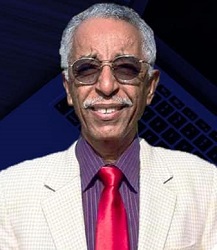
Dr. Al-Khidr Haroun
This article examines the views of two experts in international relations and specialists in Middle Eastern affairs, both academics and practitioners in their respective fields.
The first is American scholar Dr. Steven Simon, former Senior Director for the Middle East and North Africa at the US National Security Council, and previously Senior Director for Counterterrorism during the Clinton and Obama administrations. He also worked at the RAND Corporation, a research institution specializing in policy and intelligence analysis. His experience as a practitioner within the US government spans approximately twenty years, including fifteen years at the State Department.
On the academic and theoretical side, he has held senior positions at the Council on Foreign Relations and the Center for Strategic and International Studies. He holds advanced degrees from Columbia University and Princeton University and currently serves as a Senior Fellow at the Quincy Institute.
Among his most important publications is Grand Delusion: The Rise and Fall of American Ambition in the Middle East, published in 2023. The book examines the overall trajectory of US policies toward the Middle East, from the presidency of Ronald Reagan to the present day.
The present discussion draws on an article he wrote entitled “There’s Never a New Middle East,” published by Foreign Policy magazine on November 11, 2026.
The second expert is Professor Nabil Fahmy, former Minister of Foreign Affairs of the Arab Republic of Egypt and former Egyptian ambassador to Tokyo and Washington. He is currently Secretary-General of the Arab League.
He, too, has combined theoretical knowledge with practical experience, serving as a professor of international relations at the American University in Cairo, as Egypt’s ambassador to Tokyo and Washington, and as a member of the team of former Foreign Minister and Arab League Secretary-General Dr. Amr Moussa.
We explore his views through his book The Middle East in the Making: The Middle East Between Transformations in the International Order and Regional Interactions, whose second edition was published in 2025. Although the book appeared before he assumed the position of Arab League Secretary-General, it reflects his views, based on what he describes as nearly half a century of following the region’s political fluctuations and developments.
We begin by examining Steven Simon’s reading of the Middle East’s future through the aforementioned article. In my assessment, his vision oscillates between realism, pessimism, and a sense of having contributed to the very failure or decline that characterizes the central argument of his aforementioned book.
As we have noted, the title of his article is strikingly pessimistic: “There’s Never a New Middle East!” In other words, this latest round of war against Iran will be no different from previous ones and will not create a new Middle East, contrary to what Americans imagine.
He opens with the French expression déjà vu, meaning the recurrence of an old scene as though it were happening today. It is akin to saying: Despite everything that has happened, we seem to have gone nowhere and achieved nothing!
Simon argues that opinion pages in newspapers and magazines accurately reflect the condition of the Middle East, portraying it as a repetition of circumstances that have persisted for decades.
He recalls how the US administration expected the 2003 invasion of Iraq to pave the way for a new Middle East governed by democracy. In 2006, US Secretary of State Condoleezza Rice placed similar hopes on the outcome of the Lebanon war, describing it as the labor pains of a new chapter in the region’s history.
The Arab Spring was likewise regarded as a promising sign heralding the dawn of those new pages. Similarly, Hamas’s 2023 operation was viewed by some as the beginning of a new Middle East.
The US-Israeli attack on Iran and their war over the Strait of Hormuz have also been portrayed as the beginning of a new and more promising era for this troubled region of the world.
Foreign Affairs magazine reported that President Trump had said: “The Middle East will be transformed, and the future of that region will shine with a light unlike anything seen before.”
The magazine published this statement in an article entitled “The Iran Imperative: How America and Israel Can Remake the Middle East.”
Simon comments on this entire pattern of expectations by arguing that bloody and chaotic events, such as the war with Iran, encourage people to believe that comprehensive change will follow. The reality, however, falls far short of such expectations.
He cites an analogy attributed to a former Speaker of the US House of Representatives: “You can easily destroy the grain store in a barn, but you will need a carpenter to rebuild it.” In other words, destruction is far easier than construction.
Achieving comprehensive change, as understood by the United States, requires American military power, provided that the country can translate that power into lasting political arrangements.
The United States believes it possesses both capabilities, but in reality, it possesses neither!
Waging war far away, on the other side of the globe, is costly and fraught with risks. Moreover, even when adversaries are weakened, they are not passive instruments that simply submit without resistance or the ability to inflict damage. Indeed, merely weakening and fragmenting them after a war makes controlling them even more difficult and complicated.
Simon ultimately arrives at the conclusion reflected in his article’s title: the desired transformation remains beyond reach, and no new Middle East is on the horizon.
Iran will remain impoverished and militarized after the war ends, continuing to export oil while retaining two powerful allies, China and Russia. Iraq will remain much as it is today, and so will Syria. Lebanon will remain confined within the framework of the 1989 Taif Agreement, which divided the political power structure among its sectarian communities.
The situation will likewise remain unchanged in Egypt, Sudan, Morocco, and Jordan. Nothing will fundamentally change, nor will the overall circumstances in the Gulf states.
Rather than embarking on the construction of costly overland routes for oil exports, projects that would require considerable time to complete, these countries will move quickly to strengthen their air defenses after discovering the limitations of America’s ability to protect them.
Nevertheless, they will continue to depend on American technology. This will once again revive the activities of brokers and intermediaries seeking to arrange deals for the purchase of advanced weapons systems.
The only possible exception may be the success of the UAE, Israel, and the United States in establishing a base in Somaliland to reduce the threat posed by Yemen’s Houthi movement and its danger to navigation in the Red Sea. However, an enclave that has broken away from its original state, such as Somaliland, does not constitute a transformation of the Middle East.
We now turn to Ambassador and former Foreign Minister Nabil Fahmy’s book, The Middle East in the Making: The Middle East Between Transformations in the International Order and Regional Interactions, in its second edition, published in 2025.
Dr. Fahmy’s vision of change and political dynamics in the Middle East rests on two pillars: transformations in the international order, on the one hand, and regional developments, on the other.
He writes: “I believe there is a consensus among both those who favor and those who oppose the United States that it will retain considerable influence on the international stage for at least another decade or two. Nevertheless, the international political equation is constantly changing, and at an increasingly rapid pace, with multiple new centers of power consolidating their positions to replace the bipolar or unipolar system. This requires us to plan for the future differently and more profoundly, by maintaining our relations with numerous countries to ensure a diversity of options and alternatives, particularly as the international political community moves toward the ‘regionalization’ of issues and conflicts, at the expense of their traditionally global or universal dimensions, which have historically attracted the major powers.”
(Page 26)
He illustrates what he means with the following observation:
“I firmly believe that the priorities of medium-sized and small countries should be determined by their regional calculations and their relationships with neighboring states, as these are the countries closest to them and are the most likely to be involved in matters of war, peace, and existential challenges. This is something I have repeatedly emphasized in discussing the Arab world, as a means of safeguarding our interests and confronting potential threats. For example, Egypt’s regional priorities are Arab, African, and Middle Eastern, while Algeria’s regional priorities are Arab, African, and European.”
In discussing transformations in the international order, Fahmy also points to groupings of countries such as BRICS and the Shanghai Cooperation Organisation, in contrast with Western groupings such as the G7 and G20. He highlights the growing interest of these countries in political affairs and in coordinating their positions on related issues.
Naturally, he does not overlook the role of globalization in transforming the world into a small village and stresses the importance of taking this reality into account.
Under the heading “Toward a Greater Role for Arab Countries in the Middle East,” Dr. Fahmy comes close to Simon’s assessment of the stagnation affecting the region’s countries. However, Fahmy directs his discussion specifically toward the Arab states of the Middle East.
He attributes the numerous crises and upheavals in Arab countries to what he describes as the “syndrome of resistance to change” in Arab societies, whether politically, economically, or socially.
He writes: “Over the past years, numerous unexpected opportunities and challenges have emerged, extending beyond the region and its peoples.”
This observation closely resembles Steven Simon’s argument about missed opportunities for progress and transformation.
Fahmy also points out that Arab countries’ reliance on external protection, first from the Soviet Union and later from the United States, has held them back. Meanwhile, other countries in the Middle East, namely Turkey, Iran, and Israel, have developed their defense systems and capabilities, making them increasingly capable of safeguarding their national security.
Finally,
Numerous questions and issues arise, particularly in response to Steven Simon’s article, given that he spent decades among the architects of US policy toward the Middle East.
Among these questions are: Was the promotion of democracy and good governance in the Middle East genuinely an objective of American and Western policy? Or was the real ultimate goal the uninterrupted flow of oil at prices favorable to Western producing companies, alongside maintaining stability and securing the region, protecting Israel, and placing limits on legitimate Arab aspirations to guarantee Israel’s security and military superiority?
Could the article itself be an incitement to accomplish that mission this time through a decisive and knockout blow, unlike previous attempts?
Herein lies the significance of the argument advanced by Arab League Secretary-General Dr. Nabil Fahmy: Arab countries must work to secure themselves and enhance their capabilities to ensure their survival and progress.
The latest round of Middle Eastern wars has exposed the fragility of the region’s existing arrangements and demonstrated that survival belongs to those capable of confronting aggression. This, in turn, requires reviving the sense of national responsibility and patriotism necessary to achieve that objective.