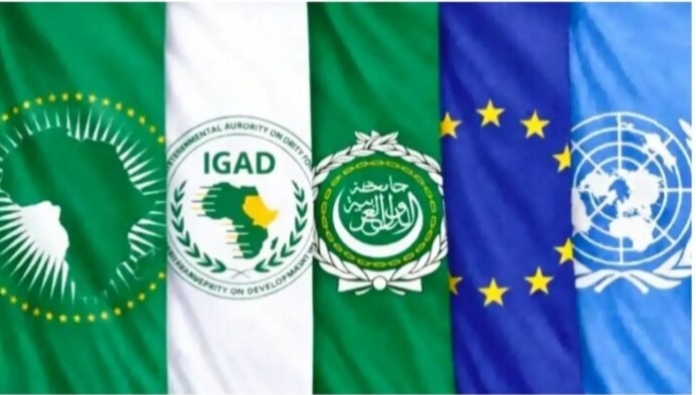
The Quintet Mechanism has informed a delegation from the “Tasis” Alliance that it does not recognize any parallel governing authority in Sudan, stressing that the international position does not include recognizing entities that challenge the legitimacy of the existing Sudanese government, according to sources close to the mechanism who spoke to Sudan’s Al-Mohagig news agency.
The sources said the position was conveyed during talks between the two sides on Wednesday in the Ethiopian capital, Addis Ababa. The meeting addressed the nature of the mechanism’s engagement with the alliance, against the backdrop of previous objections by “Tasis” to the Quintet delegation’s visit to Khartoum last September.
They added that the mechanism made clear to the delegation that its position on the Sudanese government had not changed, noting that it had previously reaffirmed its recognition of the government in response to the alliance’s refusal to receive its mission in Khartoum.
The Quintet Mechanism comprises the African Union, the United Nations, the League of Arab States, the Intergovernmental Authority on Development (IGAD), and the European Union.
The sources also revealed differences among the mechanism’s member organizations over holding the meeting with the alliance. They indicated that the United Nations and the European Union agreed to the meeting, while the African Union Commission, IGAD, and the League of Arab States did not support the move, citing their position of non-recognition of the entity.
The League of Arab States did not participate in Wednesday’s meetings in Addis Ababa, according to the same sources.
In a related development, the sources reported that Sudanese political forces are considering withdrawing from the Quintet Mechanism’s meetings if engagement with the “Tasis” Alliance continues in its current form.
These considerations come amid objections to the mechanism’s meetings with the alliance and concerns among those political forces that continued engagement could lead to treating it as a recognized political stakeholder and representative in any future arrangements concerning Sudan.