Sudan: From Diagnosing the Crisis of the State to Shaping the Future
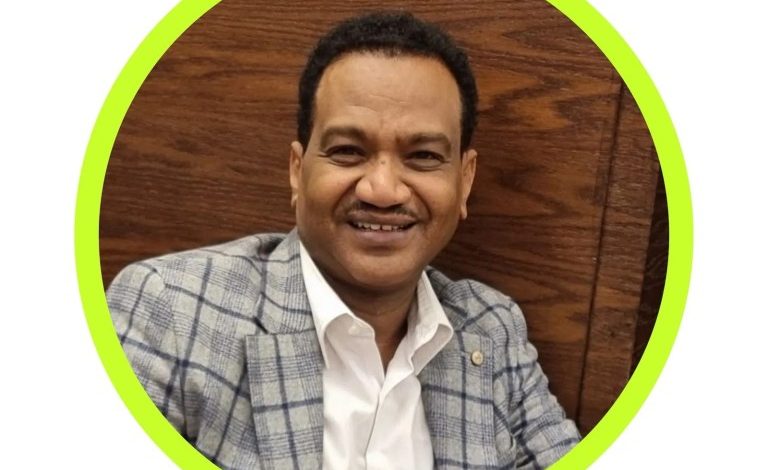
Dr. Osama Mohamed Abdelrahim
Seven decades of independence have passed, during which successive governments have come and gone, systems of government have changed, and revolutions, coups, agreements, and political settlements have multiplied. Throughout this period, Sudan has continued to search for a stable formula for governing the state, accommodating its diversity, harnessing its resources, and building its future. With every political transformation, hopes have been renewed of overcoming the failures of the past, only for the country to return to the same cycles of conflict and instability. This continued until the crisis reached its peak with the outbreak of war on April 15, 2023, which placed the very existence, unity, and sovereignty of the state before an exceptionally grave historic test.
Against this background, we previously published a series of fifteen articles in Mawti’ Qalam, examining the crisis of the Sudanese state in its historical roots and its political, military, institutional, economic, and social dimensions. Through these articles, we sought to explore possible pathways for overcoming the crisis and developing a national vision capable of incorporating the lessons of the past while responding to the demands of the future. Today, we conclude this series with a comprehensive article that brings together its most significant themes and intellectual and strategic conclusions.
The central premise underpinning these articles was that Sudan’s crisis goes beyond the struggle for political power to encompass profound structural imbalances in the foundations of the state and the management of its affairs. Since independence, competition for power has dominated much of the attention of political forces and national elites, while issues relating to institution-building, constitutional stability, the distribution of power and wealth, and the relationship between the state and society have remained deferred or subordinated to the requirements of successive political settlements. As a result, rulers have changed while the structural deficiencies of governance have persisted; governments have succeeded one another while the state’s crises have continued; and problems have accumulated to the point where each political era inherits the failures of its predecessor while adding new burdens of its own.
The proliferation of armed power centres has been one of the most dangerous manifestations of this imbalance. The emergence of multiple military formations with different chains of command, loyalties, and sources of funding has weakened state authority, threatened national unity, and created a duality in security and military decision-making. Sudan’s experience has underscored the necessity of the state exercising its legitimate monopoly over the use of force and establishing a unified, professional defence and security system governed by law and constitutional authority, and operating according to an inclusive national doctrine. It has also highlighted the importance of regulating the relationship between the military institution and political authority, clearly defining the responsibilities of each, in a manner that preserves the unity and professionalism of the armed forces while laying the foundations for legitimate civilian governance based on the will of the people.
On the political front, Sudan’s experience has exposed a profound crisis in the performance of its political parties and elites, associated with weak internal democratic practices, limited policy programmes, the personalization of leadership, and the prioritization of organizational interests and short-term calculations over the requirements of nation-building. The civilian and military leaders who have successively administered the state bear varying degrees of responsibility for the failures of this experience, according to their actual roles, decisions, and practices. This makes an objective reassessment of the country’s history of governance essential, free from selectivity in assigning responsibility. Reforming political life requires renewing leadership, developing party practices, entrenching a culture of accepting differences, and subjecting competition for power to stable constitutional rules that make recourse to the popular will the legitimate means of assuming and transferring power.
Sudan’s experience with peace has also demonstrated the limitations of agreements that focused on sharing power and wealth and accommodating armed leaders without adequately addressing the structural causes of conflict. Some of these settlements created political and economic incentives to take up arms, as access to positions and privileges became linked to the ability to impose demands through force. Sustainable peace therefore requires distinguishing between the legitimate rights of communities and the privileges extracted by armed leaders; addressing grievances arising from marginalization and uneven development; closing the door to the use of violence as a means of gaining power; and strengthening civilian and constitutional mechanisms for resolving disputes and addressing demands.
Closely related to this is the constitutional and governance crisis. Sudan has long lacked a stable national consensus on the rules governing relations among the branches of government, between the centre and the regions, and between the state and its citizens. Constitutional documents have succeeded one another in response to political transformations and shifts in the balance of power, undermining institutional stability and creating broad opportunities for the overstepping of mandates and the imposition of competing political wills. Overcoming this crisis requires establishing a constitutional foundation that reflects the will of the Sudanese people, defines the nature of the system of government, guarantees the separation and balance of powers, ensures judicial independence, protects rights and freedoms, provides for the equitable distribution of resources and responsibilities, and safeguards the continuity of state institutions through political transitions.
Justice occupies a fundamental position in this national project, given the violations, grievances, and human and material losses left behind by successive wars and conflicts. Addressing this legacy requires establishing the truth, determining responsibility in accordance with the law and available evidence, delivering justice to victims, providing reparations, restoring rights and property, and rebuilding trust among the various components of society. Accountability should also be integrated with community reconciliation within a framework that protects rights and upholds human dignity, while preventing impunity, revenge, and collective punishment. Justice is a cornerstone of restoring the legitimacy of the state and a safeguard against the recurrence of violations and the resurgence of conflicts.
The war has also exposed the dangers of economic interests that emerge in conflict environments and expand through armed control over resources, smuggling, looting, illegal levies, monopolies, and financing and supply networks. The war economy becomes particularly dangerous when its revenues are transformed into sources of funding for the continuation of conflict and the protection of centres of influence. Restoring the state’s economic sovereignty therefore requires consolidating its authority over national resources, subjecting revenues and expenditure to oversight, dismantling illicit financing networks, redirecting the economy towards production, development, and reconstruction, and building economic and social interests that benefit from the sustainability of peace and stability.
At the heart of all these crises lies the issue of citizenship and national identity. The prioritization of tribal, regional, and partisan loyalties over national belonging has contributed to weakening social cohesion and, at times, turning Sudan’s diversity into an instrument of polarization and conflict. Building a national state requires restoring the principle of equal citizenship, safeguarding cultural and social diversity, and ensuring fairness in opportunities, services, and development. This would make belonging to Sudan an overarching framework that embraces all other affiliations, while transforming state institutions into a common reference point for all citizens, regardless of their origins, regions, beliefs, or political affiliations.
Today, all these issues converge around a critically important strategic challenge: how to transform the military successes achieved by the armed forces into a sustainable political and institutional victory. Reclaiming territory and securing it opens the way for consolidating security, restoring public services, reforming public administration, establishing national political legitimacy, and managing an orderly transition culminating in constitutional foundations and popular mandate. It also requires rebuilding foreign relations on the basis of sovereignty, mutual interests, and independent national decision-making.
An awareness of the nature of this phase demands that preparations begin now for a national post-war project, so that once the military victory is complete, the state will have a political vision and an institutional and economic programme capable of implementation. This would help the country avoid falling once again into a vacuum of vision and the improvisation of decisions under the pressure of unfolding events.
Perhaps the most important intellectual conclusion emerging from this series is that Sudan’s crises are interconnected within a single, interdependent system. Weak institutions fuel instability in governance; instability in governance allows centres of influence to expand; fragile citizenship and deficiencies in justice lead to renewed conflicts; and wars create economic and political interests that benefit from their continuation. This interconnectedness reveals the limitations of partial solutions and underscores the necessity of adopting a comprehensive national project that addresses the underlying causes of recurring crises.
Sudan possesses human and natural resources, a strategic geographical location, and economic potential that qualify it to build a strong and stable state. However, the effective management of these assets remains contingent upon reforming the foundations of governance, renewing institutions, opening the way for national talent and younger generations, and developing the political will necessary to transform visions into policies and policies into tangible improvements in the lives of citizens.
Out of concern for Sudan and its future, the advice we should all share, as leaders, institutions, political forces, elites, and members of society, is that we rise to the level of the sacrifices made by this people and fully appreciate the enormity of the responsibility our generation bears towards future generations.
Everyone entrusted with public responsibility, or engaged in political, military, or intellectual leadership, should remember that Sudan has paid, in the blood of its sons and through the depletion of its resources, a price that leaves little room for another historic failure. The country needs wisdom, selflessness, humility, and the courage to reassess past experiences more than ever before.
The responsibility of leadership demands that state-building be placed above calculations aimed at remaining in power. The honour of military service requires preserving the unity, professionalism, and national standing of the military institution. Political forces and elites have a duty to reassess past experiences, renew their practices, and place the public interest above all else. Society, meanwhile, bears the responsibility of safeguarding its unity, rejecting polarization, and refusing to resort to arms.
Let loyalty to Sudan be greater than loyalty to individuals and organizations, and let protecting its future take precedence over preserving the privileges of the past. The time has come for this nation to find relief from improvised experiments and settlements that merely reproduce its crises.
Sudan has paid an enormous price in the lives, security, and stability of its people, as well as in its national resources, for failures that accumulated over decades. Future generations now have the right to inherit a country that has overcome its crises, absorbed the lessons of its history, and made effective use of its potential.
Perhaps the greatest tribute to the sacrifices of the Sudanese people would be to transform their suffering into a new national consciousness, make their resilience the foundation of a comprehensive national renaissance, and ensure that their victories lay the groundwork for a state governed by the rule of law, where human dignity is protected, institutions are stable, and opportunities for a better life and renewed hope are expanded.
Sudan, having spent seven decades searching for stability, deserves to devote its coming decades to building its renaissance. Its people must turn the page on struggles over control of the state and open, together, a new chapter of working for the state and its future.