A War Without Victory?! What Sudan Needs Goes Beyond Yet Another “Dialogue”
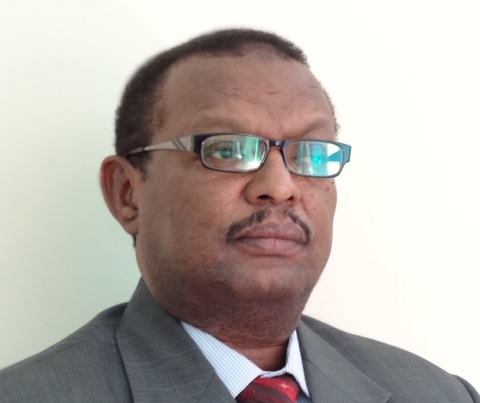
Khalid Al-Tijani Al-Nour
More than three months have passed since the announcement by the President of the Sovereignty Council and Commander-in-Chief of the Armed Forces of an initiative by a national group to launch an “inclusive dialogue.” I had intended to write an article assessing the progress made so far by the Dialogue Preparatory Committee. However, before doing so, I decided to republish this article, which originally appeared in this column on August 20, just one week after General Abdel Fattah al-Burhan’s announcement.
At the time, one prominent member of the committee commented that I had been too hasty and urged me to remain optimistic. But has anything happened since then to justify the respected member’s optimism? I will address that question in a forthcoming article, God willing. In the meantime, I invite readers to be patient and revisit this article before proceeding to the next one.
1
As soon as reports began circulating in the public domain about the intention of the President of the Sovereignty Council and Commander-in-Chief of the Armed Forces to launch a “dialogue” subject to certain “specifications and procedures,” reportedly disclosed by individuals who publicly attributed these statements to him, the political scene became dominated by heated debates in various quarters over his intentions and the arrangements he sought to put in place.
Since presidential spokespersons did not issue any statements denying the reports circulated by those described as “close associates,” it became increasingly clear that these leaks were essentially “trial balloons” intended to gauge public reaction before General Abdel Fattah al-Burhan formally announced the call for “dialogue” during the Army Day celebrations marking the seventy-second anniversary of the Sudanization of its command.
What was particularly striking in the speech was the detailed response to the criticisms and questions raised by his opponents in reaction to those leaks, especially concerning the issue of “amnesty.” This confirms that the leaks did not emerge by coincidence or simply at the initiative of those who circulated them.
2
The foregoing observation is not merely a formal detail. Rather, it constitutes a fundamental starting point, alongside other observations that we shall address in turn, for examining and analysing the agenda behind this “presidential” call for “dialogue” and the outcomes to which it may lead.
The central question is whether, in its current “design,” this initiative will genuinely lead to a better future for Sudan and its people, one characterized by security, peace, and stability, or whether it will reproduce the pattern of “revolving-door dialogues” through which the country continues to endure the consequences of deadlocked political processes, as evidenced by the persistence of wars and entrenched governance crises.
Sudan’s political memory contains an almost incalculable variety of initiatives, negotiations, and solemn covenants among different political parties over the eight decades extending from the Juba Conference of 1947 to the present day, and everything in between.
Ironically, most of these initiatives were conducted under foreign auspices, until Sudan became “the world’s basket of initiatives,” after having once been expected to become “the world’s breadbasket.”
And yet, despite all this, their common pattern was one of “persistently breaking pledges and covenants.” This is an evocative translation by Professor Bashir Mohamed Saeed of the complaint voiced by Judge Abel Alier about the repeated violation of agreements, a grievance he made the title of his famous book on the South Sudan question.
3
The existential threat facing Sudanese society and the state today is more dangerous than any of the threats that have previously confronted the country in different historical periods. The inability to address those threats through effective and decisive solutions allowed the causes of weakness to accumulate and the same mistakes to be repeated, leaving the country trapped in a cycle of continuous instability.
It is true that the country has been subjected to an unprecedented act of overt foreign aggression, one that requires no further evidence to establish. There is no longer anything that can be described as a concealed conspiracy. Everything has become common knowledge, supported by independent sources as well as evidence from developments on the ground. Confronting this aggression was an obligation incumbent upon every Sudanese citizen.
Numerous institutions of the state and segments of the population rose to the challenge of repelling it, making enormous sacrifices in the process. Nevertheless, if we are to diagnose the causes of our crisis in all their dimensions, we must not rely exclusively on the external factor while overlooking the fact that foreign intervention would not have found repeated opportunities to interfere in the country’s affairs, to the extent of seeking to seize control of the state itself, had it not been for the fragmentation of the domestic front, the disintegration of the political class, and the futile struggle for power.
4
To ensure that this does not become a war without victory, we must recognize that a complete victory does not simply mean repelling aggression on the battlefield. Nor should it become an occasion for pride, a sense that the mission has been accomplished, self-congratulation, or calculations about personal gains.
True victory lies in drawing the necessary lessons and insights from the harsh experience of this major war, with all the human tragedies it has left behind, as well as from the lessons of previous conflicts. For decades, the country has moved from one armed confrontation to another, with each conflict revolving around the struggle for power, while ordinary people are the only ones who pay the price.
What Sudan and its people need, therefore, goes far beyond yet another “dialogue” that reproduces the same pattern of top-down discussions repeatedly generated from time to time. These dialogues have remained monopolized by a class of professional political operators who conduct their business within the confines of a political marketplace. They typically end in familiar deals, repeated so often that their formula has become predictable: dividing power and wealth among armed groups and their followers.
Before long, these alliances fall apart, and the conflict returns with even greater intensity and devastation. Those who orchestrated the arrangements escape unharmed, while ordinary citizens pay the price once again.
5
The question, then, is what has changed to make this call for dialogue different from the previous initiatives whose outcomes proved disastrous? What new content does it offer? What meaningful substance does it contain that suggests a different approach?
In reality, nothing indicates that we are witnessing a historic moment capable of inspiring a defining national mission or heralding a momentous role. On the contrary, the same unproductive scenarios that characterized previous dialogues appear to be taking shape once again.
It is unreasonable that an important and decisive undertaking, such as an initiative supposedly intended to serve as a lifeboat for the country, should be preceded by leaks containing proposals so lacking in objectivity, seriousness, and responsibility that some people regarded them as a joke rather than a serious proposition.
Making matters worse, these leaks provoked reactions that further poisoned an already tense political atmosphere.
6
The public sphere soon became engulfed in emotional reactions from various quarters, reflecting the familiar pattern of Sudanese “political” practice. Politics, as Al-Kawakibi defined it, should be the practice of “managing the common affairs of people through deliberation guided by wisdom.” Yet this is not how politics has been practised in Sudan.
Instead, it has been characterized by intense mutual polarization and the exclusion of others, as though it were an all-or-nothing struggle, waged under attractive slogans from the left, the right, and everything in between.
At times, even the use of political “signals” has become a means of securing the largest possible share of power and wealth and monopolizing them in favour of a privileged group within a class that has turned politics into a profession for “earning a living.”
Such politics operates as a “political marketplace,” governed by transactional arrangements, a model developed by Alex de Waal in his analysis of the persistence of Sudan’s crisis and its chronic wars.
7
Another notable feature of this dialogue initiative is the speculative manner in which it has been promoted.
In his speech, the Commander-in-Chief announced that “a national group has come together on its own initiative to launch a purely Sudanese dialogue initiative originating from within the country and encompassing all political and societal forces.”
There is no doubt that it is commendable for a group of concerned citizens, genuinely committed to public affairs, to come forward to undertake such a noble mission.
However, this group would have served its purpose more effectively, and in a manner both necessary and urgent, had it first addressed the Sudanese people, who are the rightful owners of the country and the ultimate authority in determining its future.
It should have presented its vision for the initiative in the public domain, explaining the mechanisms through which it intends to achieve its objectives by building an inclusive national consensus capable of ensuring lasting security, peace, and stability throughout the country.
Only then should it have approached all the relevant stakeholders invited to participate in the dialogue on an equal footing, allowing those concerned to respond, at least in principle, to its invitation. It could subsequently have proceeded to examine the necessary guarantees and arrangements for creating an environment conducive to the dialogue’s success.
8
I do not understand how such an obvious and fundamental matter could have been overlooked: the need for the group to take the initiative in developing a carefully designed “smart communications strategy” to explain its mission and introduce itself before embarking on an undertaking of such importance, particularly in a political environment plagued by intense polarization, mutual exclusion, and deep mistrust.
The cornerstone of this mission is complete confidence in the group’s independence.
There is little doubt that the group’s apparent willingness, if the reports are accurate, to leave the official announcement of the initiative to the President of the Sovereignty Council and Commander-in-Chief of the Armed Forces raises numerous questions about the wisdom of such a decision, as well as serious doubts about the group’s actual independence.
To this day, the group has not come forward to address public opinion, leaving the matter open to further speculation.
General al-Burhan certainly made an effort to emphasize the group’s “independence,” but this alone is insufficient to establish its independence, whether in the eyes of public opinion or among the parties concerned.
The group’s absence from the public sphere will make its future task more difficult. Correcting this situation will not be easy, because the initial impression it allowed the holder of power to create will remain deeply entrenched: that the group is merely an extension of his own authority.
Furthermore, the argument that the authorities must provide guarantees for dialogue participants or logistical support should have come only after the group had established public confidence in the initiative’s credibility, foundations, and independence. Such arrangements should have followed as a response to the government’s demonstrated seriousness in accepting the initiative.
9
Another matter appeared explicitly in General al-Burhan’s speech. He stated:
“As for political affairs, and in recognition of the national and sectoral forces that supported the Sudanese state and upheld its unity and institutions, I have begun discussions with them regarding their participation in completing the state’s governing institutions, namely the Legislative Council. This is a constitutional entitlement. These forces, alongside the Armed Forces and the entire Sudanese people, have paid a heavy price and stood shoulder to shoulder with the Armed Forces.”
What is striking is that he made this statement before discussing the “national group’s initiative.”
Does this mean that there is another form of dialogue specifically intended for these “national and sectoral forces that supported the state,” with the aim of involving them in the “institutions of governance”?
Has the matter become a race to secure seats on the train of power, reassuring those already on board before others arrive and compete with them for space?
And does standing alongside the Armed Forces in preserving the very existence of the state entitle those who performed this duty to a political reward?
10
There is no doubt that Sudan needs something far beyond a superficial dialogue designed to appease one party and reward another, while monopolizing the process in the hands of parties, none of which possesses a genuine popular mandate to decide the country’s future on behalf of its people.
Unfortunately, the confused manner in which this necessary dialogue has been presented offers little indication that its outcome will be any different from those that preceded it.
There will be celebrations, documents will be signed, photographs will be taken, and the spoils of power will be divided. It will amount to little more than a temporary respite for the political combatants.
So, what is the way forward?
That is what we hope to address in a forthcoming article, God willing.