Hunger Rises and Graves Expand in Besieged El Fasher, Sudan
Sudan Events – Agencies
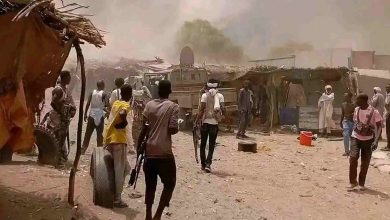
Food supplies are running out for hundreds of thousands of people trapped in the last Sudanese army stronghold in West Darfur, as they endure relentless artillery and drone strikes. Those fleeing the city face the twin threats of cholera and violent attacks.
El Fasher, the capital of North Darfur, is now the largest remaining frontline between the Sudanese army and the paramilitary Rapid Support Forces (RSF), locked in a pivotal battle in a civil war entering its third year.
“RSF artillery and drones bombard El Fasher morning and evening,” one resident told Reuters. He added that power had been completely cut off, bakeries shuttered, and medical supplies depleted. “The number of people dying increases every day, and the cemeteries are expanding,” he said.
The war between the Sudanese army and the RSF erupted in April 2023, after the two former allies clashed over plans to integrate their forces. The RSF made rapid gains in central Sudan, including the capital Khartoum, but the army has pushed them westward this year, intensifying the battle for El Fasher.
If the city falls, the RSF would control nearly all of Darfur—a vast region bordering Libya, Chad, the Central African Republic, and South Sudan—paving the way for what analysts warn could be the de facto partition of Sudan.
Hundreds of thousands of El Fasher’s residents and internally displaced people—many already sheltering in camps after earlier attacks—are trapped by the fighting. Observers say many of these camps are already suffering famine-like conditions.
“Hunger is a bigger problem than the shelling,” said a doctor, who requested anonymity for safety reasons. “Children are malnourished, adults are malnourished. Even I did not have breakfast today because I couldn’t find anything.”
Residents said the RSF has blocked food supplies, while aid convoys trying to reach the city have come under attack. Traders able to smuggle goods in are charging more than five times the national average.
Many people have resorted to eating straw or ambaz, a livestock feed made from peanut husks, residents told Reuters. An advocacy group said even ambaz is running out.
The RSF—whose origins lie in the Janjaweed militias accused of atrocities in Darfur in the early 2000s—did not immediately respond to requests for comment.
Flight and Peril
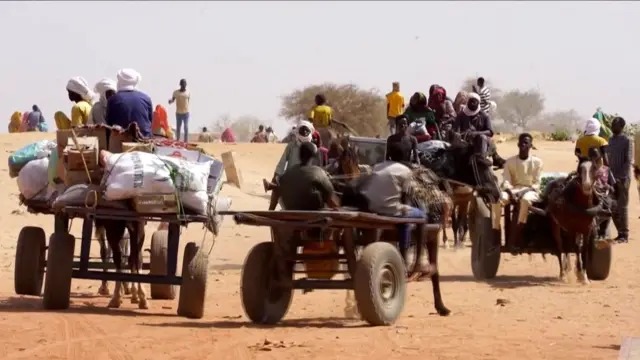
Many of those fleeing El Fasher have sought refuge in Tawila, about 60 km (40 miles) to the west. Some told Reuters they were attacked by RSF fighters along the way.
“We first fled to the village of al-Shaqra before reaching Tawila, and they attacked us again,” said 19-year-old Enam Abdullah. “If they find your phone, they take it. Money—they take that. A donkey or anything else—they’ll take it. They killed people in front of us and abducted girls in front of us.”
On Monday, Emergency Lawyers, a human rights group, reported that at least 14 people fleeing El Fasher were killed and dozens wounded when they were attacked in a village along the road.
Tawila is hosting more than half a million displaced people, most of whom arrived since April, when the RSF stepped up its assault on El Fasher and attacked the vast Zamzam displacement camp south of the city.
But Tawila offers little in the way of shelter or aid, with humanitarian agencies struggling after deep cuts in international funding. New arrivals told Reuters they receive only small and inconsistent rations of grains such as sorghum and rice—insufficient for survival.
Sudan is now in the midst of the rainy season, which, combined with poor living conditions and inadequate sanitation, has fueled a cholera outbreak.
Since mid-June, Médecins Sans Frontières (MSF) has treated 2,500 cases of cholera, a spokesperson told Reuters. Around 52 people have died of the disease, according to the Displacement Coordination Committee, a Sudanese advocacy group operating across Darfur.
Vaccines that could help curb the outbreak, even if secured, will take time to arrive due to heavy rains.
A Norwegian Refugee Council assessment found that only 10% of people in Tawila had reliable access to water, and even fewer had access to toilets. Most families reported eating one meal a day or less, the organization said.
“We have no homes to protect us from the rain, no cloths,” said Huda Ali, a mother of four, as she sat among roofless shelters made of straw. “We have to wait until the rain stops before the children can sleep.” She said she tried to ensure her children washed their hands and ate only properly cooked food.
Last month, the United Nations called for a humanitarian pause in the fighting in El Fasher with the onset of the rainy season, but the RSF rejected the appeal.
Meanwhile, clashes have also intensified in Kordofan, bordering Darfur, as both sides fight to carve out areas of control amid faltering mediation efforts.