Atar Forum: Sudanese Journalism Amid Conflict and Its Professional and Financial Independence
Sudan Events – Agencies
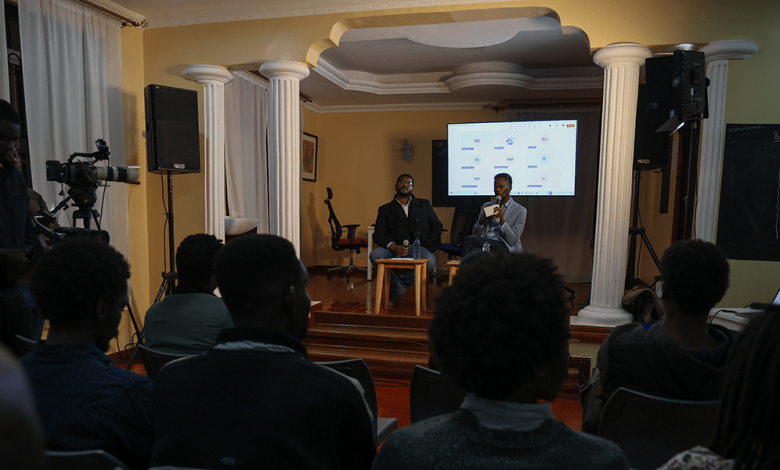
The forum “Sudanese Journalism Amid Conflict and Its Professional and Financial Independence” was held on Tuesday, July 22. It was organized by the Facts Center for Journalism at its Nairobi office and brought together media institutions and individuals interested in journalism. This was the second forum organized by the center, following the earlier event titled “Sudan’s War: How Has the Livestock Sector Been Affected?”
The discussion featured three speakers: Aref Al-Sawi, editor-in-chief of Atar magazine (speaking from the forum hall), Osman Fadlallah, editor-in-chief of New Horizon, and Adam Mahdi, executive director of Darfur24, who joined via Microsoft Teams. Their talks focused on the state of Sudanese journalism during wartime and its sources of funding.
The session was moderated by Hatem Al-Kinani, managing editor of Ater, who opened with remarks on the plight of Sudanese journalists, noting that many found themselves without work or protection as a result of the conflict. He stressed the need for collective reflection on the challenges facing the Sudanese press, before giving the floor to the speakers.
How did these platforms emerge?
The speakers began by outlining the origins of their outlets. Al-Sawi said the idea behind Ater predated the war, as an attempt to address long-standing problems in Sudanese journalism rooted in restrictions imposed by the Bashir regime. The magazine grew out of earlier research and training efforts, including a fellowship program that trained four cohorts of journalists—two before the war and two after Ater launched in October 2023.
Mahdi explained that Darfur24 had turned to digital journalism at its founding in April 2016, though it also maintained an office in Nyala. It only became an exile publication after the war. He said the Sudanese press had long been overly centered on Khartoum, and that a real understanding of Sudan required broader coverage, prompting them to focus heavily on Darfur.
By contrast, Fadlallah said New Horizon emerged entirely after the war, making it an exile publication from the outset. A group of journalists, he explained, had asked themselves what they could do in wartime. Through a workshop, they decided to build an independent platform dedicated to explanatory rather than straight news journalism. They secured limited funding from business figures and colleagues, which, though insufficient, allowed them to continue publishing.
How should journalism deal with war?
The speakers discussed the particular pressures of wartime reporting: heightened social tensions, difficulty separating personal political positions from professional coverage, the risks of remote work, and the safety of journalists still on the ground.
Al-Sawi said Ater had anchored its editorial stance in verified facts, prioritizing local news as a lens through which to understand Sudan. Mahdi said Darfur24 had taken the same fact-based approach, adopting a method where journalists report all sides of the conflict from an independent position, regardless of personal views. He emphasized the importance of covering events from across Sudan despite the dispersal of staff. Fadlallah stressed that New Horizon focused on protecting field reporters and maintaining a responsible editorial line, steering clear of rumors and sensationalist news that misrepresented the reality on the ground. He also underscored the need to think about reviving print journalism.
Where does journalism get its money?
Funding and independence were major points of debate. Al-Sawi argued that financing has always been a dilemma for Sudanese media, with two main sources: private sector or foreign aid. He noted that foreign funding does not necessarily impose a direct agenda but can subtly shift priorities toward political or advocacy campaigns. The private sector, he said, has been even more intrusive, dictating coverage more heavily than foreign donors. For him, the solution lies in a collective professional commitment to independence, which strengthens the bargaining position of journalists with any funder. He suggested possible revenue streams, such as producing special commissioned reports or paid content.
Mahdi argued that most Sudanese outlets historically served the ruling party or its affiliates, a situation common across the Middle East. He said private-sector support for journalism was nearly nonexistent, with business elites preferring to fund sports. Journalists, he said, must find ways to persuade private capital to back independent media. On foreign funding, he noted the stigma of being labeled spies or agents, but maintained that domestic financing was often worse.
Fadlallah pointed out that investors seeking financial returns in media had largely disappeared since the war began. The remaining funders were either aligned with a warring faction or committed to building alternative, independent media—though the former had far greater resources. New Horizon, he said, compiled a list of like-minded individuals, including some businessmen, and ultimately secured backing from 25 people. He urged journalists to explore innovative financing methods, citing audiovisual media as one option despite the challenges of reaching audiences with purely political content. For him, journalism now faces not only a funding crisis but an existential threat.
Audience interventions
Participants offered suggestions, including the use of crowdfunding platforms to overcome financial shortfalls, noting that this would require wide-scale outreach. Another proposal was for media institutions to consider mergers to expand capacity and reach. Others raised the importance of preserving Sudan’s press archives and studying post-war developments. Several participants highlighted best practices, such as drafting clear editorial policies, ensuring fair pay for journalists, providing adequate training, and working to build larger, more resilient media institutions.
Source: Atar