State Gold… Drugs of the War Economy… The Gulf Opportunity
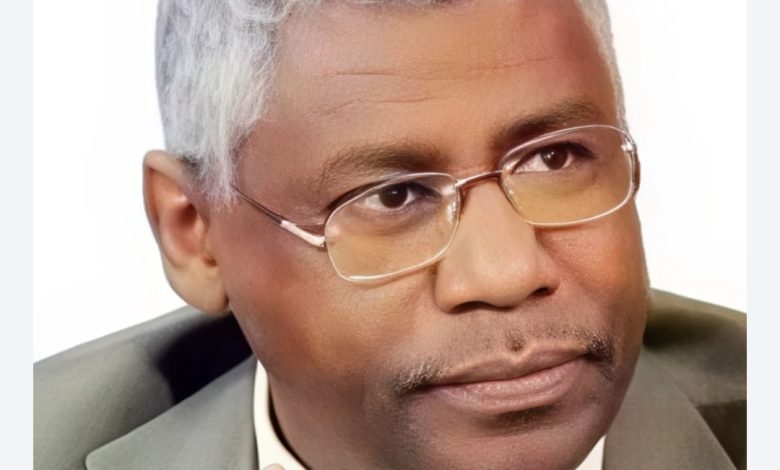
As I See
Adel El‑Baz
1. The State’s Gold
Three government entities are currently engaged in commercial dealings in gold: companies affiliated with the army, companies linked to the security services, and the Central Bank of Sudan—Bank of Sudan.
It is well known that the central bank now purchases gold from the market through companies belonging to the army and the security services. The aim is to build reserves that could help stabilize the exchange rate, serve later as external collateral when required, or even be used directly to purchase weapons, as reportedly happened in some transactions with Turkey.
What puzzles me, however, is a simple question: where does the gold belonging to state-owned companies go?
These companies have now taken control of mines that were previously under the authority of the Rapid Support Forces. Do these companies export their gold? And the gold they buy from the local market—where does it go? Is it exported? Stockpiled? Or allocated for their own internal needs?
Of course, I would rather not even contemplate the possibility that the revenues are transferred to the Ministry of Finance—an institution that may well know the answers but prefers the safety of silence.
2. Drugs… The War Economy
A report recently issued by the Sudan Transparency and Policy Tracker caught my attention. It examines Sudan’s dangerous transformation during the war that erupted in April 2023—from merely a transit corridor for narcotics into a regional hub for their manufacture and trafficking.
According to the report, the collapse of the captagon industry in Syria by the end of 2024 pushed international networks to relocate their operations to Sudan, taking advantage of the chaos of war. Production capacity, the report says, jumped from around 7,200 pills per hour to nearly 100,000 pills per hour in laboratories equipped with machinery worth millions of dollars.
The report identifies four major types of narcotics now dominating the landscape:
Captagon: The most prominent synthetic drug. Sudan has become a center for its production and export to Gulf states via the Red Sea. It is widely used among fighters to suppress hunger and maintain alertness during combat.
Cannabis (locally known as banjo): The most widespread substance domestically, with cultivation concentrated in the Radom reserve area, reportedly under the control of the Rapid Support Forces.
Shashmandi: An Ethiopian narcotic smuggled across the eastern border, favored by some students because it is cheap and does not produce a strong odor.
Methamphetamine (Crystal Meth or “Ice”): A highly dangerous stimulant entering the country through Port Sudan. Authorities in Red Sea State reportedly seized more than half a ton of the drug during 2026.
The report warns that these poisons have become embedded in the war economy, serving as a crucial source of funding for armed militias amid the near-total absence of effective security and judicial oversight.
Economic collapse and deep psychological trauma have also pushed many young people—even children as young as twelve—toward addiction as an escape from the harsh realities of war.
Sudan now faces the risk of evolving into an emerging “narco-state” unless regional and international efforts are coordinated to dismantle these networks.
But one question comes to mind: to whom was this report actually sent?
To the anti-narcotics administration?
Surely they already know—and they have tons of drugs… I mean, information.
To the police?
The police have not been idle; they reportedly seized 700 kilograms of narcotics just last month.
To the government?
Perhaps.
But only after some of it sobers up from the narcotics.
3. The Gulf Opportunity
Away from this bleak picture, a significant economic opportunity may be passing before our eyes unnoticed.
Has any state institution studied how Sudan could benefit from the current war in the Gulf?
All indicators suggest that food supply chains in the Gulf will face serious disruptions because of the war—particularly those linked to Europe, East Asia, and Iran, which together supplied more than 30 percent of food needs in some Gulf countries.
This disruption will almost certainly push food prices sharply upward.
Ironically, most of these food commodities are available in Sudan.
Moreover, supply routes between Sudan and the Gulf remain open and largely unaffected by the war.
For this reason, I propose that the Sudanese Businessmen’s Federation urgently form a committee to assess the needs of Gulf markets and immediately reach out to major food importers there, many of whom are currently facing uncertainty due to their contractual obligations.
If Sudan presents itself as an alternative supplier at this moment, it could achieve substantial economic gains—and more importantly, establish a permanent foothold for Sudanese products in those markets.
4. Conclusion
Sudan today stands before a stark paradox.
It is a country endowed with gold, vast agricultural land, water resources, and a strategic geographic location, yet it still struggles to convert these assets into real economic power.
Gold whose destination we do not know.
Drugs attempting to turn war into an economy.
And enormous opportunities in Gulf markets that may slip past us unnoticed.
The difference lies in the ability to manage these resources.
And Sudan—unfortunately—possesses abundant resources…
but is still searching for the management capable of using them.