The Dilemma of the U.S. Initiative in Sudan
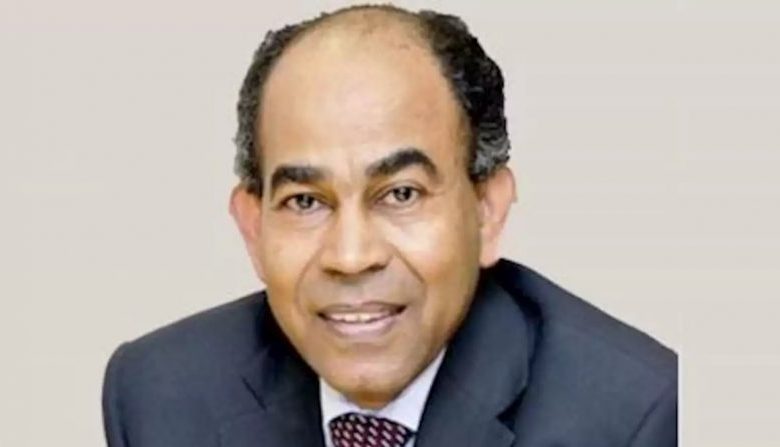
By Othman Mirghani
Sudanese people never tire of debating politics, nor do they ever stop doing so. This may well be one of the country’s political dilemmas—if not one of its curses. The endless arguments over every issue and every detail have turned politics into a difficult endeavor in Sudan, making consensus elusive. Political wrangling has become a defining feature of public life and a major obstacle to dialogue and stability.
It was therefore unsurprising that the leaked details of the U.S. proposal to end the war, the government’s response to it, and the conflicting accounts surrounding the meeting in Cairo between U.S. envoy Massad Boulos and Sovereignty Council member Lieutenant General Shams al-Din Kabbashi sparked intense controversy. Even after Washington denied reports suggesting that most elements of the plan had been accepted or that disagreements were limited to one or two points, the rumor mill continued to produce new narratives.
The government’s policy of silence undoubtedly created fertile ground for speculation. Transparency is essential, even when the nature of negotiations requires a degree of confidentiality regarding the details. Had the authorities simply acknowledged receiving the American proposals and announced that they were under review, much of the conjecture could have been avoided.
In reality, the information leaked about the initiative contains little that is fundamentally new. Most of its main provisions have been discussed before, and the U.S. envoy himself has referred to them in media interviews. If there is anything new, it lies in some of the details and in aspects of the responses to the proposals—matters that none of the parties has officially disclosed.
The central pillar of the U.S. plan is a 90-day humanitarian ceasefire. Under this framework, various arrangements are envisioned regarding reciprocal military withdrawals to facilitate the delivery of humanitarian aid, protect civilians and infrastructure, and establish monitoring and enforcement mechanisms. The plan also assumes that the ceasefire period would be used to pave the way for negotiations on a permanent cessation of hostilities, followed by a political process and national dialogue leading to the formation of a civilian government to oversee the transitional period and prepare for elections.
It is clear that the disagreement is not over the duration of the ceasefire or its broad objectives, but rather over what would take place during that period—particularly concerning the arrangements for military withdrawal, redeployment, and control on the ground. As Massad Boulos has explained on several occasions, the U.S. proposal calls for a ceasefire to take effect first, with discussions on withdrawal and redeployment arrangements to follow during the truce.
The Sudanese government’s position, however, as articulated by General Abdel Fattah al-Burhan and reflected in its own peace plan, insists that the Rapid Support Forces (RSF) must first withdraw from all cities and locations they occupied after the Jeddah Platform agreement of May 2023. Under this vision, RSF forces would then assemble at designated sites to prevent the ceasefire from becoming an opportunity for them to consolidate their positions, receive fresh supplies, and reorganize their ranks.
For its part, the RSF, despite signaling acceptance of most elements of the plan, appears firmly opposed to withdrawing from its current positions, viewing its military presence as the key to securing a role in any future political arrangements.
Is the U.S. Plan Different from the “Quad” Initiative?
Although American diplomatic efforts have dominated the scene, the proposal appears to be more of an extension of the “Quad” initiative than an entirely separate undertaking. The United States led the drafting of the plan and conducted direct negotiations with the Sudanese parties, but it continued to coordinate closely with the other members of the Quad. As a result, the broad principles have remained unchanged, while American efforts have focused on refining the details and attempting to bridge the differences between the parties.
What Are the Chances of Success?
Four possible scenarios can be envisioned.
The first is that developments on the ground make the current plan acceptable in its existing form. This appears highly unlikely, given the complexities surrounding military withdrawals and the even more sensitive question of the future of the RSF and whether any role for the force in the post-war order would be acceptable.
The second scenario involves introducing amendments that could render the plan acceptable to all sides. Yet this seems akin to squaring the circle, given the vast differences in positions regarding military arrangements.
The third scenario envisages a gradual approach, beginning with a limited ceasefire in some of the conflict’s hottest fronts—such as the city of El-Obeid—while opening safe humanitarian corridors and implementing confidence-building measures. This option may be plausible in light of mounting humanitarian and international pressure, but it is unlikely to achieve the breakthrough Washington seeks. Moreover, the continuation of military operations would remain a factor undermining its prospects for success.
The fourth and final scenario is the failure of the current initiative, as happened with previous attempts. In that case, the key question would be whether the U.S. administration possesses the determination and political will to continue its mediation efforts and search for new formulas, or whether its attention to other international crises and the approaching midterm congressional elections will push Sudan further down the list of priorities.
In any case, the future of the initiative will be shaped not only by developments in Washington, but also by events on the battlefield, where changing military realities could redraw the balance of power and impose entirely new equations.