UAE Nominee for UN Secretary-General Faces Criticism over Alleged Whitewashing of Abu Dhabi’s Crimes
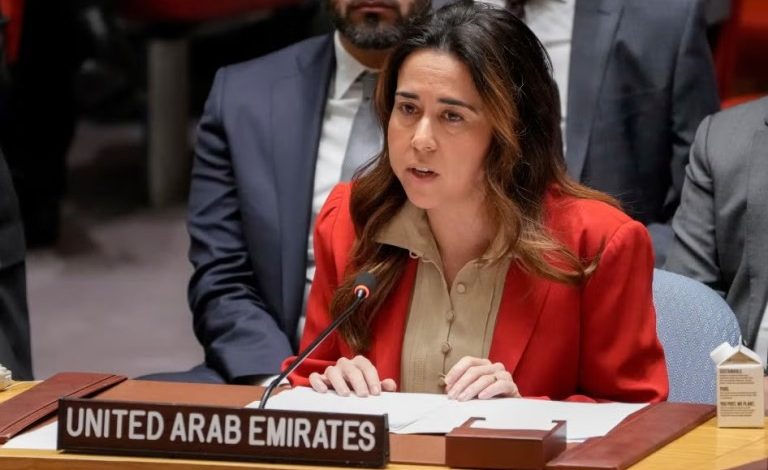
Human Rights Watch (HRW) said today that Lana Zaki Nusseibeh, a diplomat and longtime official at the United Arab Emirates Ministry of Foreign Affairs, has a record of denying and deflecting attention from human rights abuses committed by her country in Sudan and Yemen. On October 21, 2026, the UAE formally nominated Nusseibeh to become the next Secretary-General of the United Nations.
Bruno Stagno Ugarte, Chief Advocacy Officer at Human Rights Watch, said:
“For years, Lana Nusseibeh has used her position to vehemently deny and deflect attention from the UAE’s war crimes in Yemen and its support for the abusive Rapid Support Forces in Sudan. Her disinformation about the UAE’s human rights record, particularly her rejection of the UN’s own reports documenting the UAE’s links to the Rapid Support Forces, has seriously undermined justice for victims and accountability for perpetrators.”
Nusseibeh has repeatedly denied that the UAE provides military support to the Rapid Support Forces (RSF) in Sudan, while refusing to address clear evidence to the contrary. The RSF, which is engaged in a conflict with the Sudanese Armed Forces, is responsible for widespread war crimes and crimes against humanity as part of an ethnic cleansing campaign in the Darfur region. The United Nations Independent International Fact-Finding Mission for Sudan concluded that the RSF’s attack on the city of El Fasher “bore the hallmarks of genocide.”
In September 2024, Nusseibeh wrote in a letter to The Economist magazine that “the UAE does not provide weapons or any other support to the RSF or any of the warring parties in Sudan.” The letter followed the publication of the first report by the UN Panel of Experts on Sudan, which found “credible allegations” that the UAE was providing military support to the RSF through Chad.
A letter from the UAE government dated December 2023, attached to the report, claimed that flights from the UAE to Chad were intended to deliver humanitarian assistance to Sudanese civilians. The letter was unsigned but carried the letterhead of the UAE’s Permanent Mission to the United Nations in New York, which Nusseibeh headed during that period, from 2013 until April 2024.
In April 2024, in response to allegations by the Sudanese government that the UAE was providing military, logistical, and political support to the RSF, Nusseibeh issued a statement describing the allegations as “baseless” and affirming the UAE’s categorical rejection of what she called “false allegations.”
In July 2024, when CNN asked her whether the UAE was arming the RSF, she replied: “No, these allegations are completely untrue. As the UAE has done in countless places around the world when a humanitarian crisis occurs, it moved quickly to deliver humanitarian assistance and subsequently expanded its efforts.”
In November 2025, Nusseibeh, in her capacity as Minister of State, participated in an intensive UAE lobbying campaign targeting prominent members of the European Parliament. According to Politico, the campaign sought to promote the message that the UAE was “playing a constructive role in Sudan” ahead of a vote on a resolution condemning atrocities in the country.
The European Parliament adopted the resolution without mentioning the UAE’s role in the conflict. Several parliamentary sources told Euronews that Nusseibeh had “personally lobbied members of the European Parliament in Strasbourg to influence the content of the resolution.”
In a subsequent resolution adopted in July 2026, the European Parliament criticised the UAE’s role in supporting the RSF and called for sanctions against a UAE-based company involved in recruiting mercenaries and transporting them to the force.
A Human Rights Watch report published in May 2026 concluded that Colombian private military contractors, allegedly hired by a UAE-based company, had passed through UAE military bases before being deployed to Sudan to support and fight alongside the RSF. Their deployment was particularly significant during the force’s takeover of El Fasher, the capital of North Darfur, during which the RSF committed multiple massacres, widespread sexual violence, and mass kidnappings for ransom.
Human Rights Watch also presented additional evidence that the UAE had provided substantial assistance to the RSF, contributing in various ways to its capacity to commit war crimes.
In August, the United Nations Independent International Fact-Finding Mission for Sudan issued a report confirming these findings. It concluded that “individuals and entities operating from, registered in, or linked to the United Arab Emirates played an important role in networks involved in recruiting, financing, transporting, and deploying foreign military contractors, as well as providing military-related support from which the RSF benefited.”
The mission referred to “multiple sources” indicating the presence of Colombian fighters in and around El Fasher before, during, and after its capture. The mission had previously concluded that this operation “bore the hallmarks of genocide.”
Human Rights Watch has also documented the RSF’s use of military equipment, including Serbian-made munitions used to equip attack drones, which had originally been sold to the UAE Armed Forces.
On October 27, during an interactive dialogue with UN member states and civil society organisations, Nusseibeh was questioned about her rejection of the findings of both the UN Panel of Experts on Sudan and the UN Fact-Finding Mission for Sudan.
She did not directly answer a question about whether she would “continue rejecting the findings of the very organisation she seeks to lead.” Instead, she said that she had taken leave from her position as a UAE minister and that she would refer any questions concerning the UAE to her country’s government.
In her capacity as the UAE’s Permanent Representative to the United Nations, Nusseibeh repeatedly defended the country’s compliance with international law during its intervention in Yemen, while rejecting evidence of widely documented violations.
Since March 2015, the UAE has played a prominent role in a coalition of countries conducting military operations in Yemen. Its involvement included deploying more than 30 fighter jets for airstrikes, providing naval vessels to enforce the coalition’s naval blockade, and supporting abusive local forces.
In 2016, Human Rights Watch documented 58 unlawful airstrikes by the Saudi- and UAE-led coalition, which killed nearly 800 civilians and targeted homes, markets, hospitals, schools, businesses, and mosques. The organisation also documented the coalition’s use of cluster munitions.
In August 2016 and May 2018, Nusseibeh issued statements defending the UAE’s actions in Yemen, claiming that the UAE “takes its responsibilities under international humanitarian law and the protection of civilians in Yemen seriously.”
The 2018 statement was issued just months before the UAE ordered humanitarian organisations in the coastal city of Hudaydah to evacuate, despite the enormous humanitarian needs there, as the Saudi- and UAE-led coalition sought to wrest control of the city from the Houthis.
In 2021, the UAE, alongside Saudi Arabia, led a successful lobbying campaign to terminate the mandate of the Group of Eminent Experts, an impartial and independent international body established by the UN Human Rights Council to document human rights violations and abuses in Yemen.
Stagno Ugarte said:
“For more than a decade, Lana Nusseibeh has consistently sought to whitewash the UAE’s abusive role in Yemen and Sudan, portraying her country as a humanitarian actor despite mounting evidence of its role in fuelling violations.
“Having rejected and undermined the findings of UN reports, Nusseibeh should face a difficult question from member states: To what extent will she defend the independence and integrity of the United Nations and its investigative mechanisms, including those that expose violations committed by the UAE?”