When the People Come Out to Welcome Their Army… The Story of a Nation in Search of Salvation

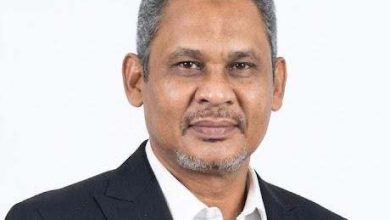
Adel Al-Rifai Abu Al-Hassan
Scenes like these are repeated whenever the army enters a Fariq, a Hilla, a village, or a city after driving rebel forces out of it. They are scenes that words can scarcely capture or describe. The moment the army’s advance units appear on the outskirts of an area, people pour out of their homes and rush towards the soldiers before they even reach its center. Children, young people, men, women, and the elderly all race towards them in a majestic spectacle, as though a feast day had arrived or life had returned to them after a long absence.
This rush towards the soldiers, and the frantic running to welcome them, is not merely an expression of passing joy. It is a scene whose details are preserved in the language of body movements, where hurried footsteps, exhausted faces, tears, and overwhelming eagerness tell the story of what these people have endured: fear, humiliation, degradation, subjugation, and terror. They are emerging from a hell they have lived through, welcoming the army’s advance units in the hope of escaping that hell and restoring security, dignity, and normal life. The joy here is not simply the joy of seeing soldiers arrive; it is also a reflection of the magnitude of the tragedy that preceded their arrival. The more eagerly people rush towards them, the more clearly the brutality of their ordeal becomes apparent.
The entire scene expresses the natural relationship between the army and the people, affirming the depth and deep-rooted nature of that bond. This is Sudan’s army, the army of its people, and the defender of its land and honour. There can be no security or safety for citizens without their army, which protects them and safeguards their homeland. This relationship is manifested in these spontaneous scenes and reaffirmed by people’s emotions, attitudes, and instinctive rush towards their soldiers.
Through their simplicity, spontaneity, and unprompted popular enthusiasm, these scenes offer a practical response to the desperate attempts to drive a wedge between the army and the people, undermine their relationship, tarnish the army’s image, criminalise it, and turn citizens against it through fabrications, malicious propaganda, and disinformation campaigns. These scenes expose the falsehood of such efforts and confirm that the army is the refuge to which people look for the restoration of security and safety. It is the defender of the land and honour, the guardian of the homeland, its sovereignty, and the dignity of its people.
Sudan has been subjected to a war that has gone far beyond targeting military installations. It has extended to human beings, the land, society, and identity. It is a war of killing, displacement, forced migration, looting, torture, detention, humiliation, and terror. Its effects have reached cities, villages, Furqan (small rural settlements), and the countryside. Private property has not been spared, nor have antiquities, heritage, cultural traditions, or the basic necessities of citizens’ daily lives.
Even more alarming are the concerns raised by large-scale displacement operations and the emptying of entire areas of their inhabitants, particularly fears of demographic change, population replacement, and the erasure of Sudanese identity. The matter is no longer merely a struggle for power or control over territory; it has become a threat to Sudan’s very existence, its social fabric, its history, its collective memory, and its national identity.
This is an existential and decisive war, one whose danger extends beyond Sudan’s present into its future. It places the nation before a fundamental question of survival: Will Sudan continue to exist, or will it cease to be? Will it remain a homeland for its people, preserving its identity, diversity, and history, or will it become a fragmented country whose communities are displaced, whose features are replaced, and whose memory is erased?
It is in this context that scenes of people welcoming the army acquire their deeper meaning. A citizen who welcomes a soldier with tears is not asking for special privileges. All they want is to live safely in their own home, reclaim their land and property, and see life return to their children.
### One Army… One People… One Homeland
These are not merely slogans chanted by crowds. They are a reality embodied in the hands stretched out towards the soldiers, the tears of joy, the women’s ululations, and the enthusiastic rush of children and young people. It is the story of a nation searching for salvation, a people holding firmly to their land, their identity, and their right to life.
Beyond that, these scenes also convey a message to the outside world, its institutions, agencies, and organisations. They reveal the reality of the aggression and the nature of the tragedy endured by the Sudanese people, who are subjected to killing, displacement, forced migration, looting, torture, terror, and violations.
If the world is searching for the truth, these scenes offer a vivid glimpse of it. They reveal that what Sudan is facing is not merely a struggle for power, but an armed rebellion and an invasion targeting Sudan and its people, its resources, demography, geography, economy, population, future generations, land, history, and identity. It is a war against an entire nation: its present, its future, and its people’s right to exist and live.
Sudan is not a land without people, nor a people without an army, nor an identity that can simply be erased. It is a homeland whose people want it to endure, and which deserves to endure.