The Absent Legislative Council: The Cornerstone of Democratic Transition and the Challenge of Sovereignty
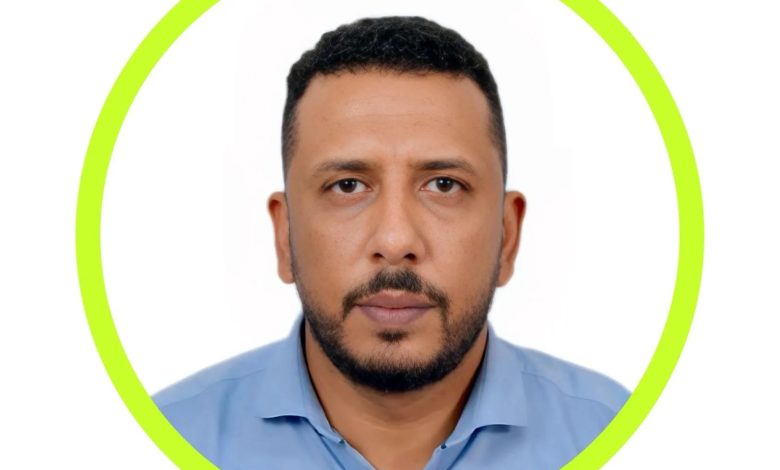
By Mohamed El-Haj
The absence of a legislative council in Sudan stands as one of the clearest signs of institutional paralysis that has crippled the country’s democratic transition. It has weakened the state’s capacity to build a cohesive political system reflecting the Sudanese people’s aspirations for a civilian state—one for which they rose up and overthrew Omar al-Bashir’s regime in April 2019. Sudan entered a transitional period that was meant to culminate in a civilian, democratic government through the establishment of balanced constitutional, legislative, and judicial institutions. However, the failure to form the legislative council—despite its clear provision in the Constitutional Document—has created a dangerous legislative vacuum. This vacuum enabled executive overreach, undermined the political process’s popular legitimacy, and opened the door to external interference that continues to shape Sudan’s political landscape.
From a legal standpoint, the Transitional Legislative Council is a cornerstone in state-building. It is the constitutionally mandated body responsible for exercising legislative authority, enacting laws, overseeing government performance, and maintaining checks and balances. The 2019 Constitutional Document clearly stipulated the formation of this council to represent revolutionary and societal forces and to play a central role in managing the transitional phase. Despite repeated delays in implementing this provision, the current circumstances—including the ongoing war sparked by the Rapid Support Forces’ rebellion—only amplify the need for such a council rather than diminish it.
In wartime, discussions about forming a legislative body may seem like a political luxury. Yet, the current reality demands creative alternatives suitable for an exceptional context. One possible approach could be the establishment of a small transitional legislative body composed of representatives from the regions, trade unions, civil society, and revolutionary movements. This temporary body would focus on enacting urgent laws related to institutional reform and state reconstruction. It could serve as the nucleus for a permanent council to be completed later through transparent and democratic elections once stability is restored.
The presence of a transitional legislative council would not only strengthen the state’s ability to govern its internal affairs but also shield it from foreign agendas seeking to impose solutions that do not reflect the national will. Such a council would provide the government with internal legitimacy, restore balance among state powers, and help forge a unified national stance in international or regional negotiations. It would also serve as an institutional platform for debating critical national issues—such as transitional justice, reform of the security sector, and the equitable distribution of wealth and power—issues that cannot be resolved without broad legislative dialogue representing all segments of Sudanese society.
Following the appointment of the Constitutional Court—a significant step toward completing the judicial framework—it becomes equally essential to finalize the legislative structures. The absence of one of the state’s key pillars undermines its ability to function as an integrated institutional system. The Constitutional Court alone cannot guarantee the rule of law without a legislative council to enact, monitor, and enforce those laws. Strengthening the legislative role of government at this stage is the cornerstone of the transition process. It restores public trust in the state and paves the way toward free elections, a permanent constitution, and a democratic system that genuinely reflects the aspirations of the Sudanese people.
The absence of a legislative council is not a mere administrative gap—it is a fundamental obstacle to building a new Sudanese state. The solution does not lie in waiting for the war to end, but in taking the initiative to establish a transitional legislative council that embodies the people’s will, revives the political process, shields the country from external manipulation, and lays the groundwork for a consensual constitution that ends division and founds a civilian democratic state governed by citizenship and the rule of law.