What Lies Behind the Designation of the Islamic Movement on the U.S. Terror List
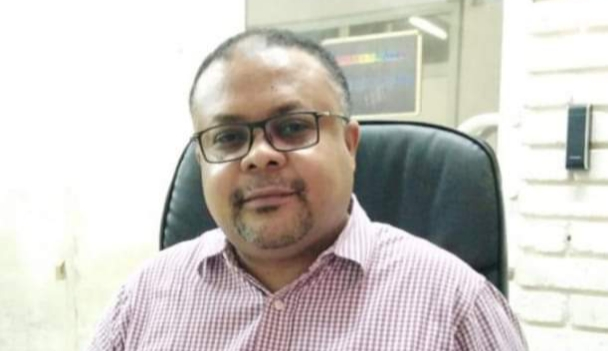
By Osman Jalal
(1)
The decision issued by the U.S. Department of State on March 9, 2026, designating the Sudanese Islamic Movement as a Specially Designated Global Terrorist entity, comes within the broader context of what the author frames as a civilizational struggle between Islam—particularly movements that believe religion should guide the spheres of politics, economics, society, and culture—and Western Christianity, which built the foundations of its modern renaissance on positivist thought and the reduction of religion to church rituals. In this view, the confrontation represents a long-standing conflict between two opposing intellectual traditions. The British Prime Minister, Keir Starmer, has been quoted as expressing this contradiction by saying: “Our problem lies with Islam itself and with Muhammad, the Prophet of Islam, because it is a civilizational religion that offers detailed answers to all existential and civilizational questions. It competes with Western civilization, which has begun to lose its luster, while Islam continues to gain prominence—even within European societies.”
(2)
According to the author, Starmer outlines what he describes as a “magic formula” to curb the spread of Islamic revival movements in the Arab world, arguing that “we must support Israel and weave an alliance between it and Arab states that fear the rise of a democratic Islamic system.” The author also attributes to Starmer what he characterizes as a Machiavellian approach to resisting Islamic culture in the West: “It is our duty to resist the Islamic tide even if such resistance contradicts our liberal values; otherwise mosques and minarets will fill Europe. Islamists would dominate European parliaments, public opinion, and the economy through elections, and eventually govern Europe according to Islamic teachings. We must enact laws that push Muslims to leave Europe—such as laws promoting homosexuality, atheism, and similar measures—either forcing them to depart or to assimilate into our civilization and abandon Islam.”
(3)
Despite the tendency of Islamic revival movements to open channels for civilizational dialogue with the West and to engage in political activity through the institutions of the modern nation-state established by the West after the Peace of Westphalia in 1648—confident in the intellectual strength of their ideas and their capacity to expand within societies under conditions of freedom and rational discourse—the author argues that the Western mindset, driven by a doctrine of civilizational confrontation, demands that Islamic movements abandon their religious and value-based foundations and fully integrate into the secular state. This notion, the author notes, has been articulated by the French orientalist Olivier Roy. According to this perspective, the strategic objective of the Western school of thought is the elimination of all Islamic revival movements in the Arab and Muslim worlds and the consolidation of regimes aligned with and integrated into Western civilization.
Confronting what the author describes as this civilizational struggle, he argues, requires unity between leadership and societies across Arab and Muslim countries, the empowerment of popular will in governance, and the development of national renaissance projects. It also requires moving beyond sectarian divisions such as “Sunni versus Shia,” and establishing institutions such as an Islamic Union, an Islamic Parliament, an “Islamic NATO,” and a common Islamic market capable of addressing the confrontation in all its civilizational dimensions.
(4)
Returning to the central question: what should be the role of the Islamic current in Sudan in confronting this civilizational challenge?
One of the defining characteristics of the Islamic Movement in Sudan, the author contends, has been its ability to dissolve into the fabric of social institutions during times of adversity and trial. The movement emerged as an influential political force following the October Revolution of 1964, later expanding its presence within state institutions and establishing Islamic organizations after the National Reconciliation with President Jaafar Nimeiri in 1977. It subsequently rose to become the third-largest parliamentary bloc with 51 seats in the 1986 elections. The author further argues that it thwarted attempts to eliminate it—allegedly orchestrated through the Sudan People’s Liberation Movement alongside leftist and secular forces—by seizing power on June 30, 1989. The movement then endured numerous internal and external attempts to bring it down, until Western powers and their regional allies, according to the author, resorted to a strategy of gradual infiltration, fragmentation, and internal erosion, culminating in the collapse of the experience from within its own institutions on April 11, 2019.
(5)
The author concludes that the vulnerabilities that led to the downfall of the “Inqaz” (National Salvation) government must now be addressed. This entails safeguarding the broader national framework from external penetration and protecting the Islamic political sphere from fragmentation and infiltration. In his view, overcoming existing divisions and unifying the national Islamic current within a renewed framework—both intellectually and in leadership—is essential. Such a current, he argues, must reintegrate into Sudanese society, raise public awareness about what he describes as a civilizational struggle targeting the country’s values, identity, and cultural authenticity, and resist efforts to fragment the state into “cantons.”
The author also calls for mobilizing public unity in support of the Sudanese Armed Forces until, in his words, this project—along with its internal, regional, and international dimensions—is defeated. Furthermore, he urges the Islamic current to engage in dialogue with political and social forces supporting the army in what is referred to as the “Battle of Dignity,” with the aim of forming the broadest possible historic bloc to reach consensus on issues of national reconstruction and to sustain that alliance over the long term until a stable and institutionalized democratic transition is firmly established in Sudan.