Western Mediation and Sudanese-Egyptian Action: Abiy Ahmed’s Regime in the Line of Fire
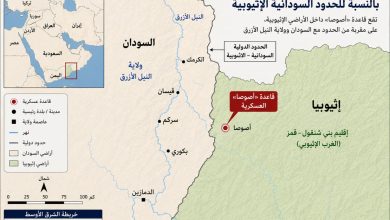
Abiy Ahmed’s regime has escalated its hostile posture towards Sudan. As drone attacks launched from Ethiopian territory continue, the Ethiopian government has given the Sudanese mission in the city of Asosa 48 hours to leave the country. The move, which has been described by some observers as a new escalation, was viewed by Amjad Farid, an adviser to the Chairman of Sudan’s Transitional Sovereignty Council, as evidence of Addis Ababa’s intention to drag Sudan into a direct confrontation.
The Ethiopian diplomatic escalation came just one day after Sudan filed a complaint with the United Nations Security Council and the African Union Peace and Security Council, accompanied by documents and evidence implicating Abiy Ahmed’s regime in attacks on Sudanese infrastructure.
Sudan, for its part, did not respond diplomatically to the Ethiopian escalation in the customary manner. Instead, it moved within the Arab framework, seeking the assistance of the Arab League. On Tuesday, the League’s Secretary-General received Foreign Minister Mohi El-Din Salem. The Arab League said Salem had called on Secretary-General Nabil Fahmy to launch an investigation into drone attacks originating from Ethiopia and targeting Sudan.
The meeting also addressed Sudan’s request for an independent international investigation under the supervision of the Arab League, the United Nations and the African Union to establish the circumstances surrounding the attacks involving drones launched from Ethiopia, in light of the evidence available to the competent Sudanese authorities. The two sides also agreed to continue coordination and consultations on the matter.
Amid these developments, Asharq TV, citing sources, reported that Western countries were leading mediation efforts to defuse tensions between Khartoum and Addis Ababa. However, observers have expressed doubts about the prospects of progress on this front.
Researcher Dr. Othman Nourain attributed this to Abiy Ahmed having transformed Ethiopia into a proxy state that carries out tasks on behalf of others. He argued that there are no fundamental disagreements between the two countries upon which mediating states could build a resolution. Nourain explained that Abiy Ahmed’s regime is acting on behalf of Abu Dhabi and Israel, adding that mediation should be directed at the head of the problem, not its tail.
According to observers, Ethiopia is unlikely to halt its actions. On Tuesday, its drones attacked a fuel station in the town of Al-Abbasiya in South Kordofan, killing at least ten civilians and injuring others. Meanwhile, the Sudanese Armed Forces announced in an official statement issued late Monday that they had shot down a strategic drone in the Blue Nile Region after it crossed into Sudanese airspace from Ethiopia.
Researcher Dr. Mohamed Al-Mustafa believes that all indications point to Abiy Ahmed’s regime continuing to fulfil its assigned proxy role, regardless of the potential consequences. He argues that Abiy Ahmed seeks to ignite the Horn of Africa for multiple, overlapping interests. On the one hand, he is serving an Emirati-Israeli plan aimed at disrupting navigation in the Red Sea and imposing a maritime blockade on Egypt and Saudi Arabia. On the other, Abiy Ahmed is seeking access to the sea by occupying Eritrean territory, taking advantage of the prevailing regional instability.
According to Al-Mustafa, Egypt and Sudan are fully aware of this plan. This, he noted, is precisely what Presidential Adviser Amjad Farid meant when he said that Ethiopia was seeking to drag Sudan into a direct confrontation.
Egypt Takes Action
In an effort to prevent further escalation, Egypt has announced its readiness to take the measures and steps permitted under international law and the Joint Defence Agreement with Sudan in order to support the country and safeguard its territorial integrity and national institutions. This comes amid mounting tensions between Egypt and Ethiopia over the Nile water issue, the Red Sea and Ethiopia’s involvement in the war in Sudan.
The Egyptian statements were made during the third round of consultations under the 2+2 mechanism involving the foreign and irrigation ministers of Egypt and Sudan, hosted by Cairo last Monday.
According to a joint statement, the two countries reaffirmed their rejection of any threat to Sudan’s unity and territorial integrity and expressed their determination to strengthen joint coordination in order to restore stability in Sudan.
Observers believe that Abiy Ahmed’s regime will not abandon its military and diplomatic escalation against Sudan. Instead, it is likely to intensify its attacks in the coming period in order to fulfil the role assigned to it, hoping to secure access to a seaport as a reward.
However, according to the same observers, this escalation could ultimately backfire on an already fragile regime, particularly since it has yet to face a Sudanese response, which could prove extremely costly.
While researcher Dr. Othman Nourain believes that Sudan possesses numerous cards that could undermine the stability of Abiy Ahmed’s regime, Dr. Al-Mustafa argues that Abiy Ahmed is drawing strength from Abu Dhabi and Tel Aviv. Both, however, are currently embroiled in political and military confrontation with Iran, as well as electoral battles in Washington and Tel Aviv.
These developments could bring about slight shifts in their foreign policies, prompting them to scale back their interventions in the coming period. Such a shift, Al-Mustafa suggests, could leave Abiy Ahmed isolated in facing Sudan and Egypt.