Sudan Targets $20 Billion in the Gulf Food Market
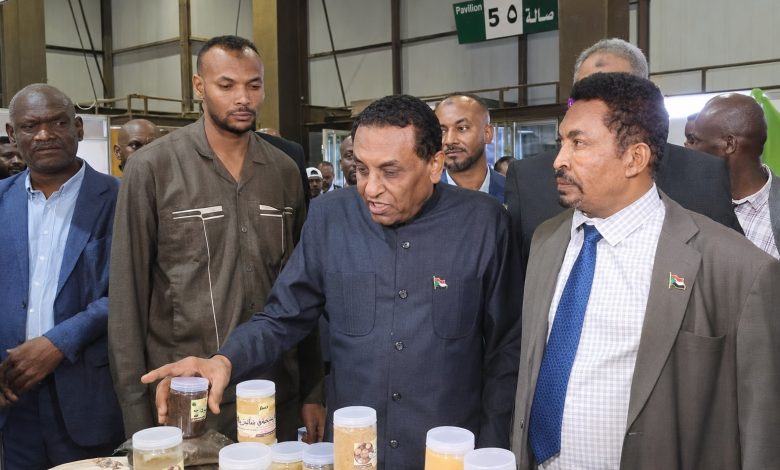
Sudan’s Minister of Animal Resources and Fisheries, Ahmed Al-Tijani Al-Mansouri, said on Wednesday that Sudan has significant opportunities to become a regional hub for food production, processing, and exports, pointing to the potential to generate revenues of up to $20 billion from Gulf food markets.
Prime Minister Kamil Idris inaugurated the Sudan Food and Export Exhibition, “Sudan Food Expo 2026,” in Khartoum on Wednesday. The exhibition was organized by Bazar for Multi-Activities Company, with the participation of the Ministries of Animal Resources and Agriculture and Irrigation, as well as several government institutions, state authorities, national and regional companies, entrepreneurs, and investors.
Speaking at the opening ceremony, Al-Mansouri said that capturing just 10% of the food market in the Gulf Cooperation Council (GCC) countries, whose annual food requirements are estimated at approximately $200 billion, could generate revenues of up to $20 billion.
He pointed out that Sudan possesses substantial resources that qualify it to become a regional hub for food production, processing, and exports, drawing on its agricultural and livestock resources and its geographical proximity to the Gulf and Egyptian markets.
He described the return of exhibitions, markets, and economic activity to Khartoum as a message demonstrating Sudan’s ability to overcome the repercussions of the war and restore its productive, commercial, and export activities.
The minister explained that the main challenge does not lie in the scale of Sudan’s available resources, but rather in how to transform them into safe food products with added value and develop industries that create jobs, increase citizens’ incomes, and boost exports.
Al-Mansouri stressed the need to shift the livestock sector away from exporting live animals and raw materials towards exporting processed products. These include chilled and processed meat, milk and dairy products, processed leather, fish, aquaculture products, and organic honey. Such a shift, he said, would enable Sudan to compete in the markets of Egypt, GCC countries, and African and regional markets.