Darkness as a Weapon: 17 Power Stations in Sudan Targeted by Drone Attacks

Life in Sudan increasingly resembles a tragic cinematic scene, where living crises are no longer newsworthy developments that warrant special attention, but an everyday reality that renews itself with every sunrise. Citizens have found themselves caught between electricity and water shortages and soaring prices.
Day after day, power outages in Khartoum caused by what might once have been considered a temporary technical fault have become a harsh daily reality: women carrying buckets over long distances in search of water, patients waiting for oxygen that must be purchased from outside the hospital, students walking long distances because public transportation is unavailable, and traders selling solar panels as though offering lifelines at prices that few people can afford.
This is the immediate human face of a new war being waged in the skies: a drone war targeting infrastructure.
In just the past week, the number of power stations in Sudan subjected to drone attacks rose to 17, following strikes on three stations in Kassala and the Northern State on Monday, November 2. The attacks caused power outages in the two areas and completely destroyed one of the stations.
The targeting of power stations is part of an escalating pattern of drone attacks against electricity facilities and infrastructure in several states over recent days, resulting in widespread and repeated disruptions to electricity and water supplies.
The attacks over the past few days have targeted the following stations: Al-Markhiyat transformer station in Omdurman, Khartoum State; Haya in Red Sea State; Abu Hamad and Shendi in River Nile State; Al-Dabba and Merowe in Northern State; Al-Fao and Al-Hawata in Gedaref State; Al-Junayd and Al-Managil in Gezira State; Sennar in Sennar State; Um Dabakir, Mashkoor, and Tendelti in White Nile State; Kadugli in South Kordofan State; and Aroma and New Halfa in Kassala State.
The 4 Lawyers Organization considers the succession of these strikes an indication of a systematic pattern targeting civilian infrastructure. It has warned that the attacks have disrupted electricity and water supplies and threatened the operations of healthcare facilities, as well as the storage and preservation chains for medicines and food.
Carrying Water in Buckets
Rayan Omar Osman, a resident of Al-Thawra, Block 10, who works as an employee at Karari Locality, told Ultra Sudan:
“The suffering starts all over again every day. Since the morning, we have been facing a transportation crisis because fuel is unavailable as a result of power outages.”
She added: “The ongoing crises affect every aspect of our lives, both inside our homes and beyond. They affect the transportation of food supplies, the availability of cooking gas, the continuous power cuts, and the recurring water crisis. Water is available only through electrically powered pumping systems. With electricity unavailable, citizens are forced to walk long distances in search of water.”
50% Paralysis of Daily Life
Adel Abdullah, a secondary school teacher in Khartoum State, summed up the same suffering, saying:
“Life in Sudan is functioning at no more than 50% of its normal capacity. Citizens are walking long distances because transportation is unavailable. Power outages have caused medicines to spoil because there are no refrigeration facilities. Hospitals, meanwhile, are operating using generators that are extremely expensive.”
Hospitals: Oxygen Has to Be Purchased from Outside
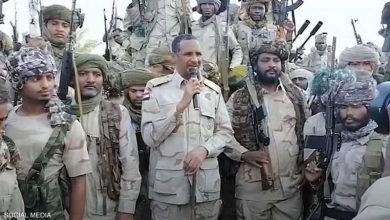
Dr. Abdel Moneim Ali Al-Qasim, Director-General of Omdurman Teaching Hospital, said the Rapid Support Forces (RSF) had recently targeted civilian infrastructure, particularly electricity stations supplying the national capital.
He told Ultra Sudan: “Electricity is the foundation of life. Water supplies and the provision of medical services depend on it. When water becomes unavailable, infectious diseases emerge, while medical services decline or are delayed.”
He revealed that the hospital’s main oxygen station had been affected by the power outage.
“As a result, we have had to purchase our oxygen supplies from outside. Thankfully, however, the situation is now stable,” he said.
He confirmed that the hospital had resumed operations almost normally and that scheduled non-emergency surgeries had restarted as planned, while emergency departments continued operating around the clock.
Al-Qasim believes that the RSF’s resort to what he described as this “criminal and inhumane” practice came after life had begun returning to Khartoum, Omdurman, and Bahri, alongside the resumption of higher education through the reopening of hospitals and medical colleges.
Direct Targeting of Civilians
Ali Mohammed Ali expressed what many citizens are feeling, saying: “The RSF’s targeting of electricity stations and fuel facilities has had a devastating impact on people’s lives and transportation costs. This is a direct attack on civilians, not on any other party.”
He called on the international community to exert pressure on the parties financing the RSF to stop what he described as the harm being inflicted on ordinary citizens.
Another resident described the situation as “a tragedy in every sense of the word, affecting citizens, children, patients, and every human being.” He noted that most citizens had increasingly resorted to purchasing solar energy systems, although their prices had become unaffordable for many.
A Lifeline
With every drone strike on an electrical transformer, demand for solar energy continues to rise.
Mohammed Ali Abdullah Mohammed, Sales Manager at Mahatat Solar Energy Company, said:
“Following the drone attacks on power stations, demand in the solar energy market has increased significantly. It has become essential for every household to have a solar energy system, even if it consists of just two or three panels. Solar power has become a necessity in the lives of the Sudanese people.”
He explained that prices had risen accordingly. The price of an individual solar panel had increased from 1,250 to between 1,300 and 1,350, with variations among retailers. He also noted that the prices of complete solar systems had more than tripled compared with the beginning of the company’s operations in Omdurman, largely because prices are linked to exchange-rate fluctuations.
Jinko panels are the best-selling products, while the prices of a 5-kilowatt system range between 7 million and 8 million Sudanese pounds. A 48-volt system costs between 8.3 million and 8.5 million pounds, depending on the brand.
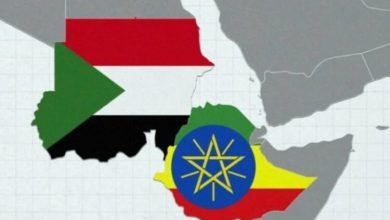
On Sunday, the Sudanese Council of Ministers condemned the repeated attacks on public facilities and service infrastructure by drones that it said were launched from Ethiopian territory. It described the attacks as a “crime against humanity” and directed that protection measures for public facilities, electricity stations, and their employees be strengthened.
The Sudanese Ministry of Foreign Affairs had announced on Sunday that it had filed a complaint against Ethiopia with the United Nations Security Council and the African Union Peace and Security Council, accusing the RSF of using Ethiopian territory to launch drone attacks against civilian sites and electricity stations in several Sudanese states.
The ministry said the attacks had resulted in civilian casualties and disrupted essential services. It added that the government had attached documents and evidence to its complaint which it said demonstrated that the RSF had used Ethiopian territory to launch both suicide drones and missile-equipped drones targeting civilian objects and vital facilities.
The Sudanese government had previously presented, during a joint press briefing in Khartoum, drones that it said had been shot down by its air defences. It also presented data on their flight paths and satellite imagery, which it described as evidence that some of the attacks had originated from within Ethiopia, including from Bahir Dar Airport.
Source: Ultra Sudan