War Erodes Social Safety Nets and Pushes Millions into Poverty
Sudan’s social and economic fabric is experiencing an unprecedented erosion of its traditional solidarity-based safety networks and government social protection systems as a result of the ongoing repercussions of the protracted armed conflict.
The continuing conflict between the Sudanese Armed Forces (SAF) and the Rapid Support Forces (RSF) has destroyed the basic livelihood coping mechanisms available to Sudanese families, along with social safety networks and neighborhood-based associations.
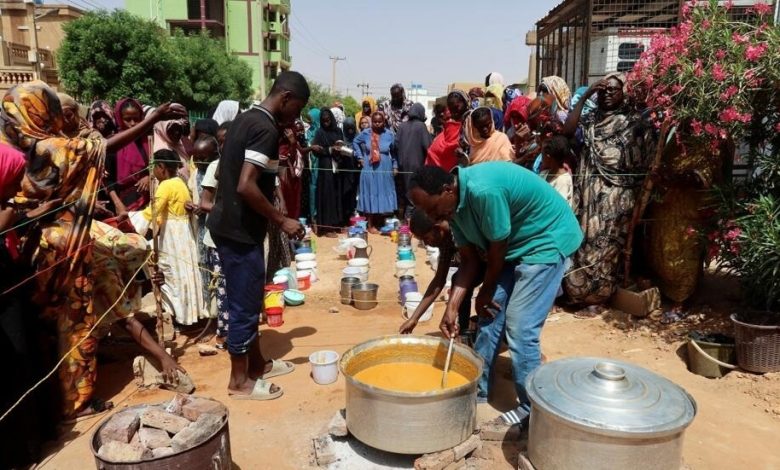
As service institutions have fallen out of operation and sources of income have dried up, traditional mutual support networks, such as Nafeer (community-led collective assistance), Takaya (community kitchens providing free meals), and extended family networks that previously provided financial and material assistance, have become completely overwhelmed. This has driven poverty rates to record levels and left millions exposed to the combined threats of food insecurity and forced displacement.
Patterns of Collapse
Abdel Rahman Darmali, a member of an Emergency Response Room, believes that one of the most prominent manifestations of poverty following the collapse of social safety nets has been the emergence of a severely affected class of salaried employees, who have lost their ability to meet market demands and cover the rising costs of living.
Speaking to Sudan Tribune, Darmali explained that skilled workers had also faced complex circumstances. However, some groups had managed to overcome these difficulties by relocating their expertise and skills to other states and displacement areas.
He also pointed to disparities in the levels of solidarity shown towards displaced people. Some communities have continued providing assistance, while others had previously offered what they could but were forced to suspend their support because of worsening economic conditions. He criticized a third group of communities for adopting a passive stance and making no contribution to strengthening social support networks.
Dangerous Reduction in Social Protection
Dr. Mohamed Ali Salem, Commissioner of the Social Security, Solidarity and Poverty Reduction Commission, stated during a meeting with the International Food Policy Research Institute (IFPRI) on August 24, 2026, that the continuation of the conflict had caused a serious decline in the effectiveness of interventions targeting the most vulnerable groups.
He said the commission was seeking to strengthen institutional and research partnerships to rebuild the lost database and support the social protection system through evidence-based approaches and field data, in order to prevent the complete breakdown of Sudan’s social solidarity structure.
For his part, the Minister of Social Development, speaking in November 2025, outlined the direct impact of the conflict on the country’s socioeconomic indicators. He revealed that the poverty rate had risen dramatically, climbing from 21% to approximately 71%, as a result of declining government revenues, increased expenditure to meet the demands of the war, and the suspension of most productive activities that had previously served as a source of support for low-income groups.
Source: Sudan Tribune