The Leaked UN Report on the UAE’s Involvement in the Sudan War: Exposing What Was Hidden
A confidential report addressed to the UN Security Council, never officially published, is leaked by employees within the international organization! Surely, such a report must be genuinely intriguing.
Its considerable significance does not lie in revealing new information about the alleged role played by the United Arab Emirates in Sudan, or its support—whether financial, media-related, political, or diplomatic—for the rebellious Rapid Support Forces (RSF) militia. All of this is already well known and has become an established fact that hardly requires further proof.
Indeed, numerous credible reports, based on rigorous and in-depth investigations conducted by prestigious media organizations such as the BBC, Associated Press, The New York Times, The Guardian, Reuters, Middle East Eye, as well as Amnesty International, Politico, France’s TV5MONDE, Le Monde, and many others, have documented this Emirati role, despite the UAE’s persistent denials and objections.
This is in addition to reports by UN experts, human rights organizations, and even a German institute specializing in international politics and security studies, alongside a long list of other sources.
The significance of this report stems from what might be considered its only weakness: the fact that it was leaked. (In grammatical terms, it resembles the passive voice, in which the agent is either unidentified, deliberately omitted, or concealed out of fear!) This, however, is a serious leak originating from within the corridors of the United Nations.
The international organization does not usually leak its reports unless it faces opposition from one of the permanent members of the Security Council, which possess veto power. A leak may also occur—and this is understandable—when one of these countries turns a blind eye to an issue or when it is preparing the ground for a particular course of action.
In this context, a leak amounts to a message conveying that: “What this report contains—or what this event reveals—is indeed true, but its official and public release may be blocked through the exercise of the veto.”
There is another possibility: the leak may have been intended to spare certain countries embarrassment. Countries such as the United Kingdom, the United States, France, and even China maintain enormous economic ties with the UAE, which has invested staggering sums running into trillions of dollars, not millions or billions.
(As Middle East Eye (MEE) points out, “China is the UAE’s largest trading partner, while Russia has been able to circumvent Western sanctions imposed on it following the war in Ukraine through Dubai.”)
Consequently, these governments are expected to do everything possible to avoid damaging their relations with the UAE. Nevertheless, since most of them are democratically elected governments, they understand that the electoral cost and moral burden of maintaining permanent silence would be considerable. They may therefore be looking for a way out, namely, leaking the information.
The reality is that any leak—even if it originated in the Comoros Islands—can easily be traced back to its source. Technically speaking, this is a relatively straightforward matter, and it becomes considerably easier when information is leaked to virtually every media outlet imaginable.
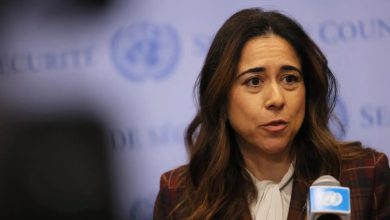
Cameron Hudson expressed this point by saying: “It is now clear that the UN has leaked its highly confidential Sudan report—which details the UAE’s direct involvement in supporting the Rapid Support Forces—to every journalist available. The fact that UN staff have taken this step carries a powerful (and highly provocative!) message to the UAE, particularly at a time when one of its senior diplomats is actively seeking a senior leadership position within the United Nations.”
The second interesting element is that the report was classified as confidential. Once leaked, however, its confidentiality effectively ceased to exist, meaning that its public release is now only a matter of time. It has effectively entered the public domain.
This paves the way for certain measures, whether in the form of moral condemnation, a means of exerting pressure, a signal encouraging the UAE’s candidate to withdraw, pressure on Abu Dhabi to make concessions, or even an attempt to absorb public anger and offer Sudan some reassurance ahead of an anticipated agreement.
International and regional media outlets—including platforms associated with intelligence circles—have confirmed that the leaked report, which has not yet been published in full, establishes, in the words of Middle East Eye, that the UAE recruited Colombian mercenaries for the RSF in Sudan.
The outlet emphasized that it had reviewed the “confidential report” detailing the UAE’s involvement in the Sudan war, confirming that UN investigators had reached a “conclusive” finding that the United Arab Emirates had hired Colombian mercenaries to fight alongside Sudan’s Rapid Support Forces.
The report, which was submitted to the UN Security Council last week and obtained by Middle East Eye, reveals details of how Global Security Services Group (GSSG)—a UAE-based company with close ties to the government—transported Colombians to Sudan through Libya, Somalia, and Chad, areas where UAE-affiliated actors control extensive territory.
UN investigators also explain that the Puntland Maritime Police Force (PMPF) base in Bosaso, Somalia, which is linked to the UAE, was used as a transit and/or training facility for Colombian mercenaries before their deployment to Sudan.
In a separate context, the outlet notes that Middle East Eye and other media organizations had previously published reports on the use of Colombian mercenaries by both the UAE and the RSF, as well as the use of the ports of Bosaso and Berbera.
It is worth recalling that the United Nations and the United States have concluded that the RSF committed acts of genocide in Sudan’s western Darfur region.
Weapons and other supplies have been transported to the RSF by air and overland through territories controlled by the Haftar family and its militias in Libya, as well as through Ethiopia and Chad, and two Somali breakaway regions that maintain close relations with the UAE: Puntland and Somaliland.
The United Arab Emirates and the other entities implicated in this network have denied any wrongdoing. The UAE Ministry of Foreign Affairs, for instance, did not respond to Middle East Eye’s request for comment on the article.
However, this report—which constitutes the fourth quarterly update by the UN Panel of Experts on Sudan and carries the classification “highly confidential,” meaning it will not be made publicly available—will be difficult for Abu Dhabi to evade its implications.
In a letter included in the leaked report, the UAE stated that it “rejects any allegations of wrongdoing in relation to the conflict in Sudan,” adding that it “takes allegations relating to mercenaries extremely seriously.”
Nevertheless, according to the leaked document, the UN Panel of Experts’ report stressed that “Colombian mercenaries were trained and deployed through a network of facilities and transit routes involving the United Arab Emirates, Somalia, eastern Libya, and Chad.”
The report further states that these Colombian mercenaries “played an important role in the military operations of the Rapid Support Forces in Darfur, particularly during the siege and capture of El Fasher.”
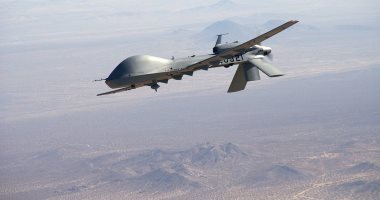
According to the report, “the mercenaries provided combat and technical support, including operating drones and providing artillery and infantry support.” It once again emphasizes that they “were trained and deployed through a network of facilities and transit routes involving the UAE, Somalia, eastern Libya, and Chad.”
According to UN investigators, these mercenaries received training in Abu Dhabi, Ghayathi, and Al Wathba—all locations within the UAE—as well as at the Puntland Maritime Police Force (PMPF) base in Bosaso, situated in Somalia’s semi-autonomous Puntland region.
The report states that “the Emirati military funded, trained, and supervised the Puntland Maritime Police Force (PMPF).”
The report does not resort to qualifying expressions such as “perhaps,” “allegedly,” “it is believed,” or “it may be.” Instead, it calls things by their names with complete clarity, even though the document remains within the realm of leaked material.
One thing, however, remains certain: the Emirati candidate is still holding on to her position, occupying fifth place in the race. She will not withdraw voluntarily; ultimately, she will have to be removed, unless the five permanent members of the Security Council agree to select her as a successor to UN Secretary-General António Guterres.
Who knows?!
Source: Al-Mohagig