A Childhood on Hold: Sudan’s War Forces Children to Shoulder the Burden of Supporting Their Families
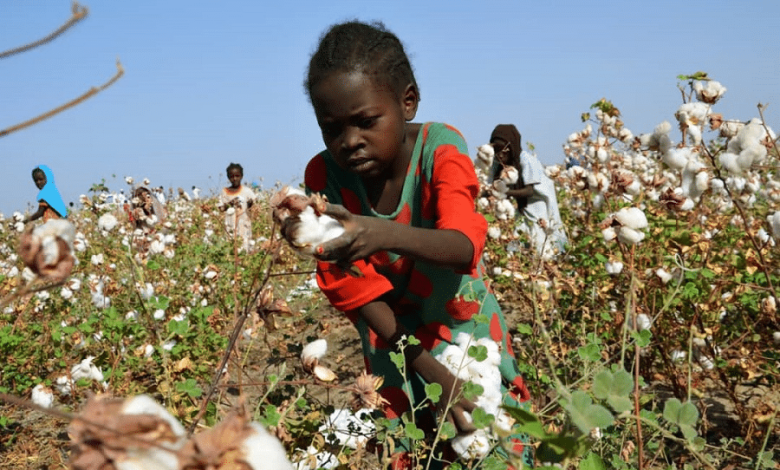
Majahid never imagined that he would become a man before completing his childhood, just as Naamat never thought she would move from being a little girl waiting for someone to prepare her meals to becoming a young mother figure responsible for looking after her siblings. But circumstances imposed a new reality on them.
In some Sudanese households, childhood is no longer a stage for playing, learning, and discovering the world. Instead, it has become a period of premature responsibility, in which children’s dreams are overshadowed by the demands of survival.
Amid the difficult economic and social conditions facing many families, and the profound changes that war and displacement have brought to community life, children have found themselves taking on roles beyond their years. Some have been forced to work to help support their families, others have assumed responsibility for caring for their younger siblings, while some have dropped out of school.
Responsibilities Beyond Their Years
In a residential neighborhood in the Bahri area, Majahid’s day begins before sunrise. He organizes the household’s needs before heading out in search of work to help support his family. At the end of the day, he returns exhausted, his mind occupied with the calculations of how to make ends meet.
“I used to dream like every other child of becoming an engineer and spending time with my friends, but circumstances have forced me to think about how I can help my family,” 14-year-old Majahid told Sudan Tribune.
A Little Mother
As for 13-year-old Naamat, she has found herself facing growing household responsibilities after her mother became solely responsible for supporting the family.
“I wake up early to get my siblings ready and help with the housework. Sometimes, I don’t even have time to review my school lessons,” Naamat told Sudan Tribune.
She added: “I wish I could go back to being the way I was before, playing without having to think about preparing things for the household.”
She explained that what she misses most is the time she used to spend with her friends, and that she dreams of returning to school and continuing her education.
Naamat’s experience reveals another dimension of childhood put on hold: domestic burdens and unpaid caregiving responsibilities shouldered by some girls at an early age. Such responsibilities can affect their education, psychological well-being, and opportunities for normal development.
Dreams Halted at the Doors of Displacement
Fifteen-year-old Ali had never anticipated that his life would change so rapidly. He was a student who loved school and dreamed of continuing his education. However, displacement and the disruption it brought to his family’s life made remaining in school extremely difficult.
He told Sudan Tribune that what hurt him most was being separated from school and his friends. His dream had been to complete his education, but his thoughts are now consumed by the need to secure shelter, food, and other basic necessities.
As his family struggles to adapt to its new circumstances, Ali finds himself facing an uncertain future, with his educational aspirations increasingly overshadowed by the demands of daily survival.
His story illustrates that the consequences of displacement go beyond losing a home or changing one’s place of residence. They also extend to children’s educational and social development, potentially creating gaps that are difficult to overcome without appropriate intervention and support.
Childhood Behind Hospital Doors
In another dimension of this suffering, 12-year-old Maryam is experiencing a different kind of hardship. She spends long hours accompanying her sick mother and helping her with some household tasks, while also looking after her younger siblings.
Maryam told Sudan Tribune that she loves her mother and cannot leave her alone. However, she sometimes feels exhausted and longs to play and attend school like other children.
“I wish my mother would recover so that we can return to our normal lives,” she said.
Children in High-Risk Situations
Abdelqader Abu, Secretary-General of the National Council for Child Welfare, confirmed that approximately 71% of Sudanese children are living in dangerous circumstances as a result of violations and the humanitarian and security consequences associated with the war.
Speaking to Sudan Tribune, Abu explained that between 11 and 12 Sudanese states are classified as relatively safe, with security levels exceeding 85%. However, he said that the practices and attacks carried out by the Rapid Support Forces (RSF) and their supporters had damaged a number of schools, while poverty and its devastating consequences continued to weigh heavily on Sudanese families.
He stated that statistical and demographic monitoring conducted by the council had revealed that between 60% and 65% of school-age children are currently out of school.
These children are working as assistants on public transport vehicles and buses, in traditional artisanal mining, as well as in restaurants and markets.
Abu pointed out that the grave violations attributed to the RSF militia had directly and negatively affected the lives and safety of Sudanese children.
He added that the council was working with national civil society organizations and United Nations agencies in relatively safe states to transform estimated figures into accurate, measurable statistics.
The objective is to develop a comprehensive map of children’s essential needs, covering food, education, and healthcare.