We Will Not Return Empty-Handed This Time: What Sudan Needs Ahead of the Riyadh Summit
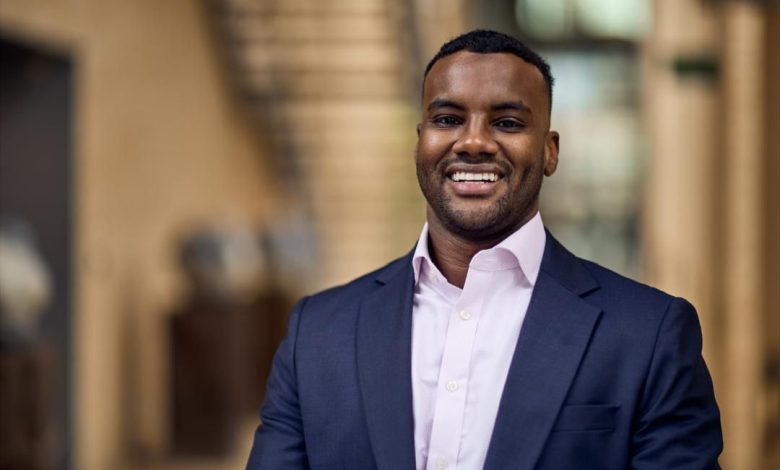
Youssef Majed Youssef
In June, our delegation will head to Riyadh to participate in the first major Sudanese–Saudi investment forum since the outbreak of war in April 2023. We will arrive carrying around 100 proposed partnership projects valued at more than $50 billion, spanning agriculture, energy, minerals, infrastructure, and technology. If we approach this summit the way we have approached previous ones—with ceremony, general promises, and presentations that describe resources rather than deals—we will return home empty-handed.
This is not new for us. For years, we have held meetings with Gulf investors around the same familiar sectors: agriculture, livestock, and mining. Our presentations detailed potential, but rarely specified project costs, expected returns, execution structures, legal readiness, or completion timelines. Interest was present in the room. Then nothing moved afterward.
Saudi Arabia in 2026 is not the same country those delegations once encountered. Capital now moves through centralized institutions, foremost among them the Public Investment Fund (PIF), with assets of $925 billion, and the Council of Economic and Development Affairs. Ministries are increasingly run by young technocrats trained in finance, engineering, and consulting. Integrated into this ecosystem are major global investment banks, international law firms, and consulting houses. Deals today are measured by execution, speed, and clarity—and this year, also by financial discipline. In 2025, the PIF imposed cost reductions of no less than 20% across more than 100 of its portfolio companies, slowing projects and laying off staff, signaling a sharper and more selective phase in capital deployment. Projects that are ready will continue to be funded. Those that are not will not.
Comparable deals tell the story.
In Egypt, the PIF committed $5 billion in new equity in 2024 through its local arm, the Saudi Egyptian Investment Company, bringing total Saudi investment in the country to around $32 billion across logistics, chemicals, and finance—separate from $5.3 billion in deposits at the central bank.
In Pakistan, Saudi Arabia’s Manara Minerals—a joint venture between the PIF and the state-owned Ma’aden—paid $540 million for a 15% stake in the Reko Diq copper and gold project, structured in two phases, with production targeted to begin in 2028. The Saudi Fund for Development added another $150 million for mining infrastructure in Balochistan. Both are part of a broader $5 billion Saudi investment package allocated to Islamabad.
In Brazil, the Saudi Agricultural and Livestock Investment Company (SALIC) built positions exceeding $3.5 billion in the protein supply chain, acquired up to 15% of Brazilian poultry giant BRF for as much as $890 million, and established a $150 million joint venture with Vibra to bring processing capacity into Saudi Arabia. Riyadh and Brasília have set a bilateral trade target of $20 billion by 2030.
Three patterns stand out. First, Saudi capital now moves through clearly defined vehicles—PIF, SALIC, Manara—each with a mandate, a team, and an active deal pipeline. Second, every deal is structured: entry price, ownership stake, governance rights, production timeline, and operating partner. Third, capital flows consistently toward platforms that serve the priorities of Vision 2030: food security, mineral supply, logistics, and future technologies. No presentation convinces these funds—only a bankable project.
We possess many of the raw ingredients: vast agricultural land, one of Africa’s largest livestock herds, largely unexplored gold and iron belts, access to the Red Sea, and human potential. Nor are we unfamiliar to Riyadh. Saudi Arabia is already our largest Arab investor, with cumulative investments of about $35.7 billion concentrated in roughly 250 agricultural projects, and annual trade nearing $8 billion—driven primarily by Saudi imports of our livestock and agricultural goods. What has been missing is mobilization, preparation, and execution credibility. Verbal assurances have too often substituted for documentation. Relationships open doors; institutions close deals.
We must therefore stop selling sectors and start selling platforms.
Agriculture should be framed as precision-farming zones that integrate irrigation systems, cold chains, crop analytics, storage, and export corridors to Jeddah and Jazan. Livestock should be framed as a traceable protein supply chain with veterinary systems, quarantine, halal-compliant processing, and logistics—essentially the model SALIC built in Brazil, reversed. Mining should be framed through geological data rooms, transparent concessions, refining capacity, and anti-smuggling controls. And because Saudi capital is increasingly backing future infrastructure, we must also bring forward concrete proposals for digital identity, land registry digitization, e-customs, AI-enhanced agriculture, renewable energy corridors, and smart logistics upgrades for Port Sudan.
If we are not fully ready by June, the summit should not be treated as a deal-closing moment, but as a launchpad. We can use it to announce a “Sudan Investment Readiness Program,” establish joint technical working groups, set up a project preparation facility, and schedule a second summit within 9 to 12 months where only bankable projects are presented.
Most importantly, we must organize ourselves differently: clear roles, short mandates, measurable KPIs, empowered teams, an investor delivery unit, a project finance team to structure deals, a digital reform team to modernize approvals, and sector leads for agriculture, mining, ports, and energy. Monthly scorecards. Named accountability. Binding deadlines.
Talent is not our constraint. Across our country and diaspora, our financiers, engineers, lawyers, technologists, and operators compete at the highest levels in global capitals. What we lack is the system that enables them to perform. If we put the right foundations in place, define the right roles, and reward execution, we can turn potential into progress. The people are ready. The state must now be ready too.