Minutes of a Meeting That Never Took Place
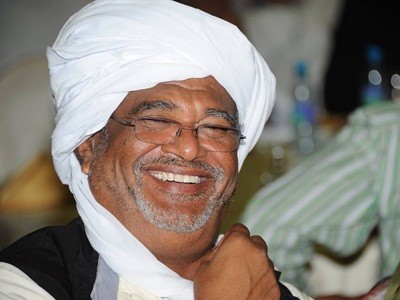
Abdul Latif Al-Buni
(1)
If I were in the government’s shoes—both its sovereign and executive branches—I would personally travel aboard a bus with a capacity of 28 passengers as a demonstration of austerity and belt-tightening. If there were more people, the rest would take public transportation.
I would head to the headquarters of the Gezira Scheme in Barakat and convene a meeting with all the institutions of the Gezira Scheme, foremost among them the Council for Regulating Agricultural Production Professional Associations. Alternatively, I would summon them urgently to the Republican Palace.
If the bus were full, the remaining officials could take public transportation. Either way, the purpose would be to let officials experience the hardships of waiting in long queues for transport and to bring them into direct contact with ordinary citizens. Officials taking public transportation could be considered a symbolic gesture of putting on a show of public solidarity.
In any case, that is not our subject today. Let us return to the matter at hand.
(2)
Agenda Item One.
“Ladies and gentlemen,” the government representative began, “you are undoubtedly following developments around the world and in the region: wars, competing strategic interests, the closure of strategic straits, and indiscriminate drone attacks in every direction. All of this has resulted in a global economic crisis.
“You are also well aware of the devastating war raging in our country and the enemies joining forces against us. The war is no longer confined to the battlefields; it has become, above all, an economic war.
“Even nature has turned against us. As you know, this year’s rainy season has been disappointing.
“In short, we are facing difficult days ahead. If we do not prepare for them now, our country’s very existence could be threatened.
“To put it plainly, people of the Gezira, we, as a government accountable before God and the people, have drawn up an urgent emergency plan. One of its key components is to produce one million tons of wheat nationwide during the coming winter season. The Gezira Scheme must account for the lion’s share of this target.
“Now, we want to hear from you.”
(3)
The Gezira delegation’s response can be summarized as follows:
“We must cultivate an area of no less than 450,000 feddans, and thankfully, that land is available.
“Over the next four months, water from the Roseires and Sennar dams must be allocated to agriculture as a priority, ahead of its use for electricity generation. Thankfully, Khartoum’s electricity needs are limited to the residential sector.
“We urgently need 20 long-boom dredgers. We also need diesel immediately for land preparation, followed by more diesel for harvesting. We will provide you with the required quantities before this meeting ends.
“We need 900,000 bags of DAP fertilizer immediately, equivalent to two bags per feddan. We also need 2.6 million bags of urea fertilizer, equivalent to four bags per feddan.
“We need treated seeds, pesticides, and sacks. We will specify the quantities shortly.
“We also require two trillion Sudanese pounds to cover all logistical expenses.
“Most importantly, we need an official guaranteed procurement price of 750,000 Sudanese pounds per 100-kilogram bag, payable on the day the wheat is delivered to the flour mills.
“This price would be calculated after deducting the cost of all the inputs listed above, including water charges and administrative expenses.
“In other words, all this money would return to the state treasury, in Sudanese pounds, down to the last penny. And this would happen after flour mills across the country had been supplied with locally produced wheat.”
(4)
The government responded:
“Excellent. Let us adjourn the meeting, discuss the matter as a government, and get back to you. In the meantime, stay here with us and give us your estimates for diesel and the other requirements.”
The Ministry of Finance insisted on making a statement before the meeting was adjourned.
“Ladies and gentlemen,” it said, “here at the Ministry of Finance, we believe these costs are far too high. We could import this entire one-million-ton quantity of wheat for less money, without all this hassle.”
One member of the Gezira delegation replied:
“Your Excellency, you yourselves said that the world is in turmoil and that nothing can be guaranteed when it is beyond your control.
“Second, these requirements are an investment in making Sudan self-sufficient in wheat. This means that next year, the cost will fall by half or even less.
“Preparing for the next season will cost less because the irrigation canals will have been repaired and the fertilizers will already be in the soil. In other words, next year we will need only half the amount of money.
“And these investments will benefit the cultivation of any crop, not just wheat. The costs of land preparation, fertilizers, and canal repairs will not serve a single season; they will benefit at least three agricultural seasons.
“Seeds can be produced locally. In fact, they can even be exported, earning us foreign currency, as happened in the past when we exported wheat seeds to Nigeria.
“Moreover, the transport and trade sectors will flourish alongside agriculture. Livestock farmers will benefit from wheat bran and crop residues.
“And above all, all this money will be recovered by the public treasury in local currency. There will be no need to raise the customs dollar exchange rate or print more money. The value of the Sudanese pound will improve.
“Ladies and gentlemen, members of the government, let me tell you something.
“Honestly, we farmers cannot stand wheat itself. We swear that we would be a thousand times better off growing coriander, chickpeas, or Egyptian beans instead of wheat.
“But you told us that this is a national duty, and that the Gezira Scheme belongs to the nation.
“So, go ahead and adjourn the meeting.
“Let us recite Al-Fatiha.”
Then came another recitation of Al-Fatiha.
That second recitation is extremely, extremely important.