An Analysis of the Economic Decisions of the Chairman of the Transitional Sovereignty Council

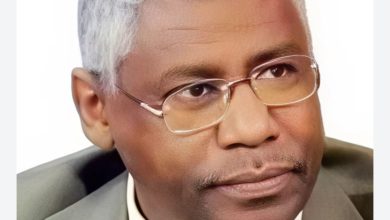
Professor Ahmed Majzoub Ahmed Ali
We commend the Chairman of the Transitional Sovereignty Council for recently turning his attention to the economic deterioration whose roots have become deeply entrenched across the various sectors of the economy.
The key to success in any economic intervention lies in strengthening and activating the government’s economic institutions to ensure participation, shared responsibility, and accountability. This must be accompanied by coordination among policies and efforts to address the root causes of crises rather than their symptoms. As we have previously explained, the fundamental cause of the problem is weak production across all sectors, while the exchange rate is merely a symptom that reflects the extent of the underlying illness.
It goes without saying that the government should not adopt policies and measures that have already been implemented and whose outcomes are known, particularly when the relevant authorities have participated in designing them. Efforts must instead be coordinated to achieve the desired objectives. More specifically, food security must be a central consideration in every plan or programme, rather than being addressed through emergency decisions and urgent measures. Only then can food security be achieved.
I begin my comments on these decisions with the prohibited-items list system, which has proven ineffective and failed to achieve its objectives, unless implemented as part of an integrated package of policies. I wrote an article on this subject when the relevant ministry issued its decision.
I would also point out that resource competition and the need to secure food lie behind many of the ongoing wars. Ensuring food security should therefore be at the forefront of government agendas, not merely as a short-term objective but as a strategic priority. This means that food security programmes must be at the heart of government priorities and an integral part of government plans, rather than being reduced to reactive measures designed to address problems temporarily.
The solution to food shortages and rising food prices, which have affected every citizen, lies in adopting clear policies towards the agricultural sector, particularly as we are now entering the winter agricultural season, when wheat, vegetables, and fruit are cultivated.
The measures and decisions taken by the President are expected to help address a temporary problem by ensuring and facilitating the movement and supply of certain food commodities. However, they will also increase demand for US dollars and push the dollar’s exchange rate higher against the Sudanese pound.
Despite this, we support maintaining these measures for a period sufficient to ensure that these commodities remain available in the markets.
We emphasise that the appropriate emergency response, amid the evident global food crisis and the looming threat of war, is to prioritise the current agricultural season. This is particularly important following the decline in rainfall and the contraction of rain-fed agricultural land. These developments make concentrating efforts on irrigated agriculture to bridge the food gap the highest priority. This should be pursued through the following measures:
First: Establish a supreme emergency task force, alongside state-level task forces, to monitor every stage of preparations for the winter agricultural season in irrigated agricultural schemes.
Second: Provide irrigated agricultural schemes with the financing required for preparatory operations, including fuel, seeds, fertilisers, pesticides, spare parts, and other essential inputs.
Third: Establish an agricultural financing fund involving the Central Bank of Sudan and commercial banks, supported by guarantees to ensure the provision of all necessary agricultural inputs.
Fourth: Implement the announced package of customs and tax exemptions for all inputs required for the winter agricultural season.
Fifth: Introduce legal measures to incentivise everyone contributing to the success of the planned emergency agricultural programme, from field-level farmers to project administrations, government departments, and operations rooms. At the same time, anyone responsible for obstructing the implementation of this emergency programme should be held accountable and penalised.
Sixth: Review annual and strategic agricultural plans and rectify the shortcomings in the executive management responsible for agricultural activities.
May God grant us success.
I will return to discuss the other decisions.