An Unstable Transitional Period: The Transformations of the Hybrid Coalition in Sudan (6-6)
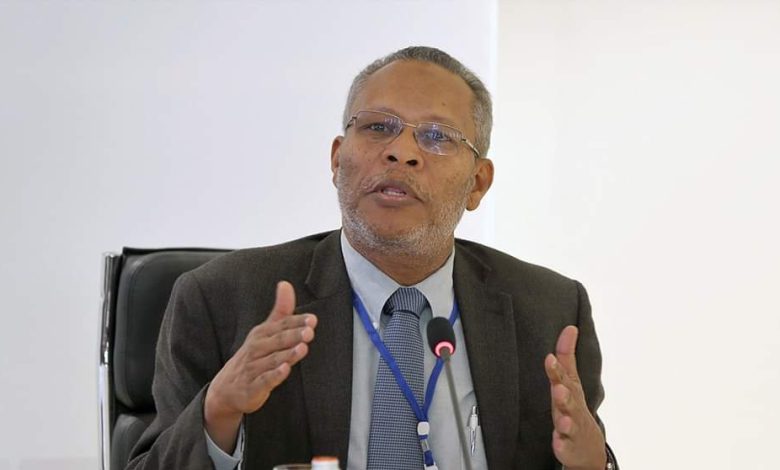
By: Hassan Elhag Ali Ahmad
Fifth: The road towards war
The withdrawal of the armed forces from the security and military reform workshop, due to the failure to include the issue of integrating Rapid Support Forces (RSF) to be part of the final agreement, has reached a dead end to complete the construction of a zero alliance; This is because achieving the independence of RSF was the condition that guaranteed the support of those forces to the framework agreement signed by the zero alliance. But it came at the expense of the armed forces’ survival as part of this agreement. Therefore, the issue of how to integrate RSF and its times has been the obstacle to achieving the zero alliance of its goals by forming a government that oversees the transitional period. The army commanders insist that the institution in which other military formations, including RSF is the armed forces. Lieutenant General Shams El -Din Kabashi, Deputy Commander-in -Chief of the Armed Forces, says: “There is no alternative to the armed forces except the armed forces […] i.e. talk about dismantling […] about the restructuring or any talk about reforming these terminologies every time they develop, they come with new terms we do not care about the term. What concerns us is that the armed forces remain […] There must be one army and one army is based on the armed forces. In security arrangements that must take place, RSF must be combined into the armed forces. ” The first topic that the armed forces object was what was stated in the principles of security and military reform and its foundations, which resulted from the security and military reform workshop held in March 2023, is that the process of integrating the forces will be completed in a period not exceeding 10 years. The armed forces want a rapid integration of RSF, not exceeding two years, with the end of the proposed period for the new transitional period. The second disagreement point relates to how to form the military commandment body until the completion of the integration process.
1. The division of the military component
The military component remained united in its position towards civilians, especially since the RSF was facing criticism and demands for its dissolution by political forces, headed by some parties and a group of resistance committees, and it was pursued by accusations of breaking up the sit-in of the General Command. There was an implicit alliance between Al-Burhan and my Hemedti; Al -Burhan sought to neutralize any movement of the army against him by strengthening RSF, while Hemedti aimed to gain more legitimacy and consolidate RSF to become a striking force that is difficult to liquidate. But cracks appeared on this implicit military understanding. The military component was affected as the civil component was, and it was included in the dynamics of the contentious politics, in terms of the transformation of political identities and the change of alliances. This shift began in the political positions of RSF, and then its alliances, and it appeared when Hemedti supported the transitional constitution draft prepared by the Steering Committee of the Sudanese Lawyers Syndicate- although it did not see its texts as he said- where he stated that “the draft constitution is a window of hope to build confidence between all Sudanese parties in order to reach a comprehensive agreement to resolve the Sudanese crisis. ”
The dispute between the wings of the military component was rooted, after signing the framework agreement that formed the zero alliance and hybrid on December 5, 2022. This agreement was signed by about 37 parties and organizations, in addition to the military component. The strong support of RSF for the agreement has emerged, as Hemedti acknowledged the error of the coup of October 25, 2021, and that he has retracted his support for it, and believes that “the framework agreement is the country’s exit from the current crisis, and that it is the only basis for a fair and just political solution.” Among the most prominent elements of the framework agreement, which deepened the differences between the two wings of the military component, granting RSF independence from the armed forces.
2. The external support for RSF;
A shift in the positions of some Western countries towards RSF; After having reservations from Western countries to establish relations with it for what it did in Darfur, these reservations were removed due to the transformations of internal politics in Sudan. They began steadily communicating with its leadership. Western envoys held meetings with Hemedti reflecting their countries’ support for the new RSF role, given that it is the military component that it relies on in the hybrid zero coalition after the withdrawal of the armed forces, on March 29, 2023, from the security reform workshop within the final stage of the political process among civilians and military personnel. On April 3, 2023, he met the French Century Special Envoy, Friedrich Cleavier, and Hemedti told him about his endeavor with the unexpected parties, to bring them on board to the political process. He met about a week later, on April 10, 2023, with the European Confederation of African Confederation Anita Weber, and discussed with it the efforts to achieve stability in the country. He held a joint meeting on the phone, on April 12, 2023, with the American envoy for East Africa, Sudan and South Sudan, Peter Lardal, the UK’s Special Envoy for Sudan and South Sudan, Robert Ferroeer, the Norwegian Special Envoy of Sudan and South Sudan, John Anton.
3.Crystallizing the zero hybrid
The framework agreement, signed on December 5, 2022, formed the second stage in the crystallization of the zero hybrid and a union alliance that prevents Cartel competition, after the launch of the first stage of transitional constitution the of the Bar Association by the Steering Committee. References came from the leaders of the coalition parties that confirm this monopoly, and that this alliance is closed, not to increase membership and expansion. Mohammad Hassan Al -Mahdi, head of the political bureau of the National Umma Party, stated that the framework agreement is closed and “there is no direction to open the framework agreement and there are agreed parties that are concerned with the signature.” Al -Mahdi stated in the same press statement that the signed group does not want to dump to open the agreement for additional groups.
The strong external influence emerged in strengthening the zero alliance, as it was supported by the Quartet Group, which used the threat to the opponents of the framework agreement. It warned “any attempt to undermine the political process now in Sudan or to raise more instability […] and that this agreement is a basis for resuming international aid and investments and raise the level of cooperation between the government of Sudan and international partners. The tripartite mechanism announced its welcoming the framework agreement between the Sudanese parties.
The conflict between the wings of the military component rapidly developed towards the armed clash, when the Sudanese armed forces announced in a statement, on April 13, 2023, in which it indicated movements of the RSF and their deployment in areas of the capital and the states, in violation of their work tasks and regime, and without the approval of the forces Sudanese armed or even coordination with it. This came after forces were sent from RSF to occupy Meroe airport in northern Sudan. The statement stated that forces from other regions had been called to confront the situation, and that the armed forces asked the RSF to withdraw from their new area in Meroe within 24 hours, and if they do not, they would be forced to do so.
Media reports and evidence from several videos indicate that RSF was gathering its forces weeks ago in the capital, in preparation for the zero hour on April 15, 2023 to take over power, and initiated the attack on the Command of the armed forces on the morning of that day. The RSF attack was the beginning of violent battles in the three cities of the capital, Darfur, and some regions of Kordofan. It was the culmination of the polarization whose intensity increase between the conflicting camps that the RSF decided to resolve it militarily, but that befell the country into a cycle of armed violence whose outputs will reinstall the political life in the country. Whatever the outputs of armed violence, the current evidence indicates that instability will continue in the country for a period that is not known, and this war has formed a detailed turn that will lead to political arrangements that are different from the past period of the transition.
Conclusion
The transitional period in Sudan, was overwhelmed by a political process, dominated by conflict; Its dominant feature was mobility and maneuvering. This movement led to a change in relations between the actors, which resulted in the use of alliances as a mechanism for political action, but the transformations that occurred on these alliances contributed to the instability of the transitional period, and from one of these transformations resulted in a detailed turn that brought the country into a devastating war. Based on the interactions of political forces through alliances, the study concludes the following:
First, as a result of the state of fragmentation that features political forces in Sudan, the formation of effective automatic alliances in showing political power, in the ability to negotiate and achieve interests took place. The formation of alliances, their dissolution and their reproduction has become the dominant feature of the transitional period in Sudan, and that is accompanied by a rapid shift in political identities, in framing positions, and in political discourse, which resulted in that the alliances have become a mechanism for polarizing that increased the transitional period tensions.
Second, most of the membership of various alliances dominated – except for the Alliance of radical change – political and ideological contrast, and then the tension within the alliances was greater than homogeneity in it; So the majority of alliances were immediate and did not hold long.
Third, hybrid alliances emerged between civilians and military personnel as the largest impact on the political system, and the most vulnerable to internal tension; Due to the great contrast in political trends and organizational interests.
Fourth, the use of many actors at the same time prevailed over the mechanism of different alliances, while the grouping, zero interaction and ideological discourse were limited to specific alliances.
Fifth, the dynamism of the contentious politics led to a transformation in the relationship within the military component, which was divided into two wings, and a shift in the identity of RSF occurred, as it became part of the zero alliance, and by meeting the zero alliance and a military force in a political system characterized by polarization and dispute, the road for the outbreak of the armed violence became open. .
Sixth, the interaction between internal dynamics and external influences contributed to the formation of alliances that varied due to the influence of regional competition, and they differed in terms of political and exclusive orientation and overlap of the components of alliances.
Seventh, the transformations of the hybrid alliances in the last copy of which led to a detailed turning point launched by the war that erupted in the country, as the political and legal foundations on which the transitional period was established were weakened.
At the level of theoretical connotations of these summaries, we can review the following:
First, the actors were in a state of permanent movement aimed at establishing loyal alliances or preventing or punishing the opposition. This confirms what Sadni Taru stated that the contentious politics is in a continuous state of movement aimed at persuading others, banning, defeating them, punishing them, or cooperating with them. This indicates that the use of approaches to the contentious politics in studying the cases of democratic transition in divided societies and reflects a large degree of polarization contributes to understanding the dynamics of transition, especially the role of alliances as a mechanism for managing transformations in the political process.
Second, one of the results of this study, which considered that the zero alliances contribute to the transitional period tensions, coincided with what Davidi stated and I was arguing that the partisan tendency to see life that its outcome is zero leads to the exacerbation of political conflicts. While dealing with the relationship between political ideology and zero thinking, they found that both liberals and conservatives view life as their zero when they achieve gains. This makes the matter difficult to reach bargains.
Third, the majority of alliances-except for the radical change alliance-based the minimum agreement that brings together different political forces; So the tension within these alliances was greater than homogeneity, and only holds on for short periods of time. This reality supports what Calvas who stated that the alliances of civil wars have little in common among them, while carrying differences within them. Our study reflected this style in the contentious politics alliances in the transitional periods that are characterized by an accelerated transformation and severe polarization.
As for the level of practical connotations, we can review as follows:
First, if the hybrid alliances tend to monopolize in a transitional period of polarization may lead to stress and political violence. The more the transitional period towards expanding political participation, the more it contributed to its stability.
Second, in societies where there is a multiplicity in military institutions, the issue of military and security reform is very complex; It does not work in it to benefit from the imported recipes inspired by the pattern of civil-military relations prevailing in Western countries. Perhaps it has led to other alternatives to a different fate of the transitional period.
Third, the influence of external forces on the political process during the transitional period has many aspects; It may provide support for a smooth democratic transition, but – as in the Sudanese case – it may contribute to congestion and polarization, which is driven by the interests of the interfering countries; What may lead the country to violent fate, including civil wars.