South Africa Questions its Identity, Strengthens Democracy
Africa news
South Africa is undergoing intense introspection following an election that resulted in a significant break from the African National Congress, the party that secured the nation’s freedom and democracy three decades ago.
In the wake of turning away from what was once the country’s most cherished party, South Africans are grappling with crucial questions about their future direction and the progress they’ve made in their fledgling democracy since the end of apartheid in 1994.
Despite having Africa’s most industrialized economy, the injustices of South Africa’s past have not been made right three decades after Nelson Mandela and the ANC were elected in the country’s first all-race vote and promised a better life for all. That has driven discontent among millions of the poor Black majority.
“We remain the pyramid society that apartheid and colonialism created,” said Thuli Madonsela, a professor of law who helped craft a new, post-apartheid constitution for South Africa in 1997 that was meant to guarantee everyone was equal from then on.
Speaking on national broadcaster SABC, Madonsela outlined how South Africa’s democratic journey is still marred by vast problems of joblessness and race-based inequality at some of the worst levels in the world. In last week’s election, opposition parties were united in one thing: Something had to change in the country of 62 million.
The problems are both the hard-to-heal scars of apartheid and the contemporary failings of the ANC. The nation, once a prime example of brutal oppression that then embodied a great hope through Mandela, is still searching for what it wants to be — but self-aware, at least.
“What must we do with this South Africa of ours?” asked Thabo Mbeki, the former South African president who had the almost impossible task of succeeding Mandela as his nation’s leader.
Politically, South Africa is heading into the unknown again as it did after the turning-point election of 1994, but with none of the joy or optimism of a transition celebrated across the world. The ANC has lost its majority, but with no other party overtaking it, South Africa faces what might be an excruciating series of negotiations to form the first national coalition government in its history.
Yet amid the uncertainty and South Africans’ introspection, some have urged them to be proud and to take a closer look at what just happened.
The ANC has accepted the result of the election and the will of the people without question, even after it ended such a long political dominance that it was sometimes hard to see where the ANC ended and South Africa began. An ANC leader once said in bluster that it would govern South Africa “until Jesus comes back,” but it graciously submitted to the will of the people last weekend and pledged to work with opposition parties for the good of the country.
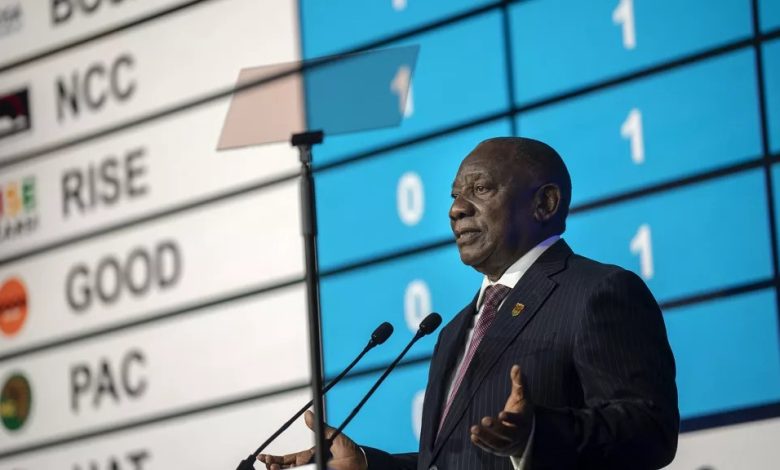
After the election results were officially declared Sunday night, South Africans went to work Monday and their children went to school. South African President Cyril Ramaphosa, while still digesting a historic defeat for the party he leads, sent an online message to the nation like he does at the start of every week. He began it with the words: “We have just held a successful general election” and wrote that the vote showed “that our democracy is strong, that it is robust and that it endures.”