In Militia-Controlled Areas… Ransom in Exchange for Life
Report – Sudan Events
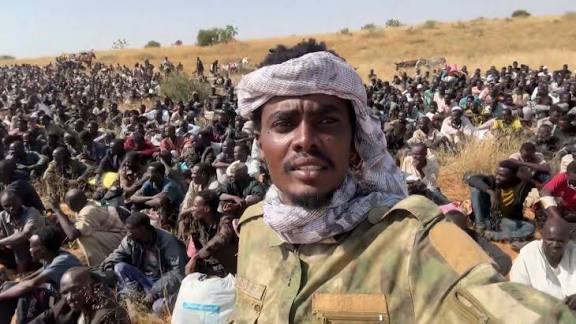
The Emergency Lawyers group has criticized the release of a number of civilian detainees from Dagris Prison in Nyala, the capital of South Darfur State, in exchange for financial payments. The group described the practice as a form of extortion and exploitation targeting the families of detainees.
The Rapid Support Forces (RSF) militia has made Nyala the capital of its parallel government, which it announced several months ago, disregarding regional and international opposition and the refusal to recognize this step. Since the outbreak of conflict in April 2023, vast areas of the Darfur region have witnessed a surge in arbitrary arrests and enforced disappearances. Human rights reports indicate that civilians are being held in deteriorating humanitarian conditions, with limited legal oversight and restricted humanitarian access to detention sites.
Dagris Prison, located about 25 kilometers west of Nyala, has reportedly turned into a place of terror, where the militia is said to carry out the harshest forms of abuse and widespread violations. In a statement issued on Saturday, the group said that some detainees managed to contact their families and requested money in exchange for their release, noting that these individuals were detained in areas under militia control, whether recently or in earlier periods.
The group added that detainees have spent prolonged periods in what it described as harsh conditions lacking even the minimum humanitarian standards, considering this a grave violation of international human rights law and international humanitarian law. It warned that linking release to ransom payments could amount to crimes of human trafficking and detention for profit. The group held the RSF fully legally responsible for these violations, stressing that any release does not absolve accountability.
Emergency Lawyers called for the immediate and unconditional release of all detainees and their handover to their families under the supervision of the International Committee of the Red Cross, along with the imposition of independent international monitoring of the release process to ensure transparency.
Meanwhile, seven people were killed and 22 others injured in a drone attack carried out by the militia on residential neighborhoods in El-Obeid, the capital of North Kordofan State, according to the Sudan Doctors Network.
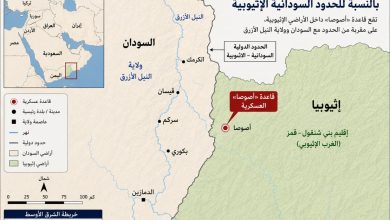
Osama Sayed Ahmed, Al Jazeera’s correspondent in Damazin, Blue Nile State, reported a significant escalation in military operations and clashes between the Sudanese army and militia forces across several axes and battlefronts in South Kordofan and southern Blue Nile. He cited a statement by the Sudanese army confirming that forces from the 4th Infantry Division in Damazin, supported by allied units, successfully repelled a militia attack on the Sali area in the Blue Nile region in the southeast of the country.
The statement also indicated that 36 militia combat vehicles were destroyed and two vehicles in good condition were seized, in addition to the killing of a number of fighters described as mercenaries.
For its part, the Sudan Doctors Network condemned what it described as the militia’s deliberate targeting of densely populated civilian neighborhoods, stressing that the attack did not target military sites but rather civilian areas, resulting in civilian casualties. It considered this a violation of humanitarian and international laws and norms.
The network held the militia leadership fully responsible for the attack, calling on the international community and humanitarian organizations to exert pressure to stop what it described as repeated assaults on civilians—appeals that, according to observers, the militia has consistently ignored, as evidenced by the atrocities, looting, theft, and massacres committed in areas under its control.
Despite the caution exercised by organizations operating on the ground—such as Doctors Without Borders and the Red Cross—and their reluctance to speak openly about conditions in militia-run prisons and ransom practices often carried out by prison guards or individuals who abduct civilians (typically RSF soldiers or officers), the situation appears increasingly grim.
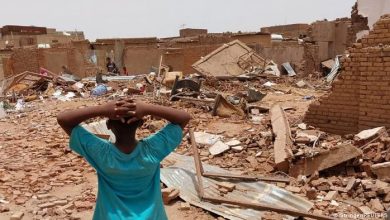
In many towns and villages, some residents initially believed that militia control would provide security, only to face the reality that the militia represents an existential threat that cannot be coexisted with. Areas previously occupied and later abandoned by the militia have been left devastated, looted, and, in many cases, turned into mass graves. No region they entered and exited has been spared. Even communities perceived as supportive have not been immune from killings, score-settling, arbitrary arrests, kidnappings, and sexual violence.
These communities—many of which were once supportive of or aligned with the militia—are now suffering from systematic kidnappings for ransom, a widespread practice rarely absent from any area. Perpetrators often justify such acts by citing the lack of salaries and entitlements.