Sudan: “You Can Run – But We Will Find You,” Militias Warn Civilians
Sudan Events – Agencies
People repeatedly told me that as they fled the Zamzam IDP camp, armed men threatened them while they ran, saying: “Run, go there, run here, run there, we will follow you, we will find you.”
At a press briefing in Geneva, Ms. Knight recounted her conversation with a traumatized child at a UNHCR shelter, whose experience mirrors that of countless young people across the country.
A young boy told her: “You know, it’s fine here during the day, but I’m afraid to sleep at night because the place we live in might be attacked again.”
Forced to Live in Misery
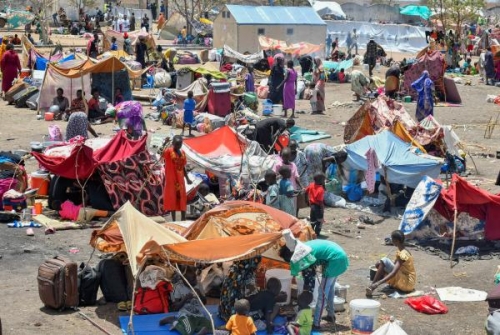
In Darfur, western Sudan, many displaced people are gathering in abandoned public buildings, facing severe shortages of basic water and sanitation services.
Meanwhile, the UN Refugee Agency has warned of continued displacement and new attacks on civilians in Darfur and the neighboring Kordofan region, in communities “already devastated and subjected to unspeakable atrocities.”
Heavy ongoing fighting has also hindered humanitarian access, disrupting aid delivery for over two years. With the seasonal rains, many roads remain impassable for months, further complicating relief efforts, the UN agency said.
Persistent insecurity has disrupted agriculture, worsening deprivation in areas at risk of famine or already facing famine-like conditions.
Latest UNHCR data indicate that over 873,000 Sudanese refugees have fled Darfur into Chad, which now hosts the largest number of registered Sudanese refugees since the conflict began. One in three people in eastern Chad is now a refugee.
A Deadly Disease
In addition to violent clashes between the Sudanese Armed Forces and their former allies turned adversaries—the paramilitary Rapid Support Forces—which began in April 2023, civilians now face a fast-spreading and deadly cholera outbreak.
Dr. Elham Nour, WHO Emergency Officer, stated: “A cholera outbreak has swept through Sudan, with all states reporting cases.”
Since last July, nearly 100,000 cases have been reported.
Lives at Risk
The highly contagious disease spreads rapidly in unsanitary conditions. By early August, 264 cases and 12 deaths had been recorded in the Dougui refugee camp in eastern Chad, hosting Sudanese refugees from Darfur.
Nearby villages have reported suspected cases, while additional cases have appeared in the Tréguine camp, one of several UNHCR sites in eastern Chad hosting Sudanese refugees.
Dossou Patrice Ahwanso, Senior Humanitarian Coordinator in eastern Chad, stressed the urgency of containing the disease.
“We still have over 230,000 refugees at the border in extremely difficult conditions. Without urgent measures, including better access to medical care, clean water, sanitation, hygiene services, and most importantly, relocating them from the border, more lives will be at risk,” he said.
To prevent new cases, the UN temporarily suspended refugee transfers from border points.
UNHCR is seeking $130 million in flexible funding to provide life-saving assistance to an estimated 800,000 people in Darfur. The agency will also respond to the cholera outbreak and relocate 239,000 Sudanese refugees from the Chad-Sudan border.
Warning of Unexploded Ordnance
Meanwhile, the UN Mine Action Service (UNMAS) has voiced concerns that unexploded munitions from ongoing fighting are killing and maiming civilians unaware of the danger.
Mohamed Siddig Rashid, head of UNMAS Sudan, said: “The sad reality of this ongoing conflict is that it’s not limited to rural areas—it primarily occurs in urban areas with high population density.”
Last week, six minefields were confirmed in Khartoum, three containing anti-personnel landmines—a first report of this kind—according to his briefing in Geneva.
“The contamination is widespread on roads, homes, schools, airstrips, medical facilities, and humanitarian bases,” he added.
“These people are largely unaware of the risks that await them… and the problem worsens day by day.”
In a briefing from Port Sudan to New York reporters on Friday, Edem Wosorno, Advocacy Director at the UN Office for the Coordination of Humanitarian Affairs, called on the international community to continue highlighting the war-torn country, from both funding and advocacy perspectives.
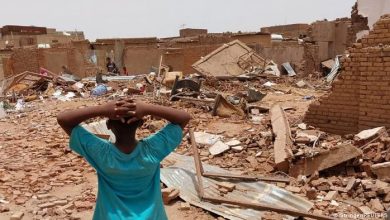
Ms. Wosorno had just returned from Khartoum, describing the devastation as overwhelming.
“The city was destroyed—Khartoum, once bustling with life, now resembles a ghost town… I’ve never seen anything like this in almost a quarter-century of UN service.”
Call for Donations
With the Sudan Humanitarian Plan funded at only 23%, Ms. Wosorno stressed that OCHA isn’t asking for much—just 55 cents per person per day.
“Wherever we can reach, we can help. Wherever safety and security are guaranteed, we can help. Wherever we have sufficient supplies and funding, we can help,” she said.
The only real solution to the world’s worst humanitarian crisis is lasting peace, according to Ms. Wosorno. OCHA and other partners continue negotiations with the Rapid Support Forces and the internationally recognized Sudanese military government.
“We desperately need this humanitarian ceasefire… People are demanding an end to the war that has killed, injured, and devastated countless lives and livelihoods.”