Comprehensive Report on International and Regional Reactions to the El Fasher Massacres in Sudan
Sudan Events – Agencies
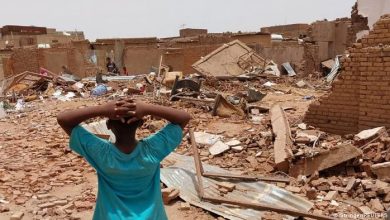
The city of El Fasher, in Sudan’s Darfur region, is witnessing an unprecedented humanitarian catastrophe. Verified reports indicate that more than 2,000 civilians were killed within 48 hours in what appears to be a systematic campaign targeting residential areas and hospitals, alongside summary executions and house raids.
The city remains under a suffocating siege threatening over 250,000 civilians, half of them children.
These developments have sparked widespread international and regional condemnation, with growing calls for urgent measures to protect civilians and open safe humanitarian corridors.
Canada’s Position
Canadian Defense Minister Anita Anand expressed her country’s shock and strong condemnation of the massacres, emphasizing:
The need to protect civilians and uphold international law
The urgent facilitation of humanitarian aid access
Continued Canadian support for Sudan, including:
$64 million in humanitarian assistance
$24.8 million for stabilization efforts
$14.5 million in development aid
United Kingdom’s Position
The Sudanese community in the UK submitted an official memorandum to Downing Street, demanding:
The designation of the Rapid Support Forces (RSF) as a terrorist organization
The suspension of arms exports to the UAE pending investigations into their end use
Support for international sanctions and war crimes investigations
Ensuring no UK-linked weapons are used in human rights violations
The memorandum stressed that “silence undermines Britain’s moral standing.”
Germany’s Position
The German Foreign Ministry declared:
Shock and strong condemnation of reports emerging from El Fasher
Direct responsibility of the RSF to protect civilians
A call for an immediate cessation of attacks and the opening of humanitarian corridors
The accountability of perpetrators under international law
United States’ Position
A former senior adviser on African affairs to ex-President Donald Trump urged:
An immediate halt to the attacks
Protection of civilians
Humanitarian access
A warning of stronger international action if violations persist
United Nations
The UN Secretary-General expressed:
Deep concern over the situation in El Fasher
A warning against grave breaches of international humanitarian law
A call for an immediate ceasefire and unhindered aid delivery
The UN Refugee Agency (UNHCR) reported that:
Thousands of civilians have fled the fighting
Large numbers remain trapped with no safe escape routes
African Union and IGAD
In a joint statement, the African Union (AU) and the Intergovernmental Authority on Development (IGAD) condemned:
The attacks on civilians
Called for an immediate ceasefire
Demanded safe humanitarian access
Stressed accountability and an end to impunity
Arab Positions
While official Arab responses have been relatively delayed, diplomatic and media channels in several countries signaled growing concern:
Qatar: Called for an end to violence, protection of civilians, and support for a political solution
Saudi Arabia: Reaffirmed the importance of the Jeddah peace track and urged commitment to the ceasefire
Egypt: Emphasized the unity and stability of Sudan’s institutions, warning against the risks of state fragmentation
Public and media voices across the Arab world have increasingly demanded condemnation of atrocities and support for Sudanese civilians.
Conclusion
The El Fasher crisis is emerging as a critical political and humanitarian turning point in Sudan’s war, as the international community begins to adopt a firmer stance against the RSF and its regional backers.
Key messages from the international community:
Civilian protection is an urgent priority
Crimes against humanity will not be tolerated
Perpetrators must be held accountable
Immediate humanitarian access to El Fasher and Darfur is essential
A political pathway is needed to restore state authority and sovereignty