Sudan’s War: When Memories Are Confiscated
Report by Idris Awad
“The forgotten war”, “the civil war”, and many other labels may be used, but the grief remains the same. Sudan’s war has spared nothing. It has produced staggering numbers of displaced people, refugees, victims, and missing persons, while many continue to suffer its devastating effects. Lives have been lost, property looted and destroyed, and people have been forced into lives they had never known before in places of displacement and refuge. They struggle to provide daily sustenance for themselves and their families — succeeding at times and failing many times over. Human beings, as we know, are children of their environments, and few are truly able to adapt easily to the upheavals of a new life.
United Nations agencies and relief organisations have published figures on the displaced and refugees, as well as their urgent humanitarian needs — clothing, food, and medicine — and have provided what they could in the camps established for them. Everyone has spoken of the material losses suffered by the displaced as a result of the war. Some have gone further, discussing “reconstruction”, by which they mean the rebuilding of civilian infrastructure and homes that suffered severe damage.
But here a far more important question arises: what will be done to rebuild souls? How can people be prepared to return to places where not only walls have collapsed, but memories too? Can a person reconcile with the “memory of place” in its current form? And which memories will prevail upon return — memories of beautiful days, or memories of bullets and the sounds of bombs?
In this report, we accompany three different human experiences, each belonging to a person who has actually tasted the return to his home in Khartoum State, though their reasons and motivations differ.
Ahmed, a 54-year-old civil servant, lived a simple, orderly, routine life in a Khartoum neighbourhood before the war turned everything upside down. Sami, a 32-year-old well-known media figure from Omdurman, had never imagined life away from Omdur for even a few hours; he had never left it until the war forced him to. Finally, there is Aref, a 43-year-old songwriter from Bahri, a city he loves with near-mad devotion. A man deeply attentive to the details of his day from waking until sleep, he is careful not to let anything disturb his mood, describing himself as a highly “mood-driven creature”.
Each of them spoke candidly about the experience of return. What experiences they were. In the following lines, perhaps they will help uncover the narrative of conflicting memories in places that once held beauty — and its opposite.
For the reader’s awareness, we have used only first names to protect the safety of those sharing their experiences.
A Harsh Test
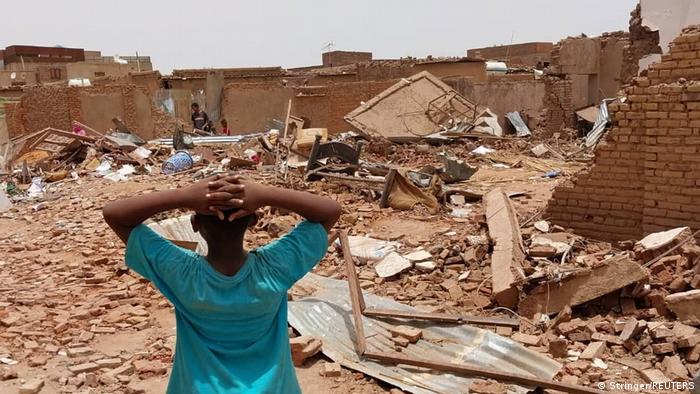
“My God!” were the first words uttered by Ahmed, the civil servant, when he reached the door of his family home in Khartoum after two years of absence caused by the war. He had not expected destruction on such a scale.
Ahmed says: “What hell war is. I never imagined our house could reach this degree of ruin and devastation. Nothing was in its place except the walls. My late father’s favourite chair, the one he used to sit in during the evenings, had been smashed. We had never moved that chair after his death because of the immense emotional value it held for us. Whenever we passed by it, we felt he was still among us. Even the walls that used to echo his voice calling us no longer carried that tone. They had replaced it with the sounds of bullets, artillery, and fire.
“My library, once filled with great books, had its frame shattered into several pieces. The books were torn and scattered across the floor, bearing traces of fire. What amazed me most was that the ceiling fan in my elder brother’s room was still in place, untouched, as though the vandals had somehow been blind to it. Without realising it, I found myself asking it what it had witnessed all that time. I wished it could answer the many questions I had. But of course, that was impossible.”
A Step Towards Coexistence
Like other displaced people returning home, Ahmed is searching for a glimmer of hope to help him live in the house again, where the best days of his life and his most beautiful memories are. He is trying to let the memories he had lived there before the war prevail over the terrible ones that forced his family to flee the neighbourhood in which they had grown up, knowing its roads and bends by heart, carrying a memory in every corner.
Ahmed says he is now struggling to find an effective way to coexist once again with a place stripped of the sweetest memories of his life and burdened instead with memories of terror, killing, and destruction. He is filled with sorrow when he stands beside the football pitch at their home and hears nothing but the distant echo of old crowds and players arguing with referees, as though from a remote age. It forces him to confront the inevitable question: Will we ever return to what we were?
Ahmed continues: “I went to the neighbourhood club, where residents of all ages used to gather to entertain themselves. They would sit in groups by age, differing in years but united by beautiful companionship. You could hear their laughter from far away before even entering the club. I went there hoping to retrieve those beautiful memories and meet old friends again. Sadly, I found none of them — not literally, but I found bodies I recognised inhabited by different spirits, filled with sadness and grief. Their eyes were sorrowful, their speech broken. All their once-pleasant conversations had turned into talk of war and its memories. Their minds were scattered.
“One acquaintance was trying to remind a third man sitting with us of the name of a neighbour from the area mentioned during our conversation. All our attempts failed. Finally, he apologised sadly and muttered: ‘My friends, my memory is no longer what it was before this cursed thing’ — meaning the war. He said no more, and we did not ask again.”
Ahmed falls silent for a moment, then asks: “Will my love of life and beautiful memories triumph, or will it be defeated by the harsh memories of war trying to take control?”
Forced Landing
“There was no option left for me except to return home with my mother. We had grown exhausted and suffered so much from displacement,” says media figure Sami at the beginning of his account.
He continues: “Like many citizens of Omdurman, we fled when the war intensified and headed towards the safer states where we had relatives. We began in White Nile State and stayed there for around two months. When we sensed discomfort from our hosts, we moved to Kassala State. After two and a half months, the same patterns repeated from people who were supposed to be relatives. I do not know whether the war changed their character or merely revealed it as it truly was.
“Each time those pressures occurred, I remembered our home and what it represented to us — a safe refuge and a warm embrace. I followed the news moment by moment until I received confirmed reports that conditions in Omdurman had calmed. Despite knowing full well that basic services such as electricity and water were unavailable in the neighbourhood, I did not hesitate for a single moment before deciding to return home. What a decision it was.
“I will never forget the moment we reached the house. It was a moment of mixed emotions. I felt a shiver run through my body as I pushed the door open after a year and a half away: childlike joy at returning, and deep sorrow at the condition of our home. The tree in the middle of the courtyard had died, and the plants had withered from thirst. Bullet marks were carved into the walls. Some windows were broken, others ripped out. But none of that mattered. I was now in my small homeland — my home and refuge that never tires of me. Yes, I was here, and that was enough.”
The most beautiful thing Sami witnessed after returning home was the gathering of neighbours for Ramadan iftar in the street on the first day of the holy month. When the Maghrib call to prayer was heard, those present burst into tears, raising their hands in prayer that they might once again enjoy the safety they had known. They cried like children, concerned only with releasing the sorrows that had weighed down their hearts.
It was, he says, a moment of personal triumph — proof that there is no despair with life and no life with despair. It was an image that brought comfort to the soul, reflecting determination and great hope that life before the war could return. At that moment, Sami became convinced that the beautiful details of the past could return with their old radiance.
He was also gladdened by the presence of some remaining young men from the neighbourhood, repairing homes and helping neighbours with daily tasks, allowing them to continue living without despair. They were planting hope in souls before planting trees; watering spirits longing for life again before securing water for the people. They were a bright glimmer of hope, telling people that we are still well, and that through cooperation and solidarity, we will surely restore life to something even more beautiful. Hope remains.
Finally, Sami speaks with deep sadness about the morning after his first night back home: “For years I would wake up to the sound of the morning assembly bell at the school beside our house, followed by the pupils singing the flag anthem with great enthusiasm. I missed their beautiful voices that morning. But I found myself whispering: ‘This land is ours.’ My voice gradually rose, and hope filled me once more: ‘Let our Sudan live as a banner among nations.’ Yes, children of Sudan, our country must be a banner among nations, for ‘this is your symbol’, and we must preserve it.
“It was there, in particular, that I compared what I had suffered during displacement with returning home. Honestly, the difference was vast. The warmth and safety surrounding me were enough to give me strength and hope that I could live happily as I once did. Looking quickly at my previous life, I realised that its details were not impossible to achieve again. All that is needed is a little work and a sincere belief that reaching that point is possible. And surely, I will reach it.”
A Stolen History
Because of the importance of expert opinion in this story, we turned to Dr Tariq Al-Fadil, a psychiatrist, to explore the psychological dimension of this troubling issue.
Dr Tariq says: “Returning home after war is not merely a journey by car or the reopening of a locked door. In reality, it is a journey back to the self. The hardest thing confronting the returnee is not collapsed walls or stolen furniture, but that strange feeling that ‘my home no longer resembles me’.
“The greatest psychological pain is seeing one’s safe place violated. A person builds memories in the corners of the home: here the children played, here we had tea. When someone finds strangers have tampered with those details, it feels as though part of their history has been stolen. That feeling can leave a person standing like a stranger in his own living room, as though the walls are silent and no longer recognise him.
“War tries to ‘confiscate’ our beautiful memories and replace them with ugly images — bullets, destruction, dust. A successful return depends on our ability not to surrender to these images and on striving to erase their traces through actions such as breaking the old image. Cleaning the house, removing rubble, repainting walls: these are not merely maintenance works, but a washing of memory. When you change the colour of a wall struck by a bullet, you are erasing the trace of fear and replacing it with a trace of hope.
“Changing the features of the place is also important. If a certain corner of the house is associated with a bad memory or intense fear, its function should be changed. Rearranging rooms and changing seating places can break the link between the place and the old pain.
“We must also not forget neighbours and togetherness. A house does not rise through stone alone, but through people. The return of neighbours, exchanging visits, and checking on one another is a real support after God, helping people move beyond bitterness. When the street fills again with people’s voices, the ugly memories begin to retreat, leaving space for new stories being written now.
“Above all, one must seek success from God, ask Him to open hearts, remove worry and grief, strengthen hearts, and grant them firmness. That is above every other cause.”
The Success of Confrontation
Dr Tariq continues: “We must not rush psychological healing. It is completely natural to cry when you see your house destroyed. That grief is an acknowledgement of the value of what was lost. But always remember that ‘the place’ is you. As long as the human being is well, he can always drive out the memories of war and create from destruction a new life, more beautiful than before.
“Sudan’s war remains a deep wound in the memory of both place and people. But the return of the displaced to their homes is the first step towards real recovery. Reclaiming homes is not merely a battle of construction and repair; it is a battle of will and memory.
“Destruction tried to confiscate the most precious things we possess: our safety, our memories, and our small details. Yet the human capacity to adapt remains, after God, the support upon which we lean to rise again. When we open the doors of our abandoned homes, we are not opening wood and iron, but horizons towards a new life, one in which we wash away the dust of pain and replace the noise of bullets with children’s laughter and neighbours’ gatherings.
“Healing a broken spirit begins with a gentle touch on a wounded wall and a smile declaring that human beings are stronger than destruction. Our homes will become homes again through our presence in them, and through our insistence on planting new hope in every corner, so that the beautiful memory remains the final victor in the battle for survival.”
Different Reactions
Dr Tariq explains that people react differently to the events and consequences of war for several reasons:
First, the experience each person endured differs. Not everyone lived through the war in the same way. Someone who lost a relative or witnessed harsh events inside the home will have a more painful relationship with the place, while someone who left early may experience a lighter shock.
Second, the strength of attachment to the place matters. Some people had a very strong relationship with their home — childhood memories, family memories, and important events took place there — so seeing it destroyed may hurt them deeply. Others may have had a weaker attachment, perhaps because they had moved there more recently, and so their reaction may be less intense.
Third, personality plays a role. People differ in how they respond to trauma. Some regain composure quickly and try to adapt, while others remain affected for longer, experiencing sadness or anxiety. This is not a matter of weakness or strength, but a natural human difference.
Fourth, the presence or absence of support is crucial. A person surrounded by family, friends, and a supportive community is better able to cope. Someone who feels alone may experience the shock more severely.
Fifth, one’s outlook on life matters. Some people see what happened as an ending and a great loss; others see it as a trial that can be overcome or even the beginning of something new. This outlook strongly influences reactions.
Sixth, the form of destruction itself matters. Seeing a partly damaged house differs from seeing one destroyed. The presence of surviving objects — photos, furniture, familiar landmarks — may reduce the shock, while destruction may leave a much deeper impact.
The Forgotten Memory
Aref, a songwriter working in the arts, lives in “beautiful Bahri”, as he likes to call it. The war initially forced him to flee to Red Sea State, after which he left Sudan for a Gulf country. He tried hard to overcome his longing for home and immerse himself in his new life. Conditions seemed ready for a new beginning in the field he loved — artistic production. But…
Aref says: “Every morning I would wake up hearing the sounds of the birds I had cared for in our house, and remembering the evening gatherings in front of the house with friends and neighbours, among many other scenes. I tried to resist that longing, but I could not. I cancelled my residence permit and returned to my eternal love — beautiful Bahri.”
In a sorrowful tone, Aref continues: “Would you believe that I sat on the floor inside our home for nearly two hours, staring with deep sadness and overwhelming astonishment at the destruction all around me — the furniture, the walls, the windows and doors, the electrical wiring, and of course the birdcage. Had I not known the road to our house by heart, I would have thought it was not the same place.
“I tried to overcome the shock by going out to check on the neighbours, because, as they say, a person is many through his brothers. Perhaps I would find them in a condition that would reassure me that the future could be better. Perhaps they would give me the strength to repair the house and prepare it for my family’s return from Northern State, where they had been displaced.
“But sadly, the streets were no longer what they had been. Uncle Mohamed’s grocery had been completely destroyed. Al-Omrabi Bakery’s walls had collapsed and it was out of service, its owner having emigrated. The vegetable market had become a dry, scattered debris. The greatest blow was hearing of the deaths of childhood friends — Mukhtar, Al-Tahir, and Khalid — during the war, reportedly in horrific circumstances.
“Even when I visited my artistic production studio, I could not recognise it. Strangely, the musical instruments were not missing; they were smashed with clear malice. It seemed the perpetrator knew no path to beauty.
“When I began assessing the damage in preparation for calculating repair costs, I realised I would need a sum I could not possibly obtain, especially as the circumstances of all my acquaintances made asking pointless. It was at that exact moment that I asked myself: where, then, is beautiful Bahri? Where is the life I once had? It seems to have entered the archives of forgotten memory and struck the walls of the impossibility of full return. And I am someone who never learned to accept it as incomplete.”
Aref could not remain in the house for more than two days. He felt an alienation far greater than what he had felt abroad — alienation in the home, alienation in the streets of the neighbourhood, alienation among the neighbours.
He says: “I cried every night as I remembered what we had been and what we had become. There was no comparison. Every door of hope for recovering the life we once had here was firmly shut. I had no choice but to carry my bag, leave the house, and join my family in Northern State. What pains me most is that our home, the playground of our childhood, and the treasury of our beautiful memories, is no longer what it was. Sadly.”