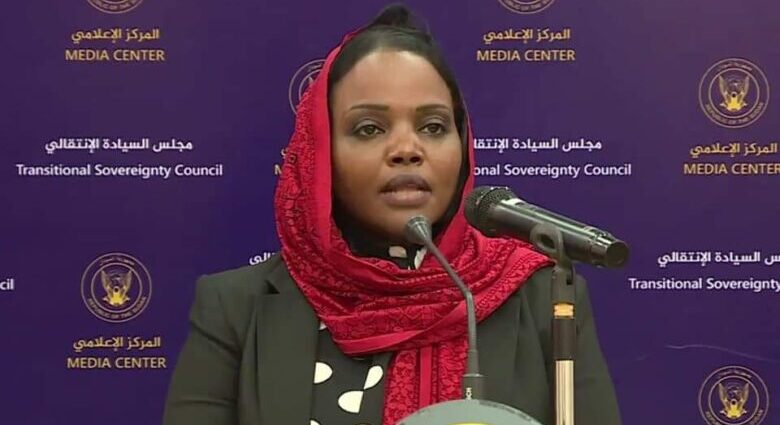
Sudan’s State Minister at the Ministry of Human Resources and Social Development, Dr. Salima Ishaq, reaffirmed the Sudanese government’s rejection of the initial Fact-Finding Mission, arguing that it had a political character rather than being a professional investigative body examining violations.
In statements to the news website Al-Muhaqiq, Ishaq said Sudan is cooperating with the Human Rights Mission affiliated with the UN Human Rights Council and welcomes special rapporteurs whose work relies on direct engagement with citizens without intermediaries. She also indicated the government’s readiness to consider any recommendations they may present.
The minister added that the formation of the fact-finding mission was driven by political motivations backed by well-known international actors. At the same time, she affirmed continued cooperation with the Office of the United Nations High Commissioner for Human Rights (OHCHR), which operates inside Sudan and participates in meetings with official bodies.
She explained that there is a joint plan between the National Mechanism for the Protection of Human Rights, headed by the Minister of Justice, and the UN office, noting that Sudanese authorities regularly provide the commission with information, despite occasional complaints from the commission about delays in receiving some data before the issuance of its reports.
Regarding the recent sessions of the UN Human Rights Council, the minister described Sudan’s participation as successful, noting that the Minister of Justice attended the meetings and responded to a number of statements presented during the sessions.
She added that some of the information presented to the council was inaccurate, and that the minister also responded to remarks made by UN High Commissioner for Human Rights Volker Türk regarding his visit to Sudan and his statements before the UN Security Council.
Ishaq also noted that Sudan organized a side event on the sidelines of the meetings to present its National Plan for the Protection of Civilians, which was submitted to the Security Council as part of Sudan’s commitments in January 2025.
The event also addressed efforts related to the protection of women and girls and combating violence against women, in addition to the framework agreement signed with the United Nations in this field.
She added that Sultan of the Masalit, Saad Abdelrahman Bahr El-Din, presented testimony during the session about the events in the city of El Geneina in West Darfur State, speaking as one of the survivors about the violations that civilians experienced there.
On the humanitarian situation, the state minister said humanitarian aid had reached Kordofan after the siege on Kadugli was lifted, stressing the continued flow of relief assistance through the Humanitarian Aid Commission and other relevant bodies.
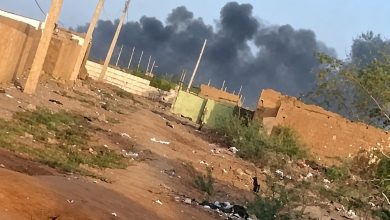
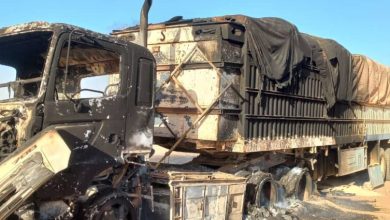
She acknowledged the challenges facing aid delivery, including drone attacks by the Rapid Support Forces militia targeting some convoys. However, she said areas returning to state control are witnessing a gradual return to normal life and the arrival of aid to residents.
She also noted that the liberation of the city of Bara would facilitate access to several areas of Kordofan, given the importance of the road linking Bara to Omdurman, which significantly shortens the distance to El-Obeid and areas of North Kordofan.