Ambassadors Speak with Heated Words at the United Nations… Is the Gulf’s Patience Running Out?
Report – Sudan Events
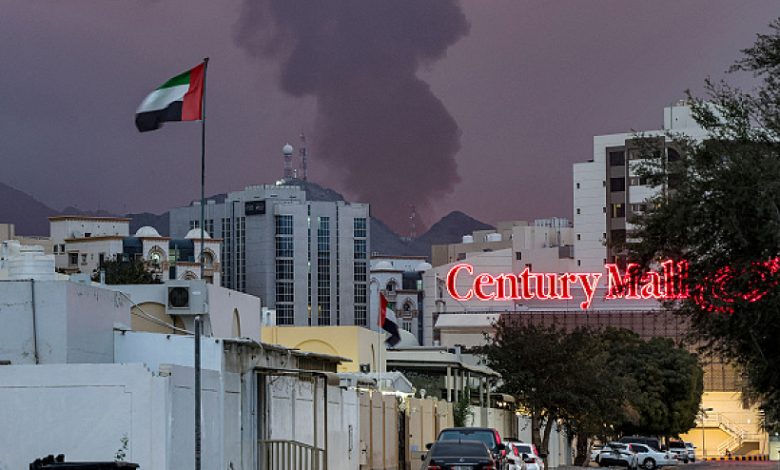
Some observers have a particular narrative about how matters have unfolded in the Gulf region. According to this view, after the shock of the killing of Iran’s Supreme Leader and the country’s descent into a state of disorientation, Iranian military leaders took charge of affairs. These leaders, in one way or another, sought to strike U.S. bases in the region despite the absence of reliable information on whether those bases had actually been used to launch attacks against Iran.
Those holding this view believe that the Islamic Revolutionary Guard Corps—already in possession of precise coordinates of these bases—began launching strikes here and there, in a largely random manner, driven by a strong desire for retaliation. As missile attacks continued, media outlets started speaking of an Iranian attempt to turn the Gulf region into an economic hostage by closing vital global passages such as the Strait of Hormuz and Bab al-Mandeb, thereby affecting the lifeblood of the global economy.
According to these observers, certain factions within Iran eventually embraced this perspective and treated it as a deliberate strategy, even though it may have originally been the product of circumstance. That circumstance, they argue, was enough to alarm states, ships, and aircraft alike. Major companies began refraining from sending oil shipments as the Middle East—due to the widening scope of the conflict—became increasingly dangerous. This, in turn, pushed fuel prices higher, with prices now rising daily as roughly 32 countries have begun drawing from their strategic reserves in an effort to stabilize oil markets.
Oil prices are widely expected to climb even further as the war enters its second week. It appears unlikely that any country will escape the repercussions of the conflict, whose impact is already spreading globally. In the Sudanese capital, Khartoum, for instance, it is not difficult to notice long lines of vehicles at fuel stations. Despite assurances from government officials, many fear that available supplies could soon run out if the war drags on. Naturally, this concern is not limited to Sudan; most countries in the region—as well as many European and African states—are now vulnerable to potential energy shortages.
Dr. Osama Hanafi, a professor of political science at the University of Sudan, says he does not fully agree with those who describe what has happened as a “strategy of coincidence,” although he acknowledges that such a scenario might initially appear plausible.
“What happened is difficult to interpret,” he said. “A country subjected to a clear attack by the United States and Israel deciding, of its own accord, to assault its neighbors in the manner we have seen is both unjustified and unacceptable. Even if Iran intended to create major turmoil in the region to pressure the United States, creating chaos by killing your neighbors and firing missiles at the homes of civilians is something Iran cannot justify.”
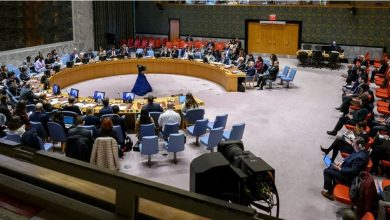
He added that it would be unrealistic for Tehran to expect cooperation from countries it attacked without provocation. “Anyone who listened to the statements of Gulf representatives at the United Nations yesterday could clearly sense that these countries are no longer able to remain patient. Their patience is beginning to run out.”
Hanafi continued: “Energy prices will certainly rise, and the world will certainly face an energy crisis. Preventing more than ten million barrels of oil from reaching global markets will inevitably have an impact. There is also a looming gas crisis that has already begun to surface. Some countries are trying to draw from their reserves to cover the shortfall—but for how long? When will the war stop?”
Professor Fadl Al-Mawla Al-Naeem, a political science specialist, believes that the continuation of the war will push the world into complex and difficult calculations.
“Some countries have already begun preparing and searching for solutions,” he said, “but in my view the crisis is significant and is already affecting not only oil-importing nations but also oil-producing countries.”
He added that remarks made yesterday by Donald Trump, in which he suggested the war might soon stop because there are no new targets left to strike, could be a positive sign. “The global economy might withstand three weeks of war—perhaps a little longer—but if the conflict continues beyond that, it could plunge the global economy into a major crisis. The entire world has already been harmed and will continue to be.”
Al-Naeem also dismissed claims that Iran is exploiting the Strait of Hormuz to sell oil to China. “That is not accurate,” he said. “Iran will not risk sending shipments at this time when it knows its vessels are under the watchful eye of the Americans.”
He concluded: “There is no logic in this war—neither in the aggression and the assassination of the Supreme Leader, nor in Iran’s insistence on striking its neighbors, nor in the way this conflict may ultimately end. Nothing about it appears rational.”