Khartoum Begins to Reclaim Life… The Capital Welcomes Eid with “Hope”
Report – Sudan Events
As discussions intensify about the organized return of large numbers of Sudanese from Egypt, Saudi Arabia, and other countries following the Eid al-Fitr holiday—within the framework of voluntary repatriation—concerns have simultaneously resurfaced about Khartoum’s persistent challenges, particularly regarding security and essential services.
These concerns come amid recent administrative developments, including the dissolution of the Ibrahim Jaber committee and the transfer of its responsibilities to Prime Minister Kamil Idris. The latter departed shortly after assuming oversight of the Khartoum rehabilitation committee—tasked with preparing the capital to receive returnees—traveling first for Umrah and then onward to Geneva for the Eid holiday. These shifts have stirred renewed activity within the file while also creating a degree of confusion around it.
In reality, Khartoum continues to face tangible difficulties related to basic services such as electricity and water. However, these challenges are not unique to the capital. Even relatively secure states that have not witnessed direct military operations—such as River Nile and Northern states—have suffered recurring power outages. Cities like Kosti, Rabak, and Al-Dueim have repeatedly gone off the national grid, plunging into darkness, as has El-Obeid and others. These issues reflect a broader pattern of weak infrastructure across Sudan rather than a crisis confined to a single state.
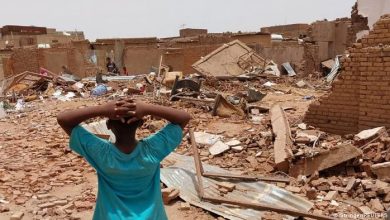
Ashraf Al-Khidir, a telecommunications professional who moved between several cities during the war, noted that despite the extensive damage and systematic destruction of infrastructure in Khartoum, conditions in the capital are comparatively better. He attributes this to the relative resilience of its infrastructure, which in many areas withstood significant sabotage. Engineering and technical teams, he said, have managed to restore portions of essential services in a relatively short time and resolve challenges that initially appeared insurmountable given the scale of destruction.
The damage, he added, was inflicted using both specialized equipment and technical expertise, enabling perpetrators to cause severe harm to facilities. Nevertheless, persistent government efforts have succeeded in restoring a functional baseline. While it cannot be said that full recovery has been achieved, sufficient progress has been made to allow services to operate pending full maintenance and replacement works.
He emphasized that local authorities in Khartoum State, federal bodies, and the Ibrahim Jaber committee all exerted significant efforts to restore services. These efforts have now culminated in the return of the federal government to operate from Khartoum. “Beyond its symbolic importance, this return will accelerate progress and place pressure on all relevant authorities to deliver the required resources and restore services to citizens. This is a positive development,” he said.
Al-Khidir acknowledged that some service-related challenges persist. Certain areas remain without electricity due to the targeted destruction of transformers. However, efforts are underway to procure and install new transformers—some of which have already been delivered and installed, while others are expected following the completion of contracts. These underserved areas, he noted, remain a priority, particularly given the patience demonstrated by their residents.
Meanwhile, architect Salah Abdelmoneim stated that engineers are currently working through a committee to assess structural damage to buildings in Khartoum. He highlighted the collective efforts being made to restore the capital following widespread destruction.
“We never left Khartoum,” he said. “We remained despite the high risks and daily shelling, which allows us to assess progress firsthand. Compared to where we were, what has been achieved so far represents a significant improvement for the Sudanese people and demonstrates our capacity to recover.”
He added that electricity is now available in most areas, with some neighborhoods relying on solar power. Markets have largely resumed operations, population density is steadily increasing, and life is gradually returning—albeit with difficulty. “Yes, we are still in a state of war, and many of our facilities continue to be targeted by militia drone attacks. This remains a reality. But considering the scale of the challenges, we are doing well and are capable of rebuilding our lives.”
Abdelmoneim stressed that the decision to return is a personal one, but an important one. Homes abandoned by their owners have, in some cases, turned into waste sites or been unlawfully occupied. Returning, he said, enables citizens to rebuild their homes and reclaim their lives.
“People will not restore their lives from Egypt, Saudi Arabia, or Kampala—they will do so when they return to their homeland,” he noted. “Despite everything it has endured, the capital is recovering. Today’s Khartoum is certainly better than yesterday’s.”
He also pointed out that the cost of living in Khartoum is now lower than in some other relatively stable cities—a claim supported by many recent returnees.
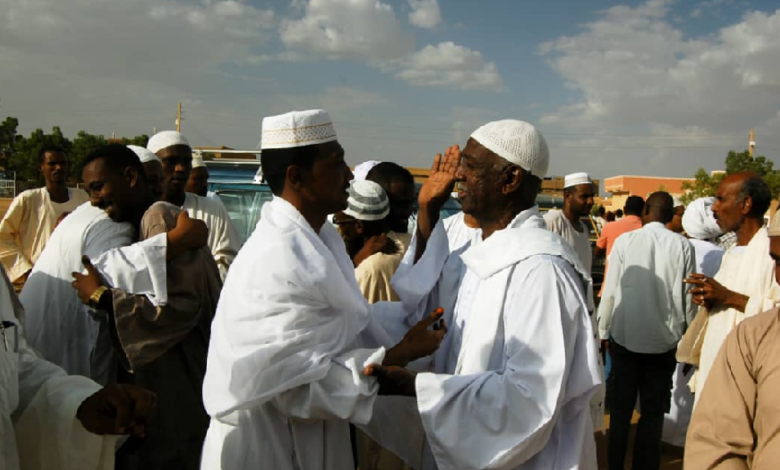
“As we celebrate Eid today, we pray in our restored mosques, live in our homes, and have access to electricity and water—despite the familiar disruptions we experienced even before the war,” he said.
“Sudanese homes are once again vibrant and welcoming. People are recovering, receiving guests with smiles, streets are filled with children, and the chants of Eid fill the air.”