Central Bank Governor: Banking Sector Regaining Strength Despite Systematic Destruction
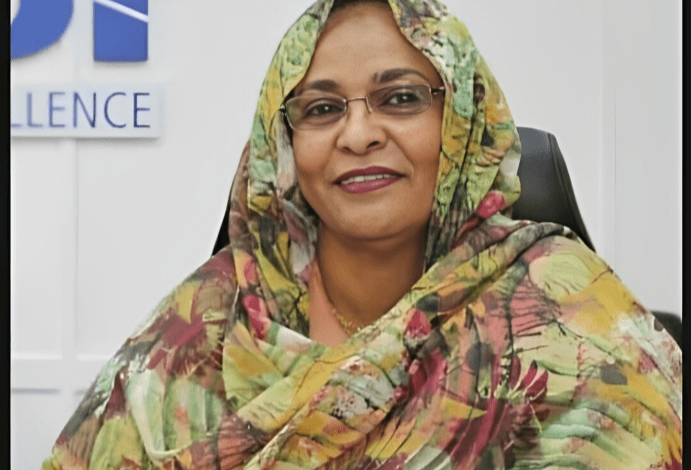
The Governor of the Central Bank of Sudan, Amna Mirghani, emphasized the pivotal role of the banking sector in supporting economic stability, stressing the need to direct financing toward productive projects—especially in vital sectors that directly strengthen the national economy. She explained that national and commercial banks have achieved significant success in recent periods by supporting various productive groups through streamlined financing procedures and expanding microfinance, which has enabled small producers to establish projects that effectively stimulate economic activity.
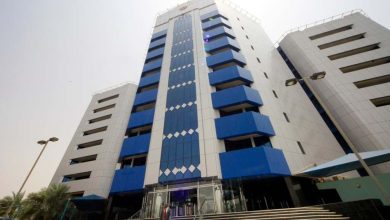
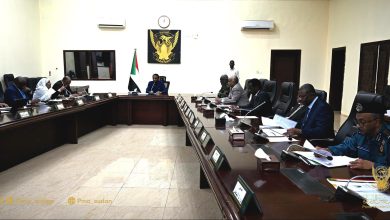
This came during her inauguration of the headquarters of the Farmers Commercial Bank and its Palace Street branch, attended by Ahmed Al-Mustafa Ali, Secretary-General of the Khartoum State Government representing the Governor, alongside Dr. Nawal Bashir Banga, Acting Minister and Director-General of the Ministry of Finance in Khartoum State, as well as the bank’s board members, branch managers, and shareholders.
The Central Bank Governor noted that Sudan’s banking sector had recently been subjected to a systematic destruction process that resulted in the loss of a significant portion of its assets. However, she affirmed that the determination and resilience of workers in the sector have been decisive in gradually restoring its strength—reflected in the return of bank headquarters and branches to the capital, Khartoum.
She also praised the sacrifices made by the Sudanese Armed Forces and supporting forces in what she described as the “Battle of Dignity,” defeating the rebellion and restoring security and stability to large parts of the country, thereby paving the way for the return of economic and service institutions.
Ahmed Al-Mustafa Ali, representing the Governor of Khartoum, described the reopening of the Farmers Commercial Bank in the capital as a clear indicator of Khartoum’s recovery and the return of security and services.
He explained that the state government has made significant efforts to remove the impacts and remnants of war and curb security disturbances, as part of a comprehensive plan for national recovery and reconstruction.
He affirmed the continued work to restore all essential services and improve the general environment to encourage citizens to return to their areas, noting the important role banks play in supporting economic activity and stabilizing daily life.
For his part, Dr. Najm al-Din Khalafallah, Director-General of the Farmers Commercial Bank, announced the resumption of the bank’s operations from within Khartoum through its Palace Street branch, as part of contributing to recovery and stability efforts in the state.
He explained that since its establishment in 1960, the bank has played a key role in supporting the agricultural sector by providing production inputs and financing to farmers, affirming its continued developmental mission in the coming phase.
He added that the bank’s return to its headquarters represents an important step toward rebuilding confidence in the banking system and enhancing its ability to support productive sectors—especially agriculture, which remains a cornerstone of Sudan’s economy. He reaffirmed the bank’s commitment to expanding its services and developing its financing tools to meet upcoming needs and contribute to economic stability and sustainable development.