Sudan’s Dialogue Mechanism: A Mirror That Does Not Reflect Everything
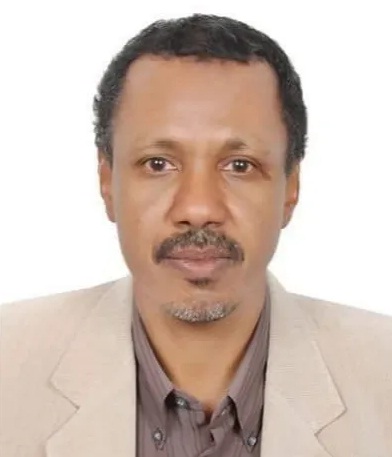
Dr. Ibrahim Al-Siddiq Ali
(1)
Let us agree from the outset that there is a national consensus on the following:
- Conducting an inclusive Sudanese-Sudanese dialogue inside Sudan, driven by Sudanese themselves and involving everyone.
- Making it a dialogue aimed at building national consensus, defining national priorities, and laying the foundations for the Sudanese state.
- Ensuring that the dialogue is free from partisan agendas, personal interests, and political or societal ambitions.
These broad principles provide a political and social foundation for discussion. Within this framework, we can address the various tracks, issues, priorities, and committees.
It is encouraging that the initiative has generated political momentum among different political forces, movements, and sectors, creating space for discussion, consultation, and coalition-building in an effort to establish a broader and more inclusive common ground. All of this is positive and welcome.
(2)
What is less reassuring is for the mechanisms intended to manage this broad space and extensive discussion to become narrowed down to a single “committee” or “initiative group” among the many initiatives put forward throughout the years of war—or even before it.
It is well known that initiatives tend to emerge from groups that share similar ideas, intellectual traditions, and areas of interest. As such, they are the furthest thing from representing the principle of inclusiveness.
Inclusiveness here concerns backgrounds, starting points, and political orientations. One colleague made a precise observation when he noted that the dialogue committee is “predominantly composed of people with leftist backgrounds,” from the same university, of roughly similar ages, and mostly over sixty.
Inclusiveness also means reflecting the popular and social dimensions. If dialogue is a societal matter, would it not be better for community leaders to be part of it?
It is true that the left has historically tended to distance itself from traditional forces. Even when compelled to engage with them, it often turns to figures from traditional leadership circles who are close to its own political orientation.
All of this undermines the principle of open dialogue, open-mindedness, and the transparent management of major national issues rather than handling them behind the scenes.
(3)
As we move from a state of isolation and hesitation toward initiative and action, it must be recognized that what the nation and its citizens have sacrificed during this war and in confronting the aggression is far greater than some groups or political forces may imagine.
This chapter cannot simply be closed without tangible changes and meaningful guarantees.
That does not mean bringing back a small group of political activists who have spent years moving from one arena to another, carrying their briefcases and disappointments with them. Rather, it means establishing firm national foundations rooted in the values of this nation and moving toward a national project connected to the country, its people, and its land.
Such a project must be founded on consensus, coexistence, and the rejection of everything that stands in opposition to them—foremost among these being foreign agendas, mercenaries, and the subjugation of the nation.
(4)
Every member of the Sudanese-Sudanese Dialogue Committee is welcome. Yet there are many reservations and numerous concerns.
More worrying still would be for those who have borne the greatest pain and have the greatest stake in the outcome to be placed in the position of “spectators” rather than “participants.”
Participation cannot be achieved through token representation or mere affiliation. It requires genuine ownership and an actual presence.
This, it seems, is what the dialogue group is failing to achieve as it hastens to engage elites in an attempt to provide a veneer of regional representation.
True representation is the voice and pulse of the street. It is the genuine sentiment of those who sacrificed, gave, endured, and contributed without expecting anything in return.
That accumulated sense of grievance and weariness cannot be erased through indifference or deliberate neglect.
May God protect Sudan and its people.