Between Gosh, Al-Gouni, and Shamim!
As I See
Adil El-Baz
1
There are stories and topics that deserve to be told, and they are not suited to the kind of analytical political writing I usually do in this column (In My View). So I try, every week on Saturday, to tell and comment on stories that are close to politics or literature in a different way. So, here is the first tale.
Social media buzzed last week with three stories: the first about Shamim Lafi, the second about Al-Gouni, and the third about Gosh and his group. The link between them is that they all relate to weapons. Let us begin with the story of Shamim Lafi.
2
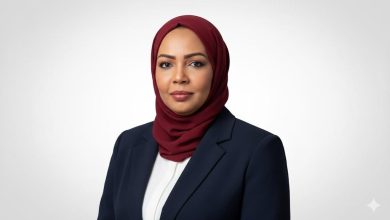
The captivating Shamim, in the story reported by Afaq magazine—edited by my friend Mr. Othman Fadlallah—is a 44-year-old Iranian woman who runs one of the most dangerous global arms smuggling networks. She was recently captured by the FBI at Los Angeles International Airport while attempting to flee to Turkey, revealing details of a lavish lifestyle and transcontinental espionage adventures. According to the narrative, the reason relates to her direct role in fueling the bloody civil war in Sudan. U.S. federal prosecutors revealed a massive $70.5 million deal (about €60 million), brokered by “Mafi,” to supply the Sudanese army with Iranian-made Mohajer-6 armed drones, in addition to guided bombs, control systems, and technical training.
According to Afaq, it did not stop at drones. Court documents allegedly claim her network transported 55,000 detonators to Sudan’s Ministry of Defense, along with tens of thousands of bomb fuses linked to the Iranian Revolutionary Guard. To evade financial oversight, “Mafi” used a front company in Oman called “Atlas International Business,” with payments made through informal exchange channels in Turkey and the UAE, and cash funds filled with “fresh dollars,” as seen in a WhatsApp video showing bundles of $100 bills. End of story.
What is strange is that Sudan does not actually need to smuggle weapons. It is a recognized state with the right to import arms. The UN arms embargo was originally related to the war in Darfur, not to the war of the Dagalo family that they ignited across all of Sudan.
The world of weapons and their smuggling is always shrouded in mystery, run by anonymous networks with no clear identity or sources, often operating outside the law. Nearly half of Africa is effectively barred by major powers—especially the United States—from importing weapons. Yet, according to the Stockholm International Peace Research Institute (SIPRI), Africa imported $3.1 billion worth of arms (though this reflects about a 40% decline compared to the previous period). Wars in Africa are fought with weapons that are never truly monitored. There are currently ten African countries under arms embargoes, yet they are among the largest importers of weapons. Strangely, these weapons are often sourced from the stockpiles of companies in the very countries that prohibit and penalize such trade—suggesting the entire process is little more than blatant hypocrisy. Otherwise, it would be easy to stop the flow of weapons at the source instead of selling them to intermediaries who fuel wars and later impose sanctions.
3
The second story: Al-Gouni
The news reported: “The United Nations Security Council Sanctions Committee (1591 Committee) announced the addition of four new individuals to its sanctions list. This decision followed a formal proposal by the United States, the United Kingdom, and France, targeting key figures behind arms supply operations and the recruitment of foreign mercenaries for the Rapid Support Forces militia. The sanctions include asset freezes and travel bans on individuals who played central roles in prolonging the war and fueling atrocities. Among them is Al-Gouni Hamdan Dagalo, brother of the RSF commander and procurement official, accused of leading militia armament operations and providing financial and logistical support for continued military activities.” End of report.
Imagine—the same Al-Gouni, previously sanctioned by the United States and internationally, moves freely across America and Europe without the slightest concern, even addressing organizations and parliaments and attending conferences. However, Professor Ashari says the whole issue is fraudulent, and that this announcement itself attempts to cover up the UAE’s role in supplying and recruiting mercenaries, shifting blame onto individuals and Colombian mercenary companies… “Who are they trying to fool?”
4
Salah Gosh… and what do you know about Gosh!
In Thursday’s news, you read the following: “The UAE Attorney General, Counselor Dr. Hamad Saif Al Shamsi, referred 19 defendants—including six companies registered in the UAE—to the Abu Dhabi Federal Court of Appeal (State Security Division) on charges of illegal trafficking in military equipment, forgery, and money laundering.”
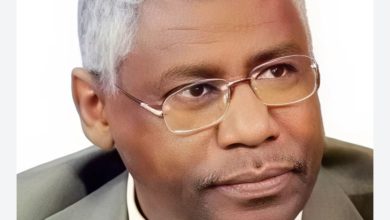
The report added: “The referral followed extensive investigations by the Public Prosecution, which revealed, according to the Emirates News Agency (WAM), that the defendants attempted to pass a shipment of ammunition to Port Sudan authorities via UAE territory, in clear violation of national laws and regulations. Investigations showed that the transactions were linked to deals requested by the armament committee of the Port Sudan government, headed by Abdel Fattah al-Burhan and his deputy Yasser al-Atta, and coordinated by Othman Mohammed Al-Zubair Mohammed. The accusations also included figures alleged to have played roles in direction and coordination, including Salah Abdallah Mohammed Saleh (known as Salah Gosh).” End of report.
Note that this news was released just two days after Al-Gouni was accused of arms trafficking—an urgent attempt to overshadow that story and divert attention from the crimes of Al-Gouni and the militia, as well as the UAE’s role in supplying weapons to them. It is worth noting that the case involving Gosh and his group dates back two years.
What raises doubts about this report is the linking of Salah Gosh with President al-Burhan and General Yasser al-Atta in a government armament committee—something laughable to anyone familiar with how Sudan imports weapons and which entity handles that. Moreover, there has been no relationship between al-Burhan and Gosh since their complete split following the chaotic change of 2019. General Yasser al-Atta is also far removed from arms trading and has no involvement in such matters.
Anyone who knows Salah Gosh understands the evolution of his relationship with the UAE, which has shifted to complete hostility. It is inconceivable that he would arrange arms shipments through the UAE in a war where the UAE is actively opposing Sudan. Gosh has extensive experience in arms procurement and smuggling across various regions—from Lebanon to Palestine and African rebel movements (see “The Days of Carlos in Khartoum” by Adil Al-Baz). Such experience would prevent him from engaging in such a naive operation—chartering planes loaded with weapons and sending them through UAE airports en route to Sudan.
What amused me most in the WAM report was this statement: “The Public Prosecution emphasized that the UAE will not tolerate any attempt to exploit its territory, institutions, or financial system for illegal activities.” Everyone knows the UAE is a hub where blood-stained gold money is laundered (see The Sentry report), and where banks facilitate suspicious deals involving arms and drug trafficking. Its financial systems allow trade with Russia, China, and Iran despite international sanctions—to the extent that Trump once described it as functioning like a bank for Iran. It would be better for the UAE not to accuse others, as it is a vast ocean of money laundering, a haven for criminals of all kinds, and a hub for cartels ranging from oil to narcotics.
The UAE Public Prosecution’s declaration of combating illegal activities comes as a bitter irony. The role played by the UAE—documented in reports by The Sentry and organizations like Global Witness—positions it as a leading global hub for illicit activity. The issue is not individual deals, but rather the ideal financial environment for laundering such funds within these financial centers themselves.