Foreign Policy: Abiy Ahmed – The Man of Many Faces
Sudan Events – Agencies
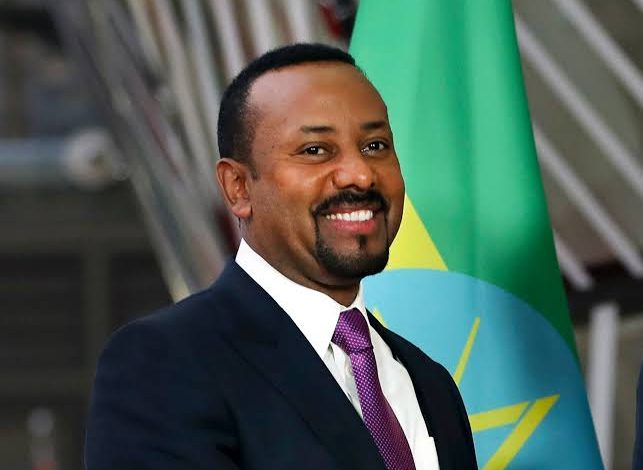
Abiy Ahmed is a very familiar figure in the Ethiopian temple of history, while also being a thoroughly modern individual. He is a Christian nationalist in the mold of Emperor Tewodros II from the 19th century, and a CEO-like leader who uses positive thinking and self-help terminology to enhance his employees’ productivity.
With this snapshot, the American magazine Foreign Policy expressed how multiple personalities coexist within the Ethiopian Prime Minister. It confirmed this by describing him as both a Christian leader and a Machiavellian figure. The article, authored by Tom Gardner, retraces Abiy Ahmed’s early steps into the world of state and politics, starting with his first encounter with General Teklebrhan Woldearegay, head of the Information Technology section in military intelligence at the time, who invited Abiy to join his team working on a joint intelligence project with the U.S. National Security Agency (NSA).
“I Will Die for America”:
When relations between the United States and Ethiopia regained strength under Prime Minister Meles Zenawi, Ethiopia’s influence in Washington grew, and a version of the NSA was established in Ethiopia—a special replica of its American counterpart. Ethiopia became a key player in the regional system and in safeguarding Western interests in the geopolitically critical Red Sea trade route.
The Ethiopian version of the NSA was tasked with protecting Ethiopia’s growing digital infrastructure from foreign threats and later played a role in monitoring and censoring the internet, though it was not initially designed as a domestic spy agency.
Abiy Ahmed had been sent, along with five colleagues, to study encryption in South Africa for six months. He was appointed head of the Information Security division and was among a small group of Oromo in an administration still dominated by Tigrayans and their party, the Tigray People’s Liberation Front (TPLF), under Zenawi’s leadership.
Quick Communicator:
One of Abiy’s Tigrayan superiors stated that “he was quick to communicate and young, and because he was Oromo, that’s why he was chosen. His main talent was communicating with people.” This role also brought him into closer contact with American officials, allowing him to spend time in U.S. training programs and cultivate valuable foreign ties in the years before he became Prime Minister.
Abiy Ahmed once boasted to The New Yorker: “I was the person sending intelligence from this part of the world to the U.S. National Security Agency, regarding Sudan, Yemen, and Somalia. The NSA knows me. I will fight and die for America.”
Emperor and Modernist:
The article notes that Abiy Ahmed is a man of many faces. He is an ambitious emperor longing for a glorious past, building himself a grand palace in the hills above the capital, reportedly at a hefty cost. At the same time, he is a futurist, looking toward what’s coming.
He established Ethiopia’s first-ever science museum, grounded in a highly modern vision of national progress, based on scientific discovery and artificial intelligence. He sought to build a new Ethiopia, a country of smart cities, robot police, biometric identity cards, virtual reality simulations, and advanced surveillance. Some have likened him to a Silicon Valley technologist.
However, he is both puzzling and contradictory. He could seem both a preacher and a spy at once—an enthusiastic Christian but also a pragmatist. One of his colleagues remarked, “Everything to him is a conspiracy.” Another added, “I don’t think there’s a better chess player in Ethiopia than him.” But he is also a gambler, viewing chaos as an opportunity that can be turned into a blessing.
Abiy Ahmed came to power at a time of global upheaval, surrounded by figures like former U.S. President Donald Trump, Chinese President Xi Jinping, and Russian President Vladimir Putin. He applied 21st-century techniques of online propaganda and misinformation while simultaneously reviving Ethiopia’s imperial court politics.
Friend to All, Loyal to None:
As the global order unravels and traditional alliances break down, Abiy Ahmed seeks to be everyone’s friend, without being loyal to anyone, according to the writer. To understand his approach to politics, it is essential to remember his time within intelligence agencies, where he built the social networks that facilitated his political rise and gained the friends who became his most trusted allies.
Abiy Ahmed built an impressive network that included top generals, politicians, and businessmen. He maintained a good relationship with Prime Minister Meles Zenawi, even though he was still in his early thirties, and his highest academic qualification was a degree from South Africa.
A senior U.S. official, who was close to Zenawi at the time, recalled, “Abiy Ahmed was one of the extremely bright young Oromo who was trusted,” though others claimed that he used his position in the NSA to build a political base.
The World Misunderstood Him:
Abiy Ahmed told everyone that he would become Prime Minister, and in 2010, Teklebrhan fired him from the National Institute of Management and Planning, which he led while Teklebrhan was traveling, for mismanaging projects and alleged corruption.
Only eight years later, Abiy Ahmed returned to become Prime Minister amid mass protests in his native Oromia region. He portrayed himself as a populist fighter against tyranny, corruption, and economic frustration. The new Prime Minister, cheered on by many Ethiopians both at home and abroad, began to reduce the Tigrayans’ presence in the Ethiopian state.
However, the world misunderstood Abiy Ahmed when he took power in 2018. He was celebrated in the West as a liberal reformer, someone who would lead Ethiopia, fractured by factional politics and competing identities, into a democratic and “post-ethnic” future.
As the first national leader in modern Ethiopian history to identify himself as Oromo, the country’s largest ethnic group, Abiy Ahmed was thought to be the unifier Ethiopia needed after years of division. One year after taking office, he brokered a historic peace deal with Eritrea and won the Nobel Peace Prize. The chair of the Nobel Committee said the award recognized “Abiy Ahmed’s efforts to achieve peace and international cooperation, particularly his decisive initiative to resolve the border conflict with neighboring Eritrea.”
At a ceremony in Oslo, Abiy declared that war “is the epitome of hell for all involved, and I know this because I have been there.” Yet, just over a year later, he ignited one of the worst wars of the 21st century in Ethiopia’s northern region.