Has the War Already Begun Reshaping the Sudanese State?
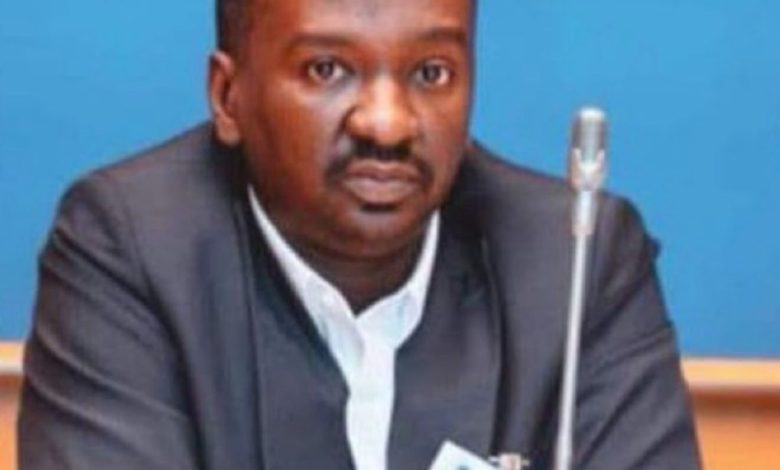
Dr. Abdelnasser Salam Hamid
The war in Sudan is no longer merely a military confrontation between the state and a rebel group, nor simply a struggle over cities and strategic locations. As the conflict has prolonged and the balance of power on the ground has shifted, deeper transformations have begun to emerge concerning the nature of authority and the future of the state itself.
The question is therefore no longer limited to who controls territory; it has also become a question of what kind of state will emerge once this war comes to an end. For more than three years, Sudanese citizens have been preoccupied with following battlefield developments and territorial control lines. Yet many significant changes have been taking shape far from the frontlines. Wars do not transform states solely through military outcomes; they also reshape them through the new realities, institutions, and authorities they create over time. Often, the transformations occurring behind the battle lines prove more consequential than the battles themselves.
Since independence, Sudan has faced recurring challenges related to managing its geographic, cultural, and political diversity within a vast territorial state. Despite the wars, coups, and crises the country has endured, state institutions remained the unifying framework preserving Sudan’s continuity and cohesion. Regardless of periods of weakness or instability, the state continued to serve as the ultimate reference point organizing the country’s political and administrative life.
When South Sudan seceded in 2011, many believed Sudan had overcome the greatest test of its national unity. However, the years that followed demonstrated that fundamental issues relating to governance, development, and the relationship between the center and the peripheries remained unresolved. The war that erupted in April 2023 has brought these questions back to the forefront with unprecedented intensity.
Yet the most dangerous consequences of the war are not limited to the battles themselves or the losses they have inflicted. Rather, they lie in what is occurring in areas beyond the state’s direct control. Prolonged wars do not merely produce battlefronts; they also generate political, administrative, and security arrangements designed to manage the new realities imposed by conflict.
This is why the recent developments in areas controlled by the Rapid Support Forces (RSF) and their allies deserve particular attention. These developments are no longer confined to military affairs but have expanded to include the creation of structures and institutions performing functions traditionally associated with the state itself.
One of the most notable developments has been the announcement of a Security and Defense Council within those territories. At first glance, this may appear to be a simple administrative measure. However, it carries political implications that extend far beyond routine governance. Security and defense are among the most fundamental expressions of sovereignty. A modern state is defined not only by its borders or international recognition but also by its capacity to maintain security and monopolize the legitimate use of organized force within its territory.
When this is coupled with the appointment of a governor for a central bank, the completion of parallel governmental structures, and arrangements concerning education and public services, the picture appears broader than merely temporary wartime measures. The issue concerns an attempt to manage people’s lives and institutions outside the framework of the central state.
This highlights the distinction between a conventional insurgency and the construction of a parallel authority. An insurgency generally seeks to impose specific military or political realities. A parallel authority, by contrast, seeks to build institutions capable of governing society, delivering services, and exercising certain functions of the state. Weapons may secure control, but they are insufficient on their own to establish a durable governing authority.
Viewed collectively, these developments make the issue far more complex. The question is no longer who controls a particular city or region but whether the war is producing new centers of authority that transcend their military origins and evolve into structures of governance and administration.
A state’s strength is not measured solely by its military power but also by its ability to manage people’s lives, provide services, enforce the law, and protect its institutions. When an actor begins performing these functions within a defined geographic area, the discussion shifts from the battlefield to the realm of state-building.
Control over territory is often confused with control over the state. Territory may be seized through military force, but governing a state requires managing the economy, public services, education, and security. For this reason, wars are not always decided by battlefield outcomes alone; they are often determined by the ability of one side to establish a sustainable model of governance.
In this context, Darfur assumes particular significance. The region is not merely a vast geographic area; it also possesses strategic importance and substantial economic resources. In recent months, Nyala has increasingly become a center for political, administrative, and economic arrangements associated with the territories under RSF control, making it a focal point of attention extending far beyond the city itself.
These developments may evoke comparisons with the experience of South Sudan—not because it represents an identical model to current events, but because it serves as a reminder that major political transformations are often preceded by lengthy periods of institution-building and the establishment of administrative and security structures. States do not divide overnight, nor do new political entities emerge suddenly. Rather, they develop through the gradual accumulation of realities on the ground.
Numerous experiences around the world demonstrate that de facto authorities often begin by managing security and public services within their areas of influence before later becoming major actors in either reshaping the state or contributing to its fragmentation. Therefore, the significance of current developments lies not only in the size of the institutions being established but also in the role they may play in the future should the war continue for an extended period.
In such conflicts, time is not a neutral factor. Every additional month of war provides these arrangements with greater opportunities to take root and adapt to the evolving reality. What begins as temporary measures may, over time, become political and institutional facts that are difficult to reverse.
The greatest danger may not lie in the prospect of immediate secession but rather in the gradual normalization of dual authorities and institutions within a single state. Historical experience suggests that division often begins when parallel realities become familiar and society adapts to them as part of everyday life.
The international community continues to officially support Sudan’s unity and sovereignty. Yet, in many cases, it responds to realities after they have become entrenched on the ground rather than shaping them proactively. Consequently, the primary responsibility for preserving Sudan’s state and national institutions ultimately rests with the Sudanese people themselves.
Today, Sudan faces two interconnected challenges: restoring control over territory on the one hand and preserving the unity of state institutions on the other. History demonstrates that recapturing cities may be easier than reunifying institutions once division has become deeply entrenched.
From this perspective, supporting the Sudanese Armed Forces and the country’s legitimate state institutions, while strengthening national cohesion, should not be viewed merely as political positions. Rather, they constitute a national imperative aimed at safeguarding the unifying framework that preserves the country’s unity.
If Sudan paid a heavy price through the secession of South Sudan in 2011, the most important lesson is that any fracture affecting one part of the nation rarely remains confined to that area. What begins in one region can ultimately affect the whole country, because Sudan is not simply a collection of neighboring regions but a single state whose parts are interconnected by a shared destiny.
For this reason, the real question posed by the war today is not who will win the battle, but what kind of state will remain after it ends. Battles may conclude through agreements or military victory, but the effects of institutional transformation can endure for many years after the fighting stops.
What Sudan faces today is not merely a security or military test; it is a test of the state’s ability to preserve its unity, institutions, and sovereignty. Either the country succeeds in restoring national cohesion and reunifying its institutions under a single authority, or the war will impose a new reality that reshapes the structure of the state and the balance of power for decades to come.
At that point, the question will no longer be how the war began, but how it reshaped Sudan. History remembers wars not only through their battles and military outcomes but also through the lasting impact they leave on the structure of states and their institutions.
The greatest challenge facing Sudan today, therefore, is not simply winning the military conflict. It is preserving the state itself and preventing the erosion of its institutions and national unity. The success of the state in restoring its authority and reunifying its institutions will ultimately shape Sudan’s future far more profoundly than the outcomes of battlefield engagements alone.