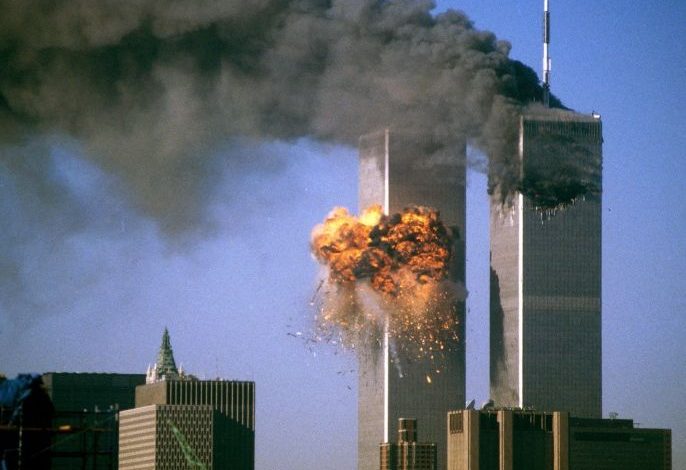
Twenty-five years after the 2001 attacks on the World Trade Center, and despite Sudan having paid hundreds of millions of dollars in compensation, the country is facing the prospect of a fresh legal setback in New York.
At a time when compensation claims arising from the September 11, 2001 attacks appeared to have been settled between Washington and Khartoum, a new legal move has reopened the Sudan-related dimension of the case. Three new lawsuits were filed in late September before the US District Court for the Southern District of New York, renewing claims against the Republic of Sudan.
The lawsuits, brought by victims’ families, are based directly on a consolidated complaint filed in 2020, which brings together claims involving hundreds of victims of various terrorist attacks carried out by Al-Qaeda, their beneficiaries, and insurance companies.
The three lawsuits were filed on September 24, 25, and 28 by the families of victims Annette Andrea Dattaram, Si Wong Shum, Nicholas Roe, and Hagai Shivi. The development coincided with Sudanese Foreign Minister Mohi El-Din Salem’s participation in the 81st session of the United Nations General Assembly in New York.
Under a bilateral settlement and restructuring agreement concluded in December 2020, Sudan paid $335 million in compensation to victims of the 1998 bombings of the US embassies in Kenya and Tanzania, as well as to victims of the 2000 attack on the US destroyer USS Cole in Aden, Yemen.
In return, Washington enacted the Sudan Claims Resolution Act, removing Khartoum from the US list of State Sponsors of Terrorism and restoring its sovereign immunity, the legal principle that protects foreign states from being sued in US courts.
Bin Laden’s Safe Haven in Sudan
However, legislation enacted in 2021, known as the Consolidated Appropriations Act, undermined that settlement. The law explicitly excluded claims related to the September 11 attacks from the scope of the immunity restored to Sudan, while preserving US courts’ jurisdiction over class-action lawsuits that were already pending when the legislation was enacted.
In August 2023, a federal court rejected Khartoum’s assertion of sovereign immunity. The ruling was upheld on appeal in September 2024, according to Africa Intelligence in its September 30, 2024 edition.
This legal loophole has now provided grounds for the resumption of proceedings, as lawyers representing the plaintiffs argue that the 2020 bilateral agreement did not absolve Sudan of all potential legal liabilities.
The consolidated complaint, filed on November 20, 2020, and underpinning the more recent lawsuits, accuses former Sudanese President Omar al-Bashir, who ruled the country from 1989 to 2019, and the National Islamic Front, founded by prominent Islamic cleric Hassan al-Turabi, of providing Osama bin Laden and Al-Qaeda leaders with a safe haven in Khartoum between 1991 and 1996. Al-Turabi was one of the leading figures in Sudan’s Muslim Brotherhood movement.
According to the lawsuits, Al-Qaeda evolved under the protection of the Sudanese government from an emerging group into an “active and sophisticated terrorist organization.”
The allegations maintain that military training, the provision of diplomatic passports, and intelligence services helped establish the logistical infrastructure that subsequently supported the September 11 attacks.
The new claims also overlap with a long-running lawsuit filed by the family of John P. O’Neill, a former senior FBI official who later became head of security at the World Trade Center and was killed when the Twin Towers collapsed.
His family initially launched legal proceedings against Saudi Arabia in 2004 before directing its claims specifically against Khartoum in 2018.