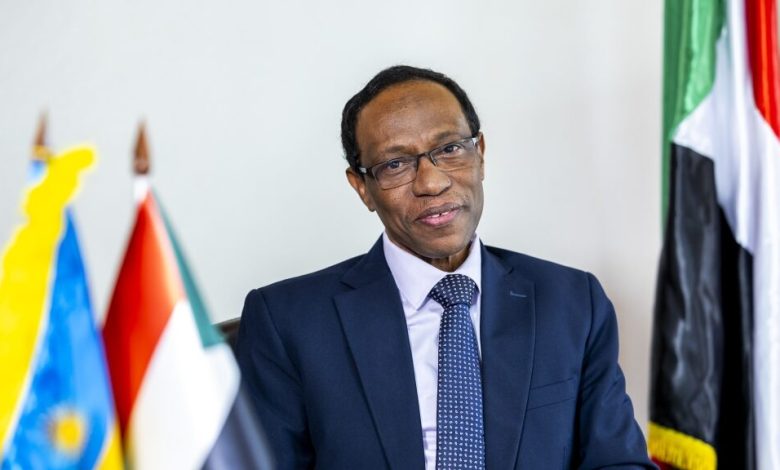
Sudan’s Head of Mission in Brussels, Ambassador Khalid Musa, met on Friday with Leticia Bader, Deputy Director of the Africa Division at Human Rights Watch, and her assistants. The meeting addressed developments in Sudan and concerns relating to the human rights situation and violations committed in the country.
During the meeting, the ambassador listened to the organisation’s concerns regarding allegations of arbitrary arrests on ethnic grounds. He provided a comprehensive explanation of Sudan’s judicial and legal framework, outlining the legal directives and decisions issued to ensure that no individuals are subjected to abuse or retaliation, and that no one is detained or targeted solely on the basis of suspicion.
He also highlighted the prohibition of taking the law into one’s own hands, the need to adhere to proper legal procedures, the importance of delivering justice through fair trials, and the requirement that any violations in this regard be dealt with under the authority of the law.
Musa expressed his appreciation for the organisation’s position calling for measures to prevent impunity and ensure accountability for those responsible for crimes against humanity, war crimes, and the grave humanitarian violations committed by the Rapid Support Forces militia in El Fasher and West Darfur.
He stressed the importance of the international community in general, and the European Union in particular, taking effective measures to halt the flow of military support to the RSF from certain external parties, without yielding to any economic bargaining over this issue.
He also called for preventing neighbouring countries from being used as launch platforms for drones targeting civilians, and for taking measures to stop the provision of military and logistical support to those responsible for genocidal crimes against civilians in Sudan.
At the same time, Ambassador Khalid Musa welcomed the recommendations of the public hearing held by the European Parliament’s Subcommittee on Human Rights concerning sexual violence and gender-based violence in Sudan and the Horn of Africa.
He particularly welcomed the hearing’s emphasis on the need to hold RSF militia members accountable for war crimes and crimes against humanity committed against civilians in Darfur and other parts of Sudan.
He also welcomed the condemnation by some members of the European Parliament of the use of territories in areas along shared borders with certain neighbouring countries to launch drone attacks, which have resulted in civilian deaths and the destruction of critical infrastructure in Sudan.
Musa commended the hearing’s conclusions regarding the need for additional measures to hold regional actors accountable for fuelling the war by providing military and financial support to the Rapid Support Forces militia, as well as recruiting mercenaries from Latin America and neighbouring countries to participate in killing civilians and raping women.
He noted that the European Parliament had previously adopted Resolution No. (2026/2799(RSP)), issued on 9 July 2026, which called for the Rapid Support Forces militia to be placed on the European Union’s list of terrorist organisations and for those responsible for crimes to be held accountable.
In this context, he urged the relevant European Union institutions to take the necessary legal and procedural steps to implement the European Parliament’s resolution calling for the RSF militia to be added to the EU list of terrorist organisations, as part of broader efforts to combat impunity and achieve justice.