Reports
National Responsibility: Education and Humanitarian Affairs as a Model
Report: Amar Awad
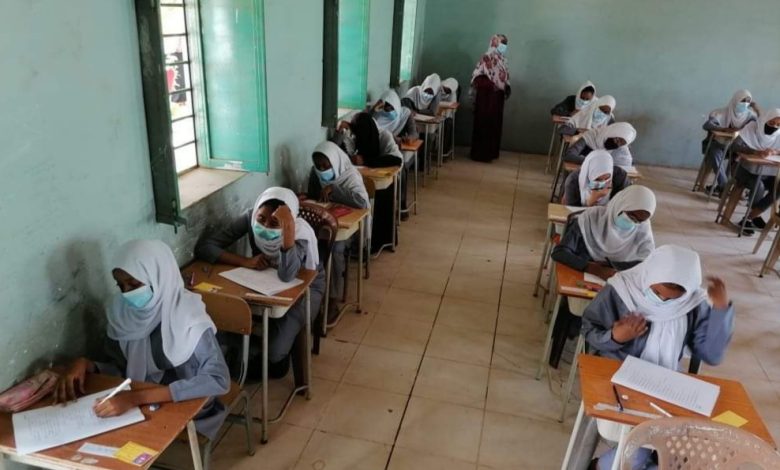
A great joy filled me in a time of sadness that is only occasionally mixed with happiness. It wasn’t just the announcement of the results of the intermediate stage and the accompanying joy and happiness in Sudanese homes and timelines. Rather, it was the realization that the train of education in our country (“Dur Hidido”) is running, which is the most important train for the future and present of the Sudanese people. The ringing of school bells across the country brings me comfort, as these generations have found themselves in this world through no fault of their own. They found us, their parents and older siblings, failing to manage our conflicts, resulting in a war that surrounds them — a war they had no part in but have suffered the consequences of. Two academic years were lost, with some students stuck in the middle, neither able to take the secondary school exams nor move on to university.
The return of life to schools is an atonement and an apology to our children and younger siblings, demonstrating our deep concern for their future, hoping that their fate will be better than ours.
2
In a time of struggle to find a unified solution for delivering humanitarian aid to those affected by the war, those trapped in conflict zones, and those giving thanks to God despite the destruction caused by rain and floods, there has been growing concern about food shortages — or what I call “systematic starvation.” Food is being used as a weapon to achieve political or military gains in the war. While political leaders are preoccupied with securing their positions, and the government works to expand aid access, hopeful news emerged from South Kordofan. In Delanj, a beloved hub for our people in the Nuba Mountains, seven trucks carrying relief and medicine arrived, which were distributed across several localities. The joy stems from the fact that this region, which was once besieged between different factions, is now receiving much-needed aid. This progress was made possible through the efforts of various leaders, including General Abdel Fattah al-Burhan, who secured an agreement with South Sudan to use Juba’s airport to deliver aid directly to the area.
The joy in my heart also grew as I saw pictures of aid arriving from Turkey to North Kordofan and Al-Obeid, despite the siege imposed by militias. This confirms the reality of “systematic starvation” aimed at forcing the city’s surrender. However, Turkish relief trucks reached the city, and images captured the gratitude and joy in the eyes of its residents. Similarly, residents of Kosti welcomed seven UNICEF trucks carrying medicine and supplements.
3
Many of my discussions with friends from international organizations have focused on how Sudanese states, especially the northern state hosting nearly a million displaced people, are facing compounded disasters, particularly after the recent floods. Although outside the immediate war zone, the region is burdened by its role as a host community for displaced people. However, when I saw images of aid arriving, such as three trucks of flour for Al-Golid and hundreds of shelter tents delivered to Wadi Halfa by the International Organization for Migration, I felt a glimmer of hope. These efforts come on top of tents previously set up in Al-Qadarif for displaced people from the regions of Sennar and Sinja, provided by the Norwegian Church Council.
4
The fruits of the agreements made by leaders like Youssef Kargokola of the Liberation Movement and others are now visible. Three trucks from Médecins Sans Frontières reached the Zamzam camp in El-Fasher, marking the first delivery of medical supplies to the city in six months. None of this would have been possible without the dedicated efforts of Sudanese individuals in international organizations, matched by the highest level of national responsibility exhibited by the Humanitarian Affairs Committee, led by General Ibrahim Jaber, a member of the Sovereignty Council.
The value of these efforts lies in the Sudanese government’s commitment to the welfare of its people. The government demonstrated its responsibility by opening border crossings and securing routes to deliver aid to the Kordofan, White Nile, and Darfur regions. Unlike others who remain silent about the crimes of siege, starvation, and bombing, the government has shown its readiness to help its citizens despite the ongoing conflict.
5
The successes and bright spots emerging from the northern state, White Nile, North Kordofan, and Al-Qadarif have spared Sudan from potential calamities under the pretext of “saving Sudan from famine.” The Humanitarian Affairs Committee has shown the international community that Sudan has fulfilled its obligations by opening routes, securing agreements with neighboring countries to use their airports, and expediting relief efforts. However, the real challenge now lies in securing funding for sustained relief efforts.
The international community must now step up, ensuring that local aid workers are protected from the threats of kidnapping or murder. Until then, we hope that the Sudanese state will continue to fulfill its duties to its citizens with the same spirit that led to the reopening of schools and the revival of the education system, shielding future generations from the impacts of our failures to manage our conflicts. Just as it opened border crossings and secured agreements to facilitate aid, we hope the government will continue to demonstrate its responsibility toward its people.