Is Turkey Playing Both Sides in Sudan’s Civil War?
Sudan Events – Agencies
Ankara’s entanglement in Sudan’s conflict reveals a foreign policy stripped of moral compass—one willing to ignore international sanctions aimed at curbing the ongoing bloodshed.
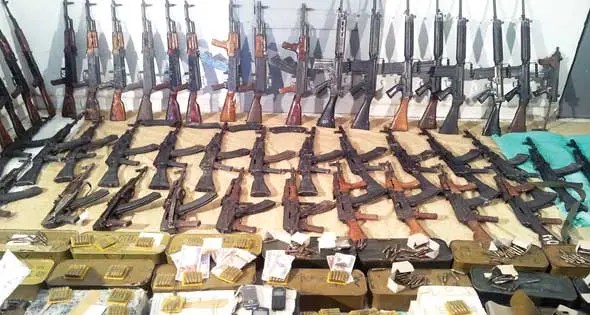
A recent Washington Post investigation uncovered that Turkish arms manufacturers have been supplying weapons to both the Sudanese Armed Forces (SAF) and, possibly, the Rapid Support Forces (RSF)—a militia accused by the United States of committing genocide and severe human rights violations during Sudan’s civil war.
The report details how Baykar, Turkey’s leading defense company—owned by President Recep Tayyip Erdoğan’s son-in-law, Selçuk Bayraktar—sold offensive weapons to the Defense Industries System (DIS), the procurement agency for the Sudanese army. Baykar’s shipments to Sudan’s military appear to violate existing U.S. and EU sanctions.
According to the report, Baykar’s deal with the Sudanese army, valued at $120 million, included six TB2 drones, three ground control stations, and 600 warheads in 2023. Remarkably, the contract was signed on November 16, 2023, five months after the U.S. Treasury imposed sanctions on DIS.
The Washington Post also cited evidence of extensive communication between another Turkish firm, Arca Defense, and Gen. Hamidti Musa, the RSF’s procurement chief and brother of RSF leader Mohamed Hamdan Dagalo (Hamidti). Although Arca Defense denied selling weapons to the RSF, the claim remains unverified.
Sudan’s Civil War
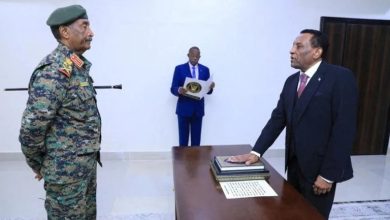
The conflict erupted in April 2023 after tensions escalated between army chief Gen. Abdel Fattah al-Burhan and RSF commander Mohamed Hamdan Dagalo (Hamidti)—former allies who together led the 2021 coup that toppled Sudan’s post-Bashir transitional government. The dispute over integrating the RSF into the national army ignited full-scale war.
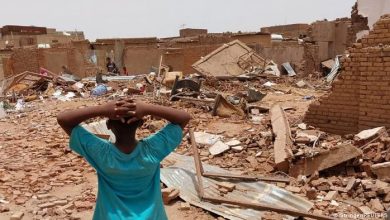
The conflict has since evolved into a humanitarian catastrophe. A UN fact-finding mission concluded in September 2024 that both sides committed “shocking and heinous violations,” including mass rape, arbitrary detention, and torture.
Half of Sudan’s population now requires humanitarian assistance, with 25 million people facing acute food insecurity, and Washington estimates the death toll at 150,000.
A Battlefield for Regional Powers
The war’s persistence is fueled by extensive foreign involvement:
Egypt and Saudi Arabia are the main backers of the Sudanese army.
Iran has allegedly supplied drones that bolstered the army’s recent advances.
The United Arab Emirates is the RSF’s primary supporter—justifying its role by branding the army as “aligned with the Muslim Brotherhood.”
The Sudan Conflict Observatory confirmed with “high confidence” that 32 cargo flights delivered weapons from the UAE to the RSF between June 2023 and May 2024.
Meanwhile, several countries are vying for control over the strategic Red Sea coast. In February 2025, Moscow and Khartoum announced an agreement to establish a Russian naval base in Port Sudan.
Turkey’s Interests
President Erdoğan has long sought to expand Turkey’s influence in the Horn of Africa. In December 2024, he reportedly called Gen. Burhan, offering to “mediate” between Sudan and the UAE.
Turkey has also:
Strengthened its military presence in Somalia, gaining gas exploration rights.
Signed a uranium mining deal with Niger, sparking speculation over long-term nuclear ambitions.
Analysts argue that Turkey’s actions in Africa reflect its ambition to build strategic autonomy from the West and expand its military and geopolitical footprint.
Ankara’s Values-Free Diplomacy
The authors contend that Turkey’s behavior in Sudan epitomizes a foreign policy devoid of principle, willing to flout international sanctions when convenient.
They note this is not an isolated case: Erdoğan has
Blocked Russian warships from the Bosphorus as a NATO member,
Yet simultaneously enabled Russian oligarchs to move funds through Turkish banks and sold dual-use equipment that indirectly supports Moscow’s war in Ukraine.
The report also references the private Turkish security firm “SADAT,” founded in 2012 by Islamist-leaning generals led by Adnan Tanrıverdi, a close Erdoğan ally. SADAT has provided training and logistical support to Islamist-aligned groups in Libya, Azerbaijan, West Africa, Syria, and Iraq.
A Warning to the West
The authors caution the United States and Europe against relying on Turkey as a partner in countering Russia.
Despite recent calls by some European leaders to reintegrate Turkey into the European fold and revive its EU accession bid, they question: “What makes them believe Turkey would truly stand with Europe?”
This article was written by Sinan Ciddi, Senior Nonresident Fellow at the Foundation for Defense of Democracies (FDD), and Sophia Eble, Research Intern at FDD and student at Georgetown University’s School of Foreign Service.