How Do Sudan’s Political Forces Read the Conflicts of the Middle East?
Sudan Events – Agencies
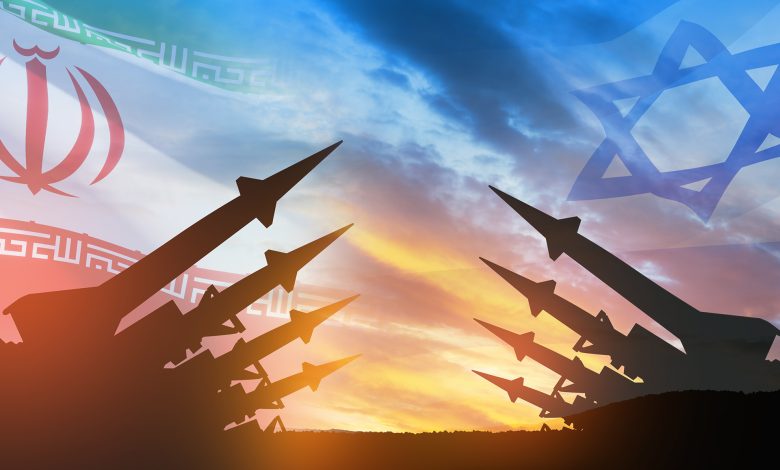
The recent military escalation in the Middle East—particularly the confrontation between Israel and the United States on one side and Iran on the other—has revived longstanding questions within Sudan’s political discourse about the country’s position in regional conflicts. Statements and reactions issued by political parties and alliances reveal a clear divide in how these developments are interpreted. Left-leaning rhetoric tends to frame the conflict within the context of Western hegemonic policies, while Arab nationalist perspectives identify Israel as the central driver of regional tensions. Other positions focus on Gulf security and regional stability, whereas some political forces have preferred to call for keeping Sudan neutral in the region’s conflicts.
A review of political positions over recent months reveals a political landscape marked by multiple directions, where ideological backgrounds intersect with geopolitical calculations and regional alliances. The ongoing war in Sudan, which erupted in April 2023, has introduced new tensions and fractures into the political scene. Alignments and alliances among political actors have shifted in accordance with their differing interpretations of the war’s nature, adding another layer of political complexity to an already complex conflict. International reports suggest that the continuation of the war in Sudan is linked to support provided by regional actors to the parties involved, a reality reflected in the positions adopted by Sudanese political forces—whether aligning with these axes, attempting to avoid them, or remaining silent.
Current political positions appear less concerned with the broader strategic horizons that once characterized some of Sudan’s intellectual and political figures in the years following independence. Observers of many present-day positions may notice a tendency to focus on the immediate and the nearby, as if politics sees no farther than the mud of the fields beneath one’s feet, or as if political opinions are drawn from the front pocket of a shirt. In such a climate, attention to the needs of ordinary people often disappears when political stances are formulated, and politics is reduced to the confines of the moment.
On the surface, statements issued by Sudanese political actors regarding developments in the Middle East may appear to be routine expressions of solidarity or condemnation released whenever a war erupts somewhere far away. Beneath the language, however, lies the agenda of Sudan’s own war—a conflict that began as an internal struggle for power in April 2023 but has gradually been penetrated by regional rivalries.
While the Sudanese government condemns Iranian attacks on some Gulf states and calls for respect for international law, international reports simultaneously speak of Iranian drones flying over Sudan’s battlefield. On the other side stands the Ta’sis alliance, linked to the Rapid Support Forces (RSF), denouncing Iran and expressing solidarity with Gulf states. This position appears consistent with reports describing close relations between the RSF and the United Arab Emirates, as well as accusations that support channels run through Chad. The clearest paradox is that the Middle East has become more present than ever in the details of Sudan’s war—as if Sudan is no longer reading the region’s news from afar but turning another page of its own story.
At the official level, Sudan’s Ministry of Foreign Affairs condemned what it described as Iranian aggression, calling for adherence to the principles of international law and a return to negotiations. Sudan also declared its solidarity with several Gulf countries that were targeted in the attacks—though notably not the United Arab Emirates, a diplomatic omission that has not gone unnoticed.
The position of the Sudanese Communist Party has remained consistent with its long-standing political tradition in interpreting international conflicts. An editorial in Al-Maidan, the party’s newspaper, adopted a sharper tone, describing the attack as “a U.S.–Zionist assault on Iran and a blatant disregard for the security of peoples and their right to life and sovereignty.” The editorial framed it as “a new episode in the series of aggressive policies pursued by American imperialism to impose its will through military force in the Middle East.” It also blamed what it called “complicit Arab regimes and powerless international institutions” for their silence regarding the escalation. Notably, the party did not take a clear position on Iran’s attacks against certain Gulf states—reflecting a familiar pattern in Arab leftist discourse that tends to focus on criticizing U.S. and Israeli roles more than examining the actions of other regional actors within the broader project of opposing imperial hegemony and expressing solidarity with democratic and progressive forces.
This position is consistent with the party’s earlier stance. In a statement issued by its Political Bureau on 14 June 2025, the party condemned Israel’s attack on Iran, describing it as “a blatant violation of international law that threatens to expand tensions in the region,” and stressing that respect for international borders is a fundamental condition for regional and global stability. The statement also affirmed the party’s “full solidarity with the Iranian people and their democratic and progressive forces, as well as with all peoples of the region, in the face of Zionist aggression that threatens the security and stability of all.”
By contrast, the Civil Democratic Forces Alliance—Sumoud—condemned what it described as “the brutal aggression carried out against Saudi Arabia, the United Arab Emirates, Qatar, Bahrain, Kuwait, and Jordan by the Iranian regime, despite its awareness of these countries’ early rejection of escalation in the region and their calls for de-escalation and diplomatic solutions to conflicts.” However, the alliance issued no statement during the twelve-day war.
Some political actors adopted a discourse centered on the humanitarian dimension of the conflict. Yasser Arman, head of the Sudan People’s Liberation Movement–Democratic Revolutionary Current, called for rejecting wars and the targeting of civilians in the region, stating that “human integrity requires us to stand against wars and against the targeting of civilians anywhere in the world.” Arman also warned that an expansion of the war in the Gulf could have direct repercussions for Sudan and the wider region, cautioning that regional escalation might lead to declining international attention to Sudan’s crisis.
The position of the Sudanese Congress Party, also part of the Sumoud alliance, reflects a more pragmatic approach for which the party has become known in reading regional conflicts. Its language often includes phrases such as “extremist projects” and “destabilization.” Although the party issued no statement regarding the twelve-day war in June 2025, it condemned Iran’s targeting of Gulf Cooperation Council states and Jordan in March of this year, describing it as “a violation of the sovereignty of these states and a direct threat to regional security and stability.” At the same time, the party went beyond diplomatic pragmatism by recalling “the role played by the Iranian regime in supporting the National Congress regime and the Islamic Movement in Sudan over past decades,” accusing it of “empowering extremist projects that plunged the country into cycles of war, repression, and international isolation.” The party reaffirmed its commitment to “rejecting violence, prioritizing peaceful solutions to disputes, and respecting international law,” reflecting a current within parts of Sudan’s civilian political movement that approaches foreign policy through the lens of regional stability.
Arab nationalist perspectives appear clearly in the positions of Sudan’s Baathist parties. Sudan’s political scene includes two separate Baathist organizations: the Arab Socialist Baath Party (Original) and the Sudanese National Baath Party.
In the statements of the Sudanese National Baath Party, which belongs to the Sumoud alliance, the discourse combines condemnation of Israel with warnings about the expansion of war in the region. Party leader Kamal Bolad stated in June 2025 that “the Zionist attack on Iran clearly reflects Israel’s technological, military, and intelligence superiority as well as its aggressive nature.” In a later statement in March of this year, the party condemned what it described as a “U.S.–Zionist attack on Iran,” while also criticizing Iran’s response in targeting Gulf states, warning that it could widen the scope of the conflict.
The Arab Socialist Baath Party (Original), which withdrew from the Forces of Freedom and Change coalition following the October 2021 coup, tends to interpret the conflict within a broader framework related to U.S. policies in the region, focusing on the role of international actors in reshaping the balance of power in the Middle East. In a party statement dated 11 March regarding a U.S. decision related to the classification of the Muslim Brotherhood in Sudan, the party noted that “this decision cannot be read in isolation from the strategic orientations, interests, and calculations of American imperialism linked to the developments and outcomes of its war—alongside the Zionist entity—against Iran.”
The position of the National Umma Party similarly reflects internal plurality in interpreting the regional conflict, illustrating the difficulty of defining a unified stance within a party that encompasses diverse political and intellectual currents. In June 2025, the party’s Coordination Council condemned Israel’s attack on Iran, describing it as “a blatant violation of international law and a direct threat to international peace and security.” While the party’s language remained similar during current events, its positions differed: in March this year it condemned Iran’s attacks on Gulf states, with the office of the party’s president describing them as “a flagrant violation of the principles of good neighborliness, the UN Charter, and the rules of international law.” The office also declared solidarity with “the brotherly nations targeted in the attacks,” emphasizing that the security of the Arab Gulf is indivisible and calling for “prioritizing dialogue and diplomatic solutions.”
Islamist currents in Sudan have, unsurprisingly, expressed solidarity with Iran in its confrontation with Israel and the United States. Statements by figures associated with the Islamic Movement have suggested readiness to support Iran should the war expand, reflecting enduring ideological ties between segments of Sudan’s Islamist movement and what is often referred to as the “Axis of Resistance” in the region. The result was the U.S. government’s designation of the Muslim Brotherhood as a terrorist organization—along with all the consequences such classifications entail for those who find themselves caught in the margins of politics.
On the very first day of the Middle East war, the Ta’sis alliance issued a press statement through its official spokesperson declaring that “confronting regional and international terrorism is a top priority to protect the peoples of the region and ensure their future.” The alliance unequivocally condemned “Iran’s attacks on all states whose territorial sovereignty and security were targeted by the Iranian regime,” including the United Arab Emirates. The statement added that Ta’sis would “continue the struggle against all forms of terrorism.” The alliance issued no statement regarding the Middle East war in June 2025 but did publicly welcome the designation of the Muslim Brotherhood as an international terrorist organization.
The regional alignments connected to Sudan’s war reveal that a conflict which began as an internal struggle for power has gradually seeped into broader geopolitical maps beyond the country’s borders, seeking a place among the region’s proliferating wars. As the warring parties become increasingly tied to external axes, the conflict becomes less local and more akin to a war contested across the maps of others.
In a country overlooking the Red Sea, geography does not appear entirely innocent. The sea sometimes shifts from being merely a passage for ships to becoming a corridor for ambitions as well. Yet despite this regional noise, the simplest—and perhaps most ironic—truth remains: wars may receive support from abroad, but they rarely end there. Weapons may arrive from afar, and statements may be written in multiple languages, but the Sudanese war will ultimately remain a Sudanese matter—determined as much by the internal balance of power as by the exhaustion of all parties from its continuation.
In a region long accustomed to exporting wars more than peace, Sudan appears to be learning an old lesson in a new form: geography may open the door to the winds, but it does not force the house to collapse.