“So how could I bargain it away with my betrayal?” Remembering Independence, when the homeland becomes a covenant
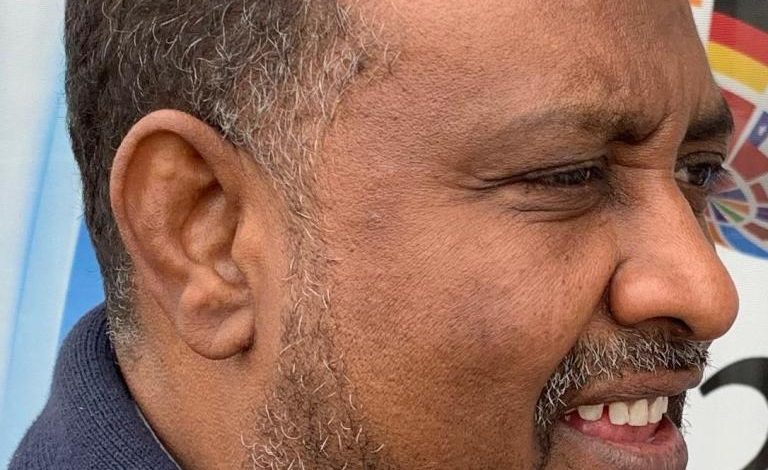
Abdelaziz Yaqoub
My country—O glow of dawn and spring of fragrant scent,
Muse of anthems, verses spun of poetry.
You are my gentle peace, my dream of chaste love.
Its land nurtured me as a child—
So how could I bargain it away with my betrayal?
I pledged my life to its very essence,
And gratitude for its goodness is only right.
With these verses—verses that admit no abridgment and cannot be displaced from the head of the text—the poet Hassan Mustafa Al-Tinni opens his poem as a moral covenant before it is a patriotic song. It is not a Gentil Speech, a rhetoric of nostalgia, but a declaration of total belonging: a vision that sees the homeland as the source of upbringing, and betrayal of it as a collapse of meaning before it is an act of treason.
Al-Tinni fashioned his poem with deep national awareness and a translucent Sufi spirit, rendering Sudan a perpetual dawn—not reducible to a passing political moment, but understood as an enduring ethical value. The homeland here is not land to be possessed, but a trust to be fulfilled; not a slogan to be raised, but a lifetime devoted to its sake. From this premise rises the poem’s central question: “So how could I bargain it away with my betrayal?”—a question of collective conscience, not a fleeting emotional reproach.
The poem confronts us with a fundamental inquiry: what does it truly mean to be independent? Is independence merely liberation from colonial authority, or is it emancipation from selfishness, complacency, and betrayal of the values on which the nation was founded? When the poet asks, “How could I bargain it away with my betrayal?” he addresses no single individual; he challenges the conscience of a nation, warning that the gravest threat to countries is not an external enemy, but internal betrayal.
In the context of Independence Day, the value of work emerges as the true extension of that historic moment. Freedom that does not translate into effort is squandered, and independence that is not safeguarded through productivity and selflessness fades into a pale memory. The poem refuses to separate love from labor: genuine love of country is to expend one’s energy in building it, to place it above personal comfort, and to see one’s private toil as a brick in the wall of its survival.
When these words crossed from poetry into song—carried by the voice of the late artist Abdelaziz Mohammed Daoud—they were not wrested from their author; their circle simply widened. The poet created the vision and the meaning; the singer endowed it with an aural life that lodged it in the collective consciousness. Thus the work reached completion without the voice overpowering the word, or performance eclipsing the original.
The poem establishes a firm moral stance against betraying the homeland. Betrayal is not political disagreement; it is the negation of loyalty and a departure from the most basic meanings of honor. A land that “nurtured its child” cannot be bargained away when its sons come of age, nor reduced to transient conflicts and gains. In this text, love of country becomes an act rather than a slogan, labor rather than a claim.
Work and altruism advance as the essence of authentic patriotism. Nations are not built by chants, but by patience, daily effort, and the capacity to place the public good above the private. To “give oneself” for the homeland does not mean physical annihilation; it means expanding beyond the narrow self into the breadth of meaning, beyond the selfishness of the moment into the permanence of impact.
In the poem’s background, a quiet Sufi religiosity is present: nature glorifies, dawn bears witness, as if the entire homeland were engaged in remembrance. Here, work becomes worship, loyalty a faith value, and betrayal a spiritual fracture before it is a national crime.
On the first of January, we are worthy of spending such a poem—not in extravagance, but in fidelity. Worthy of returning it to our hearts before our podiums, and making it a mirror in which we question ourselves: are we still faithful to that first dawn? Do we still believe that giving oneself for the homeland is not a losing sacrifice, but the highest form of life?
On Independence Day, this poem reminds us that the homeland is not loved by words alone, nor preserved by songs only, but by loyalty, labor, and the sincerity of sacrifice. Countries that are not betrayed are those whose sons find in serving them a meaning for life, not a burden upon it.
May God have mercy on the poet Hassan Mustafa Al-Tinni, who made poetry a conscience and the homeland a covenant not to be broken; and mercy on the artist Abdelaziz Mohammed Daoud, who carried the word with dignity and entrusted it to the memory of Sudanese as an anthem of fidelity.