Between Bashir’s Statements and Burhan’s
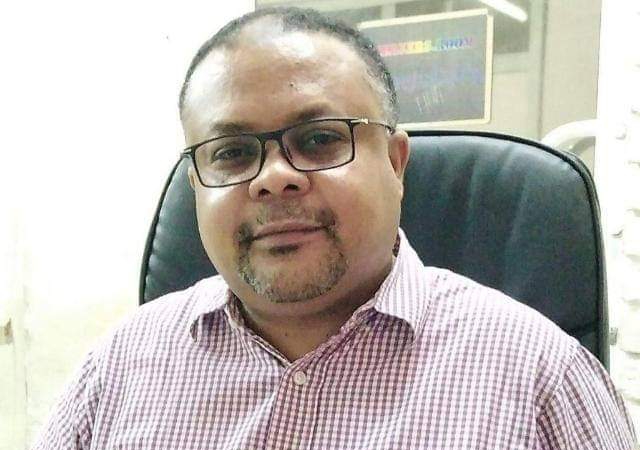
By Osman Jalal
(1)
“Not even if they wash themselves seven times in the waters of the Red Sea will the leaders of the National Democratic Alliance set foot in Sudan.” These were the words of President Omar al-Bashir, spoken in Port Sudan during the celebration of Sudan’s first oil exports in 1998. The remarks came in the context of political rivalry and hostility between the then-ruling Islamist-nationalist current and the opposition, entirely detached from the will and interests of the Sudanese people.
The same words have since been echoed by Abdel Fattah al-Burhan, albeit in a softer tone. Yet they reflect the collective voice of the Sudanese people, who have suffered in their wealth, property, honor, dignity, and pride at the hands of the terrorist Al-Dagalo militia and its civilian political wing, the Sumoud Alliance.
(2)
When the National Congress Party signed peace agreements with the opposition National Democratic Alliance in Asmara and Cairo in 2006, the sharp polarization between the ruling party and the opposition came to an end. Political parties resumed their activities, reconnected with their social bases and communities, and some even participated in all institutions of the transitional government formed after the 2005 Naivasha Agreement, from 2005 to 2010.
This was followed by the 2010 and 2015 elections, with peaceful political and popular mobilization continuing until the fall of the National Congress Party on April 11, 2019.
(3)
Today, even if General Burhan rises above personal grievances and signs a political settlement with the Al-Dagalo militia alliance and Sumoud, Sudanese society—as the primary victim of this cursed war—will seek retribution against the leaders of this sinister alliance. The alliance has fully aligned itself with Emirati and Zionist-American agendas to the point of outright collaboration and mercenarism. Leaders of Sumoud have been employed as political and media mouthpieces in a scheme aimed at destroying the Sudanese state.
Since independence, Sudan’s civilian and armed political opposition has traditionally drawn clear lines between malign foreign agendas and its legitimate demands. External support was used to advance political and social causes without complete submission to hostile foreign designs. Dr. John Garang was assassinated in May 2005 precisely because he distinguished between foreign subservience and the national agenda, and ultimately chose the project of unity between North and South Sudan.
(4)
I am firmly convinced that any political settlement that reproduces and recycles the Al-Dagalo militia–Sumoud alliance within the national political arena constitutes a strategic threat to social peace and national cohesion. It would ignite direct confrontation between all sectors of Sudanese society and this alliance, plunging Sudan into the abyss of so-called “creative chaos” and a war of all against all. This is therefore a zero-sum battle that must end with the decisive defeat of the terrorist militia on the battlefield, or with its surrender and the prosecution of Sumoud leaders.
(5)
Burhan’s message to regional states that sponsor and support the Al-Dagalo militia–Sumoud project also reflects the will of the Sudanese people, who have thwarted the conspiracy to dismantle the Sudanese state. It equally expresses the will of a regional alliance that supports the unity of Arab and Islamic nations—an alliance that has already begun to act politically, diplomatically, and militarily.
Accordingly, these states—fully aware that their own houses are made of glass—must end their investment in rebel movements and politically and socially rootless groups, lest the plot backfire. Instead, they should build and deepen their strategic relations with peoples and official state institutions.
