A United Nations panel of experts on Libya has revealed that southern Libya has become a key corridor for transporting military and logistical support to the Rapid Support Forces (RSF) militia in Sudan. The report states that the transfer of fighters, weapons, and fuel took place through organized smuggling networks along the borders with Sudan, Chad, and Niger between October 2024 and February 2026.
The report noted that armed groups—most notably the Subul al-Salam Battalion led by Abdulrahman Hashem—played a central role in controlling supply routes and organizing transport operations by providing vehicles, fuel, and protection, leveraging tribal ties and local knowledge. It confirmed that this battalion effectively controls the supply lines used to move fighters, weapons, and equipment from Libya into Sudan.
It also highlighted the presence of RSF fighters inside Libyan territory, which has led to armed clashes between Sudanese factions within Libya. The report further explained that the RSF used bases inside Libya as logistical hubs, as well as air and ground facilities for movement and preparation, under the supervision of the Libyan Arab Armed Forces to coordinate operations.
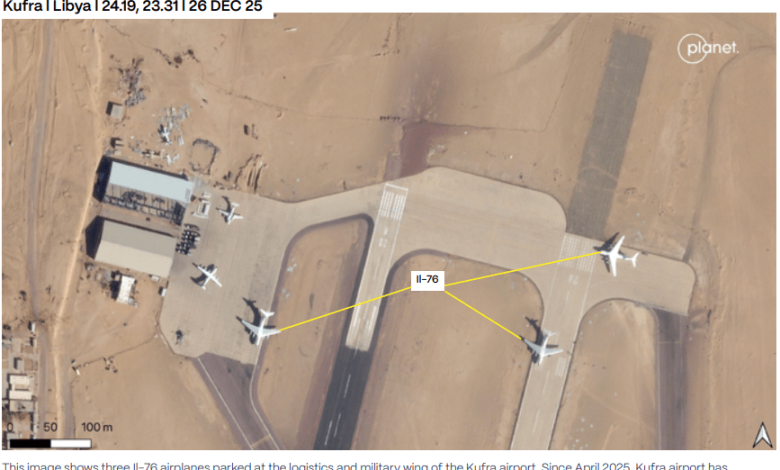
According to the report, Libya is no longer merely a transit route but has become an operational base and a center for assembling and redeploying forces. It pointed to the monitoring of joint military convoys and the transfer of foreign fighters to support the RSF. The report also documented a significant increase in cargo flights to the city of Kufra since April 2025, recording the arrival of 143 Il-76 cargo aircraft over nine months—an average of about 16 aircraft per month.
The panel emphasized that this support via Libya has weakened border security, boosted smuggling activities and the illicit economy, contributed to the internationalization of the Sudanese conflict, and exacerbated regional instability. It also noted that some weapons destined for the RSF were resold on the black market and ended up in the hands of smuggling groups in Libya, Chad, and Niger.