A Fundamental Shift or a Tactical Move? What Does the African Union’s Reopening of Its Office in Khartoum Mean?
Report – Sudan Events
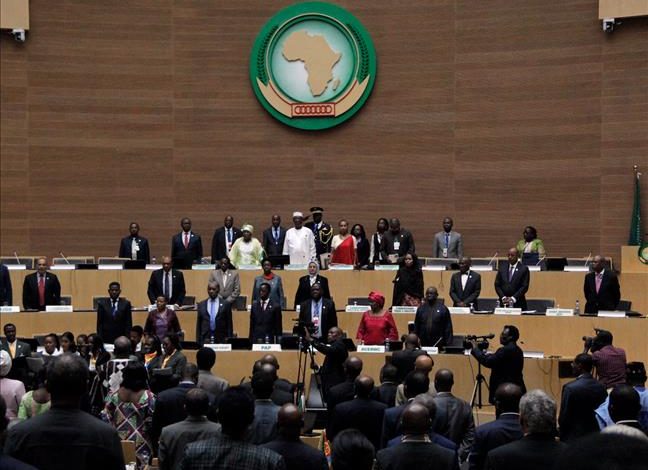
In a surprising move, the African Union has announced its intention to reopen its office in the capital, Khartoum, and resume the activities of its mission in the near future. The step is widely viewed as an acknowledgment by the AU of the presence of an effective central authority in Khartoum, potentially paving the way for ending Sudan’s membership suspension, which has been in place since 2021.
The African Union’s envoy, Ambassador Mohamed Belaiche, revealed that arrangements are underway to reopen the office as soon as possible. During his meeting with the Minister of Foreign Affairs, Mohi El-Din Salem, he explained that his visit aims to assess the situation in preparation for the official resumption of the AU mission’s work from Khartoum.
For his part, the minister affirmed that security and service conditions have stabilized following the return of the government and international organizations, adding that the ministry stands ready to provide all necessary facilitation.
An Important Step
This AU decision coincides with the return of international institutions—foremost among them the United Nations—to reopen their official headquarters in Khartoum, sending a signal to the international community that the security situation in the capital has improved.
According to observers, the AU office also aims to accompany the Sudanese people in their efforts to restore peace and to facilitate comprehensive Sudanese dialogue under national leadership, away from external interference. Additionally, the office is expected to serve as a link for assessing growing humanitarian needs on the ground and supporting the efforts of the “Government of Hope” in the post-war phase.
Researcher Mohamed Al-Mustafa noted that the resumption of the AU mission’s work in Khartoum represents a significant step toward restoring Sudan’s membership in the continental body. It also constitutes recognition of the legitimacy of the current authority, which could contribute to a breakthrough in Sudan’s external relations—particularly within Africa. Al-Mustafa further يرى أن this step serves as a quiet warning to African countries that continue to engage with the Rapid Support Forces as a legitimate entity, such as Kenya, Uganda, Ethiopia, and, to a lesser extent, South Sudan.
A Delayed Move
From a different perspective, researcher Dr. Othman Nurein argues that the AU’s step has come far too late. He points out that it was preceded by the United Nations, which had already reopened its offices in Khartoum, followed by visits from European Union officials who inspected their premises in preparation for reopening.
Dr. Nurein believes that African institutions initially adopted a negative stance at the onset of the Sudanese crisis, and although they later corrected course, their return has been slow. He also notes that the African Union remains constrained by the policy orientation of its host country, Ethiopia, which he suggests prefers to keep Sudan in a state of instability and is reluctant to see it fully recover. He added that the AU needs to restore its intended role before fully resuming operations in Khartoum.
A Strained Relationship
Tensions have characterized relations between Sudan and the African Union since the measures of October 2021 and the subsequent suspension of Sudan’s membership. Observers believe that former AU Commission Chairperson Moussa Faki played a major role in this strained relationship, allegedly showing clear bias in favor of the Rapid Support Forces during the conflict that erupted on April 15.
According to Dr. Mohamed Omar, a professor of political science at Sudanese universities, Moussa Faki—through the African Union—proposed a roadmap for resolving the Sudanese crisis in May 2023, with terms and conditions that were unacceptable to the Sudanese government.
The key question remains: does the reopening of the African Union office in Khartoum mark the beginning of the process to end Sudan’s suspension from African institutions?